An international, open-access dataset of dental wear patterns and associated broad age classes in archaeological cattle mandibles
Eden Hill, Umberto Albarella

TL;DR
This paper introduces Bubona, an open-access dataset of cattle dental wear patterns and age classes to improve archaeological age estimation methods.
Contribution
The novel contribution is the creation of an international, open-access dataset for archaeological cattle mandible age estimation.
Findings
Bubona contains 1460 data entries from nine countries for reference in age-at-death estimation.
The dataset aims to improve and innovate age estimation systems for cattle mandibles with incomplete dentition.
Abstract
Zooarchaeologists investigate past interactions between animals, humans, and their environments by analyzing the remains of archaeological fauna. Age-at-death distributions are fundamental to faunal analysis and are often estimated by comparing exposed dentine patterns to standardized tooth wear stages that have been associated with relative age classes. We present Bubona, an international dataset of dental wear patterns and associated broad age classes in archaeological cattle mandibles. Our open-access dataset of 1460 data entries from nine counties is being used to create tooth-type specific reference tables of probable age class attribution for cattle mandibles lacking complete dentition. Bubona is a valuable resource for the innovation of new systems of age estimation for cattle and it is the creators hope that researchers will continue to both help expand the dataset by…
Genes, proteins, chemicals, diseases, species, mutations and cell lines named across the full text — each resolved to its canonical identifier and authoritative record.
Click any figure to enlarge with its caption.
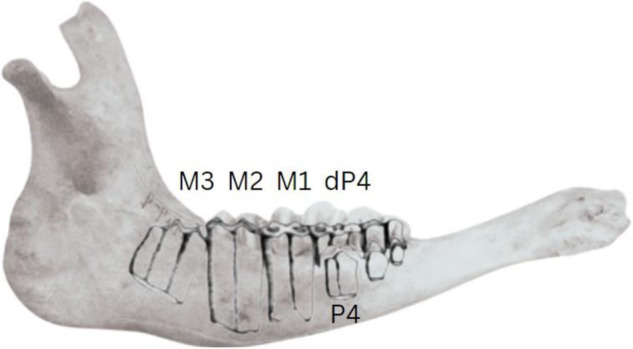 Figure 1
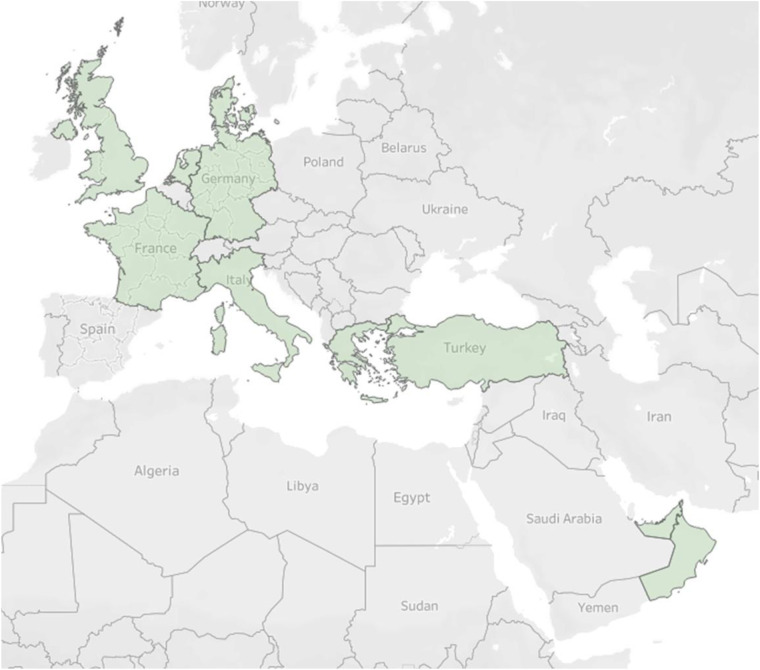 Figure 2
Peer Reviews
No public reviews on file for this paper yet. If you reviewed it on a platform where reviews are public (OpenReview, ICLR, NeurIPS, ICML), you can paste yours below so the community can read it here.
Videos
No videos yet. Explain this paper in a talk, walkthrough, or lecture? Add one.
Taxonomy
TopicsForensic Anthropology and Bioarchaeology Studies · Archaeology and ancient environmental studies · Forensic and Genetic Research
Background & Summary
Zooarchaeologists use a variety of methods to reconstruct profiles of animal assemblages from archaeological sites^1^. The age-at-death distributions of archaeological fauna can help to address many archaeological questions, ranging from hunting patterns to husbandry regimes, ritual behavior, cultural preferences etc. Their estimation is a critical aspect of zooarchaeological research^2,3^. The relative age-at-death of archaeological fauna is generally estimated through the examination of bones and teeth, which are commonly recovered and exhibit determinate growth^1–4^.
A fundamental zooarchaeological method which utilizes teeth to estimate the relative age-at-death of archaeological animal remains is the analysis of dental eruption and attrition^3^. Dental age in cattle may in turn be associated with broad or narrow chronological age classes (e.g.^5–12^). Bubona was created to synthesize Grant’s^6^ tooth wear stages with O’Connor’s^12^ broad age classes (Table 1) in an open-access dataset, in order to facilitate the age class attribution of cattle mandibles lacking complete posterior dentition. An additional age class, Neonatal, has been adapted into O’Conner’s original criteria^12^.Table 1O’Connor’s broad age classes (1988).Age ClassCriteriaNeonatalFourth deciduous premolar not in wearJuvenileFourth deciduous premolar in wear; first permanent molar not yet in wearImmatureFirst permanent molar in wear; second permanent molar not yet in wearSubadultSecond permanent molar in wear; third permanent molar not yet in wearAdultThird permanent molar in wear but not heavily worn; wear stage a - i*ElderlyThird permanent molar heavily worn; wear stage j or beyond**Wear stages as defined by^6^.
Age-at-death frequency distributions, known as mortality profiles, derived from assemblages of wild animals (such as aurochs) can be utilized to extrapolate hunting tactics, seasonal killing, and seasonal occupation^3,13–15^. The mortality profiles of assemblages containing domesticated animals (such as cattle) may be interpreted to infer herd specialization and livestock management practices^10,16–21^. The value of age-at-death data cannot be understated and the authors are in the process of using Bubona to create and publish reference tables which correlate the development of the fourth premolars and molars with broad age classes (publication forthcoming). We strongly encourage researchers to submit their own data to be incorporated into Bubona, especially welcome data from archaeological contexts outside of the United Kingdom. Any submitted data would be vetted by the authors before inclusion into our dataset. We also whole-heartedly welcome other researchers to use our dataset to develop additional age-at-death estimation methods, or refine existing ones.
Methods
Bubona is a collation of 1460 tooth eruption and wear data derived from both prerecorded and independently examined cattle mandibles housed in university collections and recovered from archaeological sites and across the world. The details of our data selection, collection, and compilation are described below.
Data selection
Two criteria were observed in the selection of archaeological cattle and aurochs mandibles; (i) the presence of at least two molars or fourth premolars and (ii) the presence of erupted third molars, or the furthest back erupted molar if the third molar had not yet erupted.
The presence of at least two molars or fourth premolars is a useful criterion because^12^ system of age classification is dependent upon the eruption and wear of molars/fourth premolars in association with one another. These teeth are abbreviated as dP4, P4, M1, M3, and M3 (Fig. 1). The examination of mandibles with at least two recordable teeth also reveals incidence of tooth wear stages which do not form parameters for age classes; e.g. it is the recording of tooth wear stages of the remaining molars and fourth premolar of an elderly mandible which reveals which non-M3 tooth stages are frequently exhibited by elderly individuals.Fig. 1. Dental schema of a cattle mandible adapted from^1^.
The direct attribution of the cattle mandibles to O’Connor’s broad age classes^12^ as opposed to Grant’s mandibular wear stages^6^ is possible only in mandibles which have the furthest back erupted molar present. Accordingly, only mandibles with erupted third molars or the furthest back erupted molar if the third molar had not yet erupted were incorporated into Bubona.
Data collection
Pre-recorded data was included in our personally owned data^22–26^, and provided by Veronica Aniceti^27,28^, George Kazantzis^29,30^, Mauro Rizzetto^31–43^, Sofia Tecce (unpublished data from Rectory Farm, Lincolnshire, UK), Angela Trentacoste^44,45^, and Lizzie Wright^46–48^. Additional data was pulled from published sources^11,49–57^.
Independently recorded cattle mandibles were selected from multiple sites across France, Germany, and the UK (Chaplin Treasury, no known publication; Dangstetten Roman Camp^58^; Gurness^59,60^; Inveresk Gate^61^; Jarlshof^62^; Lazenay^63^; Links of Noltland^64^; Newstead^65^; Perth High Street^66^; Skeleton Green^67^) and analyzed by one of us (EH) in accordance with Grant^6^ and O’Connor^12^. Modern cattle mandibles from Germany, Oman, Turkey, and the UAE were also selected from the Tübingen University zooarchaeological collections. In total, cattle mandibles from 9 countries have been incorporated into Bubona (Fig. 2).Fig. 2. Map of countries represented in Bubona.
Access to the assemblage from the Lazaney site was facilitated by Robin Bendry and the University of Edinburgh, where the materials were being housed at the time of data collection. The assemblage from Skeleton Green was examined at the University of Sheffield (on loan from Hertford Museum). The remaining assemblages were examined at the National Museum Stores in Edinburgh under the supervision of Zena Timmons by permission of Jerry Herman and the National Museum of Scotland. The assemblage from Dangstetten Roman Camp, and all modern mandibles, were examined at the University of Tübingen zooarchaeological collections under the supervision of Angel Blanco-Lapaz by permission of Britt Starkovich.
Data entry
Data recorded from all mandibles selected was entered into an Excel spreadsheet organized by
(i) archaeological site or modern context (see ‘Data Collection’), (ii) chronological context (iii) tooth wear stages^6^ recorded for each mandibular tooth (dP4, P4, M1, M2, M3), and
(iv) age classes (^12^, with the added class on Neonatal) recorded for each mandible. C represents crypt, V represents visible, H represents half-erupted, E represents erupted, and U represents unworn. The age class Neonate has been added to O’Connor’s age classes and is assigned to mandibles with an unworn dP4 (Table 1).
Reference publications and DOIs of faunal and archaeological reports and datasets were also included for each entry whenever possible.
Taxa inclusion
Bubona is composed of tooth wear stage and age class data recorded for archaeological and modern domesticated cattle (Bos taurus) and aurochs (Bos primigenius).
Data Records
The dataset is freely available as an .xlsx file on Zenodo^68^. Bubona includes 1460 data entries for cattle and aurochs mandibles recovered from 79 archaeological sites and 5 modern contexts. All entries have been associated with (i) an archaeological site or modern context, (ii) a chronological context (iii) tooth wear stages^6^ recorded for each mandibular tooth (dP4, P4, M1, M2, M3), and (iv) age classes^12^ recorded for each mandible.
Technical Validation
Bubona is composed of lower posterior (dP4/P4, M1, M2, M3) tooth wear stages and broad age classes recorded in cattle and aurochs mandibles exhibiting the presence of at least two molars or fourth premolars as well as the presence of erupted third molars (or the furthest back erupted molar if the third molar had not yet erupted). All mandibles have been assigned a unique Bubona ID that is clearly associated with their original ID and all tooth wear stages and age classes can be checked either against their original datasets or the original data. In the case of original data, occlusal and buccal/lingual photographs taken of the mandibles that were selected for inclusion in Bubona and independently recorded in either the University of Sheffield, the University of Edinburgh, or the National Museum Stores in Edinburgh in 2018 or the University of Tübingen in 2023 are available for review on Zenodo^55,68^.
The reference list from the paper itself. Each links out to its DOI / PubMed record.
- 1Davis, S. J. The archaeology of animals. Routledge (2012).
- 2Klein, R. G. & Cruz-Uribe, K. The analysis of animal bones from archeological sites. University of Chicago press (1984).
- 3Reitz, E. J. & Wing, E. S. (2008). Zooarchaeology. Cambridge University Press.
- 4Hillson, S. Teeth. Cambridge university press (2005).
- 5Grigson C Sex and age determination of some bones and teeth of domestic cattle: a review of the literature Ageing and sexing animal bones from archaeological sites 1982109724
- 6Higham C Stock rearing as a cultural factor in Europe Proceedings of the Prehistoric Society 1967684106
- 7Jones G Sadler P Age-at-death in cattle: methods, older cattle and known-age reference material Environmental Archaeology 201217112810.1179/1461410312 Z.0000000002 · doi ↗
- 8Klein R Age (mortality) profiles as a means of distinguishing hunted species from scavenged ones in Stone Age archeological sites Paleobiology 19828215115810.1017/S 0094837300004498 · doi ↗