Playing with data differently: engaging with autism and gender through participatory arts/music and a performative framework for analysis
Nicola Shaughnessy, Ruth Herbert, Emma Williams, Jackie Walduck, Rocio von Jungenfeld, Hannah Newman

TL;DR
The paper introduces a new framework for evaluating participatory arts programs, combining arts and science to better capture the experiences of autistic individuals.
Contribution
A novel transdisciplinary analytic tool, the Participatory arts Play Framework, is developed to evaluate participatory arts programs with sensitivity to autistic experiences.
Findings
The PP-Framework was developed through video analysis of participatory music workshops with autistic girls.
The framework identifies modes of engagement and maps types of participation through performative behaviors and qualities of experience.
The PP-Framework was tested in a real-world setting with homeless individuals and professional musicians.
Abstract
There are increasing demands for Participatory Arts-Based (PAB) programs involved in health research to better evidence outcomes using robust quantitative evaluation methodologies taken from science, such as standardized questionnaires, to inform commissioning and scale-up decisions. However, for PAB researchers trying to do this, barriers arise from fundamental interdisciplinary differences in values and contexts. Researchers are required to navigate the tensions between the practice-based evidence produced by the arts and the evidence-based practice sought by psychologists. Consequently, there is a need for interdisciplinary arts-science collaborations to produce alternative methods of evaluation that are better aligned to PAB approaches, and which combine systematic rigor with a sensitivity to the values, contexts and strengths of this approach. The current article centers on the…
Genes, proteins, chemicals, diseases, species, mutations and cell lines named across the full text — each resolved to its canonical identifier and authoritative record.
Click any figure to enlarge with its caption.
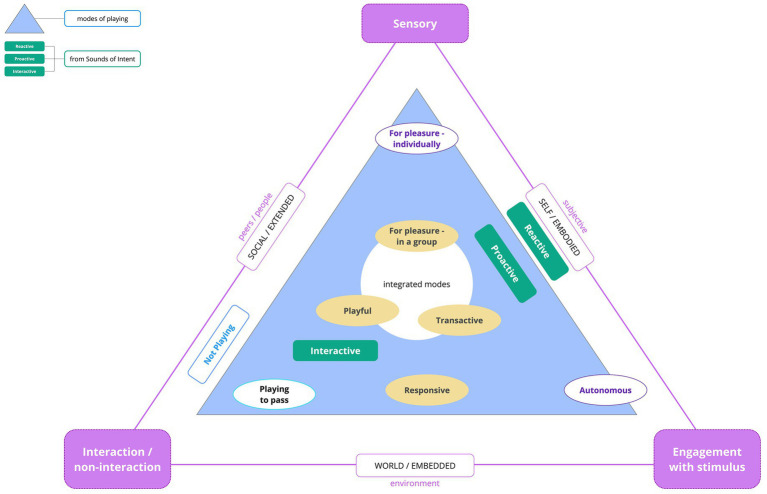 Figure 1
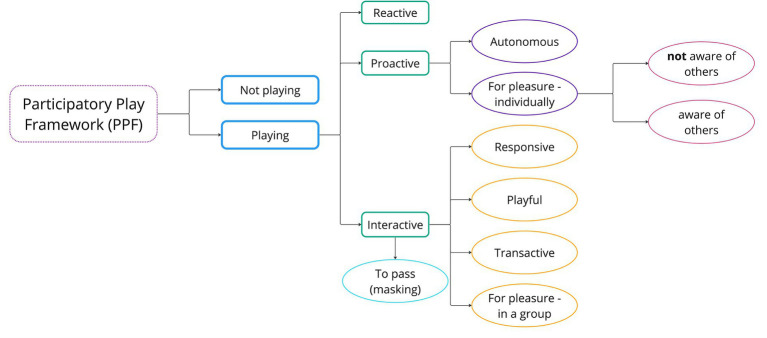 Figure 2
 Figure 3
Peer Reviews
No public reviews on file for this paper yet. If you reviewed it on a platform where reviews are public (OpenReview, ICLR, NeurIPS, ICML), you can paste yours below so the community can read it here.
Videos
No videos yet. Explain this paper in a talk, walkthrough, or lecture? Add one.
Taxonomy
TopicsMusic Therapy and Health · Art Therapy and Mental Health · Participatory Visual Research Methods