PERCEIVED AND PHYSIOLOGICAL STRAINS OF SOCIETAL PARTICIPATION IN PEOPLE WITH MULTIPLE SCLEROSIS: A REAL-TIME ASSESSMENT STUDY
Arianne S. GRAVESTEIJN, Maaike OUWERKERK, Isaline C.J.M. EIJSSEN, Heleen BECKERMAN, Vincent DE GROOT

TL;DR
This study found that perceived and physiological strain during daily activities in people with multiple sclerosis are not related, with fatigue being a key factor in perceived strain.
Contribution
The study is the first to show that perceived and physiological strain are unrelated in real-time societal participation among people with multiple sclerosis.
Findings
Perceived strain during societal participation ranged from low to moderate (3–6 on a 1–10 scale).
Physiological strain, measured as heart rate reserve, ranged from 18.5% to 33.2%.
Perceived and physiological strain were not significantly associated, even after adjusting for fatigue and mobility.
Abstract
To examine the relationship between perceived and physiological strains of real-time societal participation in people with multiple sclerosis. Observational study. 70 people with multiple sclerosis. Perceived and physiological strain of societal participation (10 participation-at-location and 9 transport domains) were measured in real time using the Whereabouts smartphone app and Fitbit over 7 consecutive days. Longitudinal relationships between perceived (1 not strenuous to 10 most strenuous) and physiological strains (heart rate reserve) were examined using mixed-model analyses. Type of event (participation-at-location or transport) was added as covariate, with further adjustments for fatigue and walking ability. Median perceived strain, summarized for all societal participation domains, varied between 3 and 6 (range: 1–10), whereas physiological strain varied between 18.5% and…
Genes, proteins, chemicals, diseases, species, mutations and cell lines named across the full text — each resolved to its canonical identifier and authoritative record.
Click any figure to enlarge with its caption.
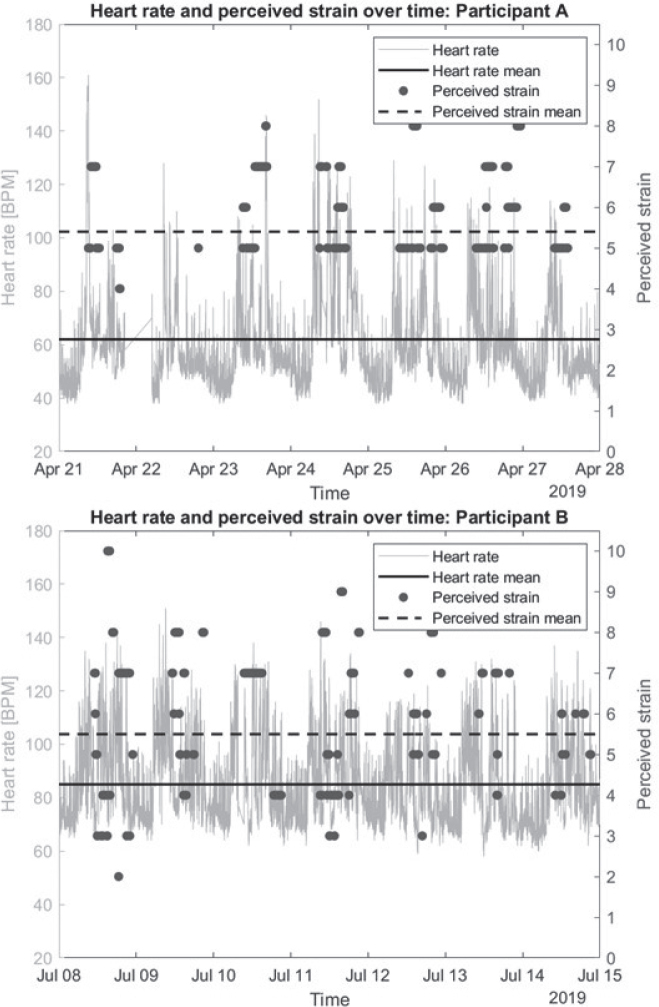 Figure 1
Peer Reviews
No public reviews on file for this paper yet. If you reviewed it on a platform where reviews are public (OpenReview, ICLR, NeurIPS, ICML), you can paste yours below so the community can read it here.
Videos
No videos yet. Explain this paper in a talk, walkthrough, or lecture? Add one.
Taxonomy
TopicsMultiple Sclerosis Research Studies