Double-Breasted Anterior Rectus Sheath Turnover Flap
Wen Yang Chung, Koh Siang Chai, Daphne Stephen, John Ranjit

TL;DR
A new surgical technique called the DART flap is used to successfully close an open abdomen in a cancer patient, avoiding complications.
Contribution
The DART flap is introduced as a novel, autologous method for early open abdomen closure.
Findings
The DART flap enabled tension-free closure without fistula or bowel perforation.
No hernia occurred during follow-up after using the DART flap.
The flap is a simple and effective option for open abdomen management.
Abstract
The management of the open abdomen follows wound management with temporary abdominal closure prior to definitive closure while concurrently managing patient nutrient and fluid losses. This case report describes the successful use of double-breasted anterior rectus sheath turnover (DART) flap for early open abdomen closure to facilitate oncological management. The patient is a 47-year-old female with uterine smooth muscle neoplasm whose laparotomy wound was complicated with abdominal wound dehiscence and intra-abdominal infection. The abdomen could be closed with no fistula formation, iatrogenic bowel perforations, or overlying skin necrosis, and a follow-up showed no hernia occurrence. In conclusion, the DART flap provides a simple and autologous option for early tension-free midline closure of the open abdomen with acceptable intra- and postoperative complications.
Genes, proteins, chemicals, diseases, species, mutations and cell lines named across the full text — each resolved to its canonical identifier and authoritative record.
Click any figure to enlarge with its caption.
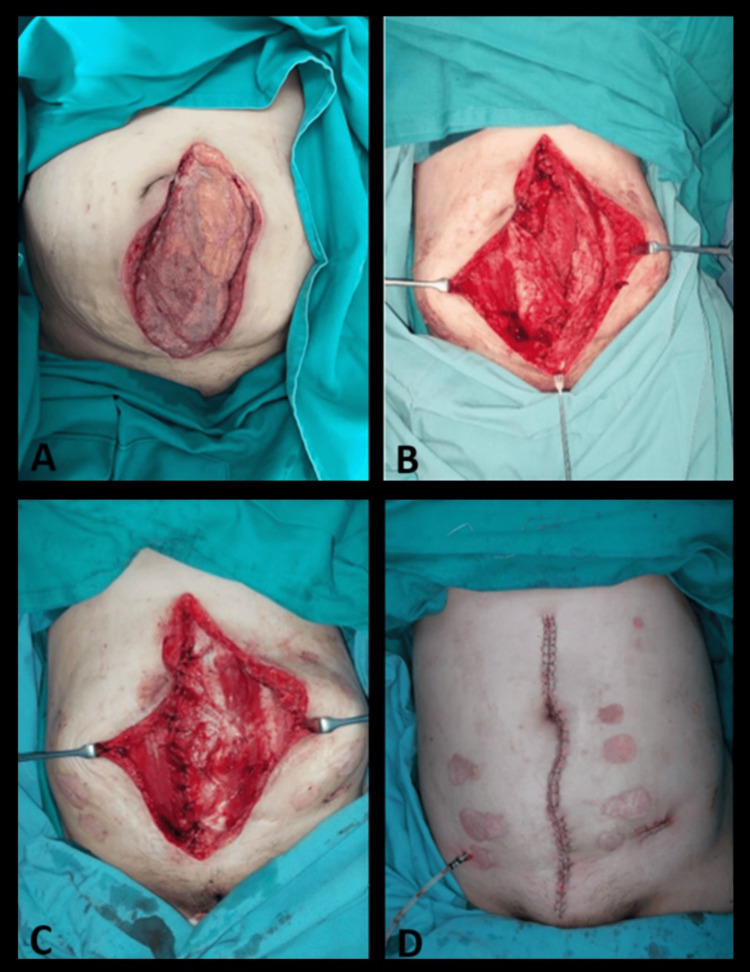 Figure 1
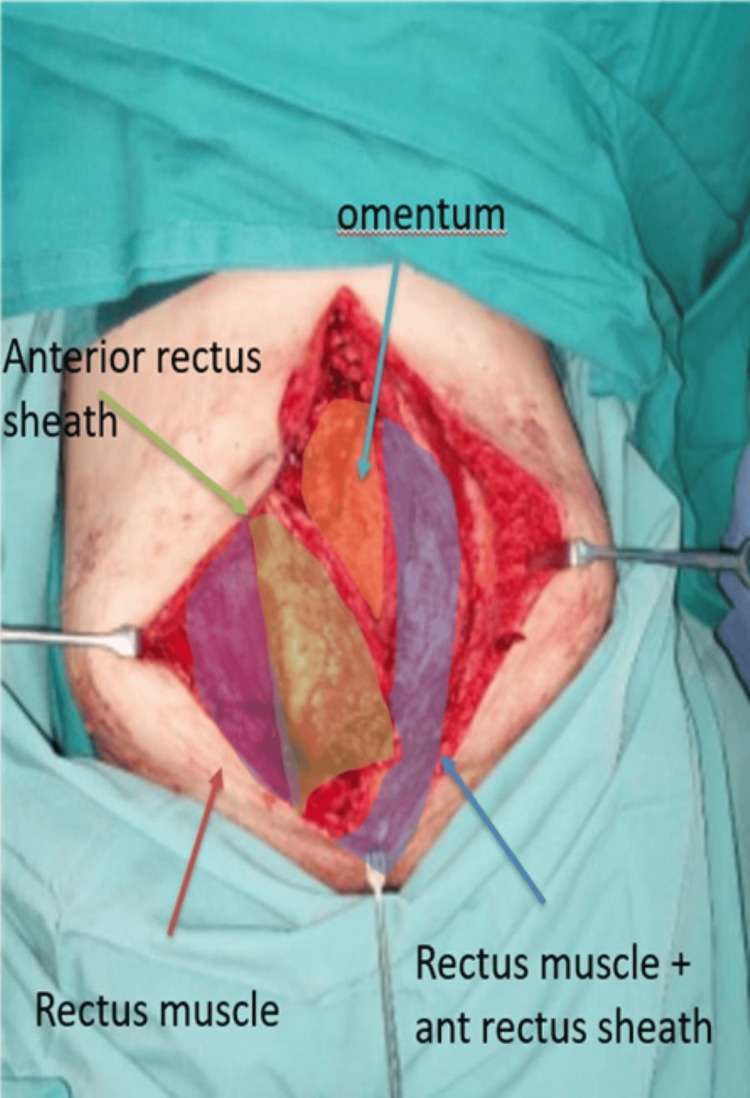 Figure 2
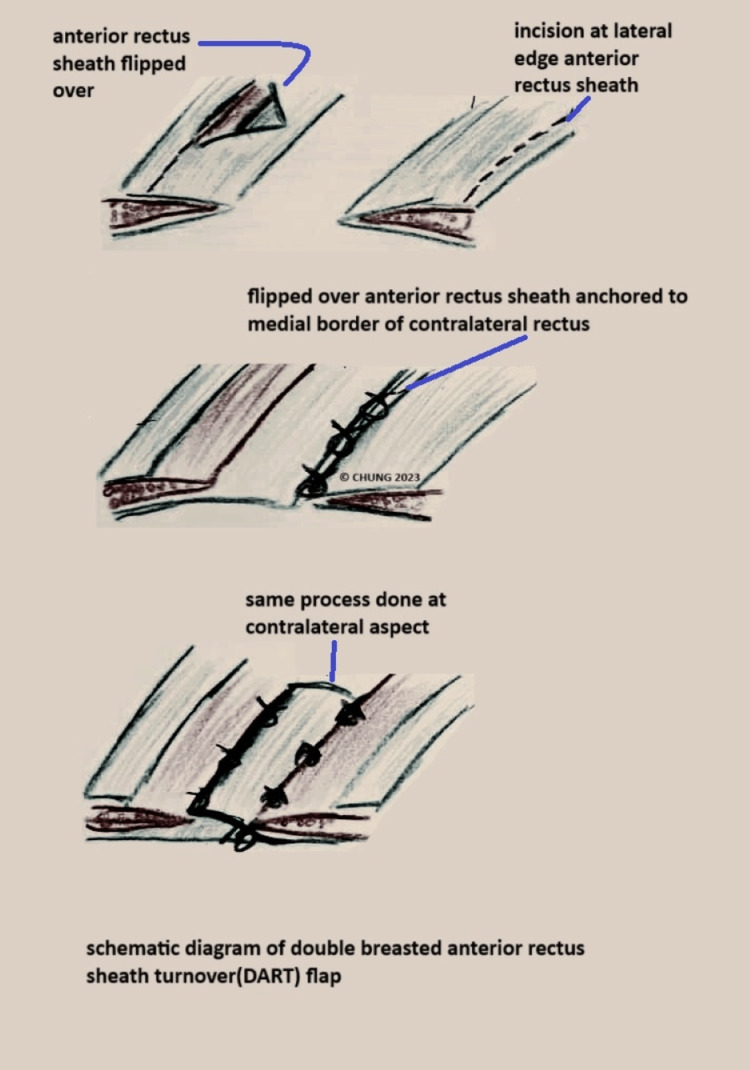 Figure 3
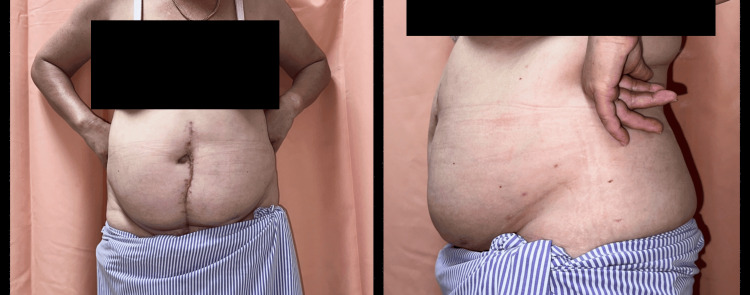 Figure 4
Peer Reviews
No public reviews on file for this paper yet. If you reviewed it on a platform where reviews are public (OpenReview, ICLR, NeurIPS, ICML), you can paste yours below so the community can read it here.
Videos
No videos yet. Explain this paper in a talk, walkthrough, or lecture? Add one.
Taxonomy
TopicsReconstructive Surgery and Microvascular Techniques · Surgical site infection prevention · Trauma Management and Diagnosis