Influence of PepF peptidase and sporulation on microcin J25 production in Bacillus subtilis
Guangwen Zhang, Saixiang Feng, Miaomiao Qin, Juan Sun, Yutong Liu, Changqi Luo, Min Lin, Siqi Xu, Ming Liao, Huiying Fan, Zhaoping Liang

TL;DR
This study shows how modifying peptidase PepF and sporulation in Bacillus subtilis can boost production of the antibacterial microcin J25.
Contribution
The study identifies PepF peptidase and sporulation as key factors limiting MccJ25 accumulation in B. subtilis and provides engineered strains with improved production.
Findings
Disruption of the pepF gene increases MccJ25 concentration to 1.68 µM in B. subtilis.
MccJ25 production downregulates sporulation-related genes in B. subtilis.
Engineered B. subtilis strains with ΔpepF and ΔsigF mutations improve MccJ25 stability and yield.
Abstract
The lasso peptide microcin J25 (MccJ25) possesses strong antibacterial properties and is considered a potential effective component of bacterial disease treatment drugs and safe food preservatives. Although MccJ25 can be heterologously expressed in Bacillus subtilis as we have previously reported, its regulation and accumulation are yet to be understood. Here, we investigated the expression level and stability of MccJ25 in B. subtilis strains with disruption in peptidase genes pepA, pepF, and pepT. Oligoendopeptidase F (PepF) was found to be involved in reduction of the production of MccJ25 by degradation of its precursor peptide. In the pepF mutant, the MccJ25 reached a concentration of 1.68 µM after a cultivation time exceeding 60 hours, while the wild-type strain exhibited a concentration of only 0.14 µM. Moreover, the production of MccJ25 in B. subtilis downregulated the genes…
Genes, proteins, chemicals, diseases, species, mutations and cell lines named across the full text — each resolved to its canonical identifier and authoritative record.
Click any figure to enlarge with its caption.
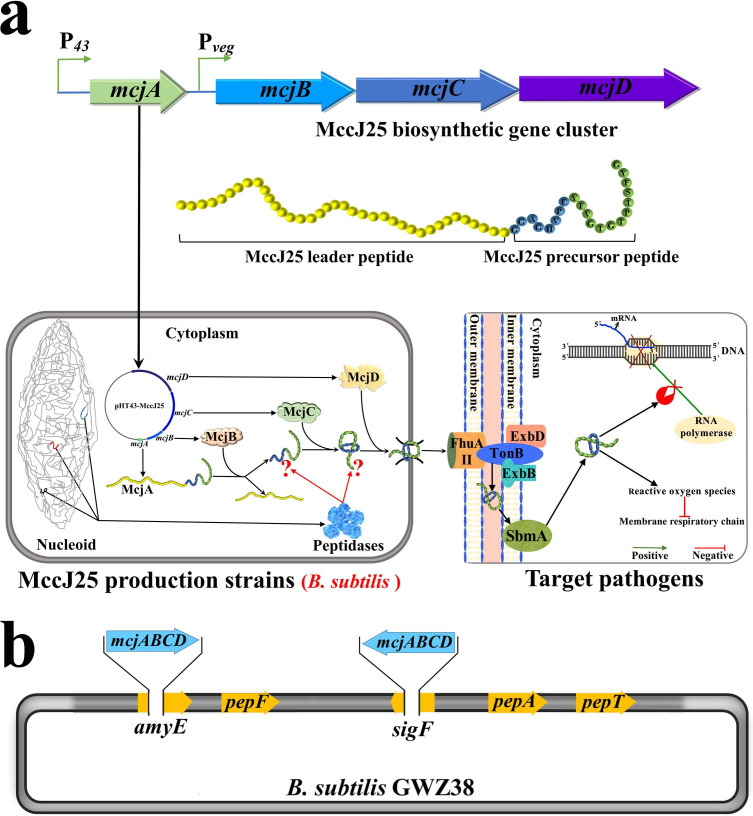 Figure 1
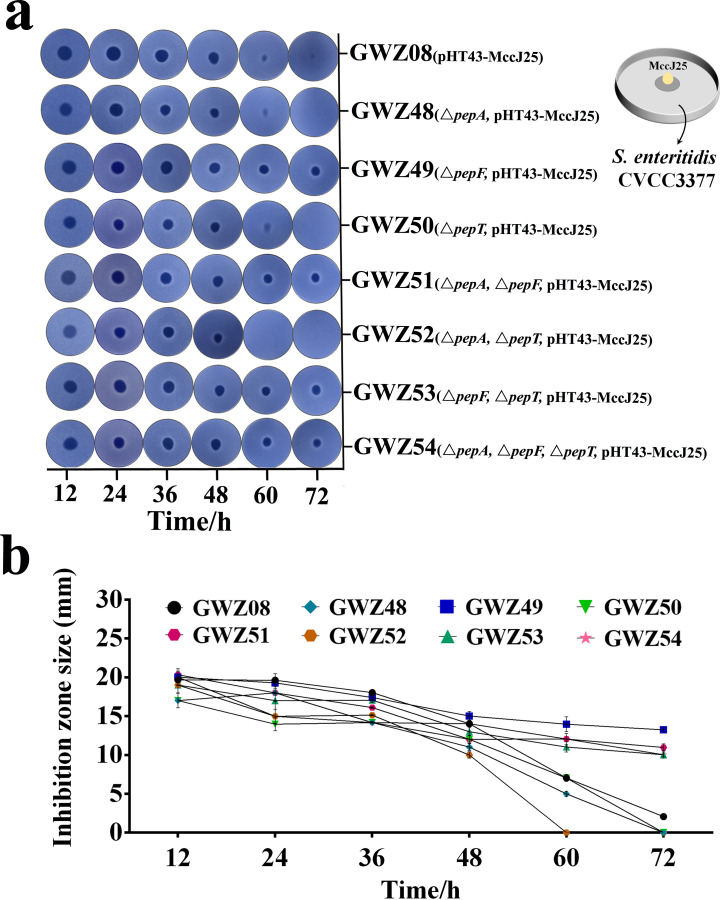 Figure 2
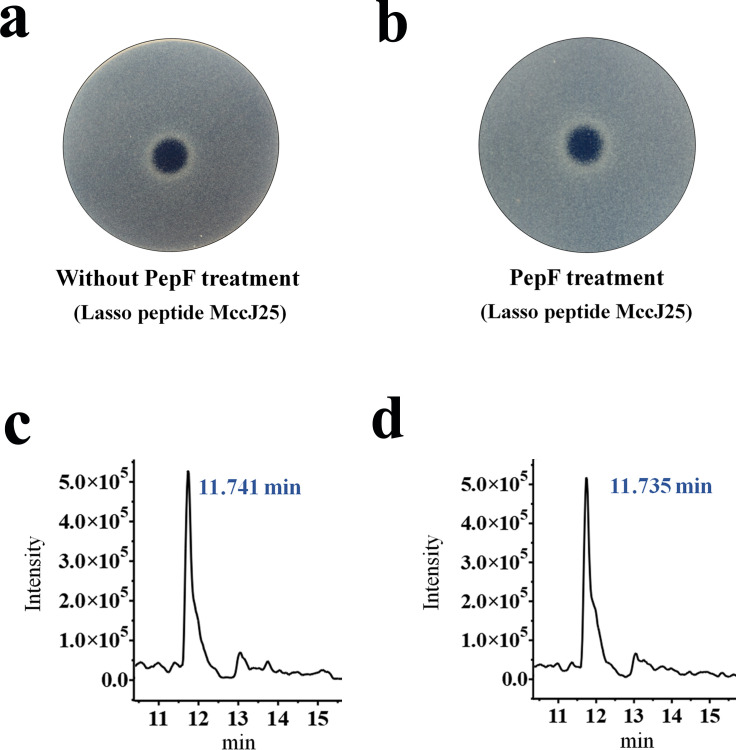 Figure 3
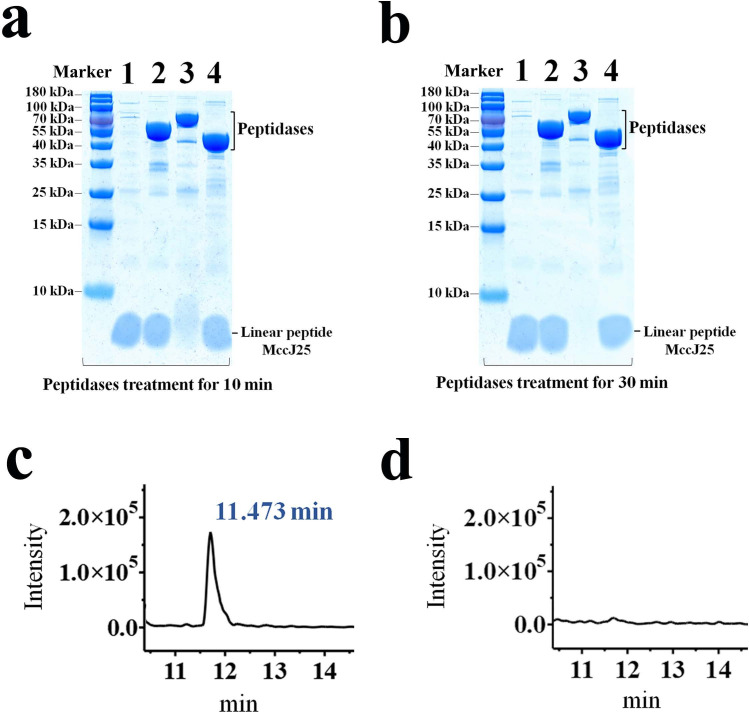 Figure 4
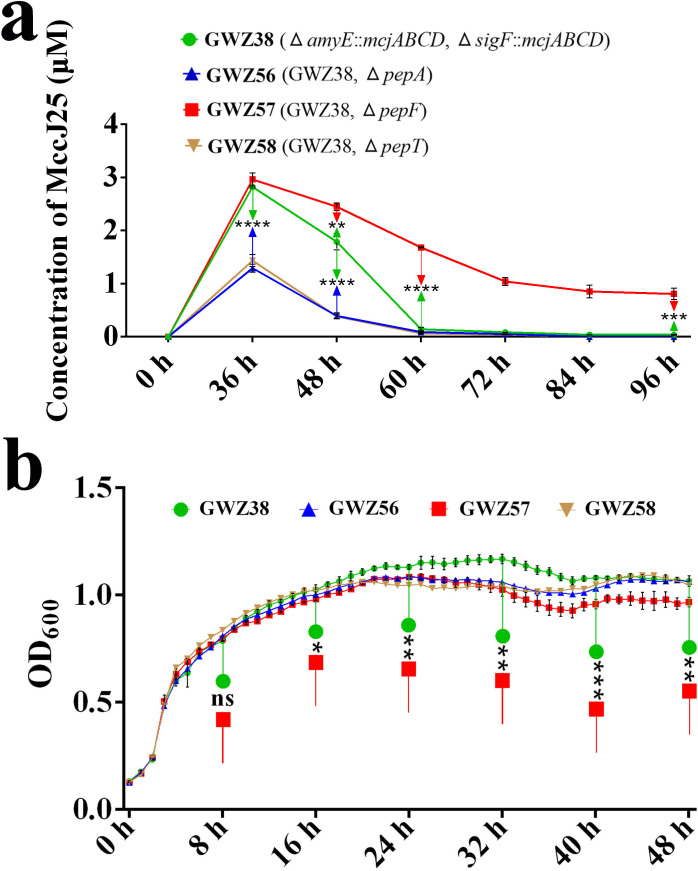 Figure 5
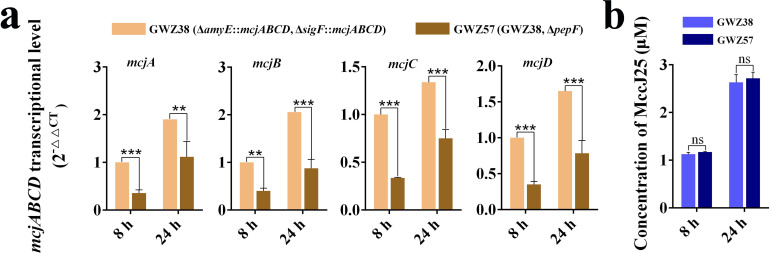 Figure 6
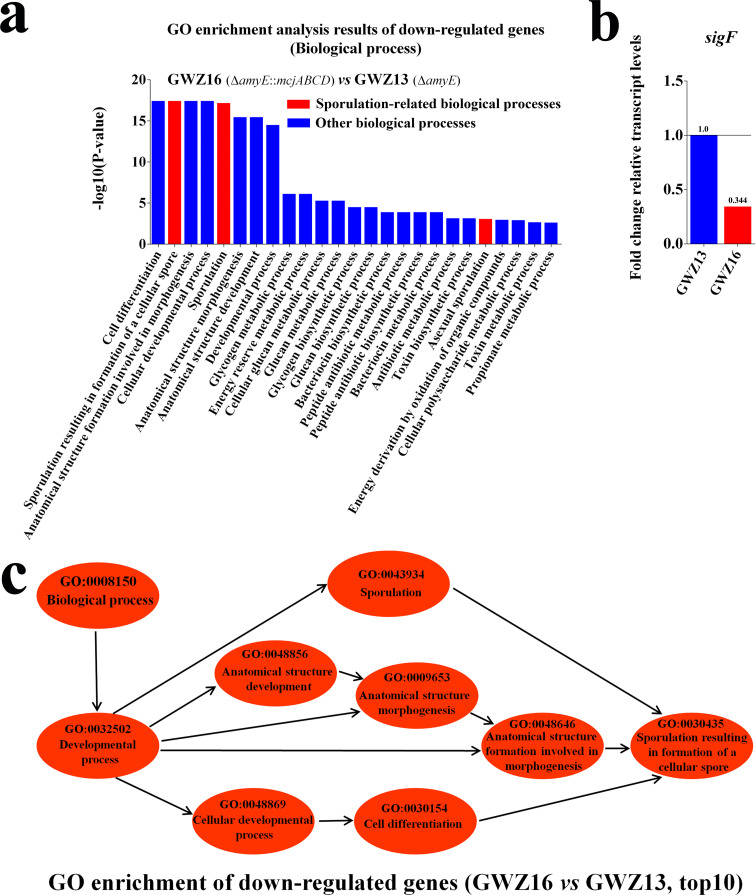 Figure 7
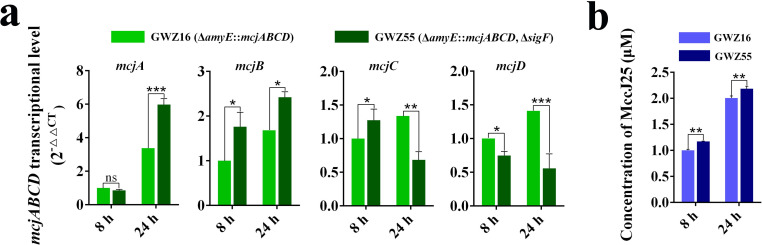 Figure 8
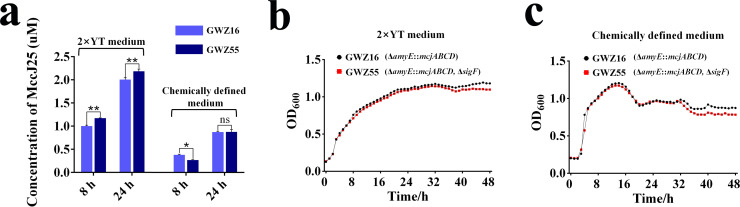 Figure 9
Peer Reviews
No public reviews on file for this paper yet. If you reviewed it on a platform where reviews are public (OpenReview, ICLR, NeurIPS, ICML), you can paste yours below so the community can read it here.
Videos
No videos yet. Explain this paper in a talk, walkthrough, or lecture? Add one.
Taxonomy
TopicsMicrobial Natural Products and Biosynthesis · Bacterial Genetics and Biotechnology · Genomics and Phylogenetic Studies