A challenging STEC strain isolation from patients’ stools: an O166:H15 STEC strain with the stx2 gene
Surangi H. Thilakarathna, Vincent Li, Linda Chui

TL;DR
A rare STEC strain, O166:H15 with the stx2 gene, was isolated from patients with gastroenteritis using a novel immunomagnetic separation method.
Contribution
A novel application of immunomagnetic separation for isolating a rare STEC strain from clinical stools is demonstrated.
Findings
The O166:H15 STEC strain with the stx2 gene was successfully isolated from patient stools using immunomagnetic separation.
Routine culture methods failed to recover the STEC strain, highlighting the need for alternative isolation techniques.
The isolated STEC strain showed distinct colony morphologies on different agar media over time.
Abstract
Two patients with acute gastroenteritis tested positive for Shiga toxin-producing Escherichia coli (STEC) by polymerase chain reaction (PCR), and both strains carried the Shiga toxin 2 encoding gene. Since routine culture using CHROMagar STEC failed to recover these isolates, immunomagnetic separation (IMS) targeting the top six non-O157:H7 serotypes was used for isolate recovery. After two subsequent IMS runs, the STEC strains were isolated from trypticase soy broth with and without overnight enrichment for runs 1 and 2, respectively. Serotyping based on whole-genome sequencing revealed that both patients carried the strain O166:H15 STEC with the stx2 gene. Hence, the magnetic beads used in IMS appeared to have cross-reactivity with other E. coli serotypes. When the STEC isolates from both stools were cultured on CHROMagar STEC and sheep blood agar (BAP), two distinct colony sizes were…
Genes, proteins, chemicals, diseases, species, mutations and cell lines named across the full text — each resolved to its canonical identifier and authoritative record.
Click any figure to enlarge with its caption.
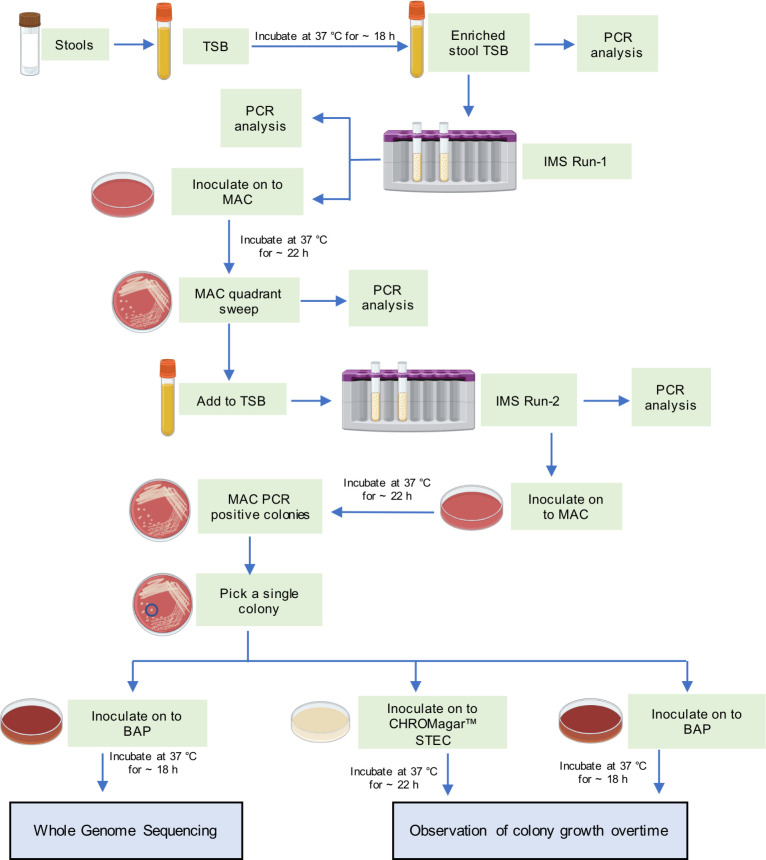 Figure 1
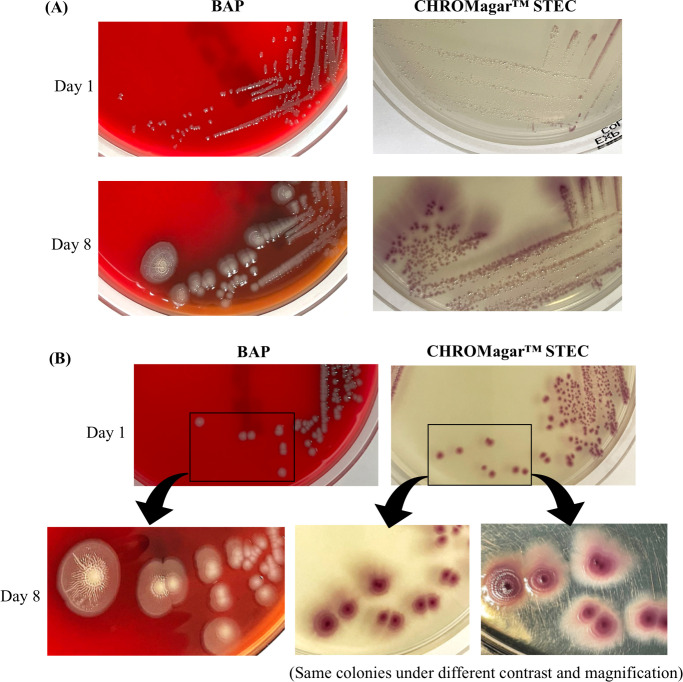 Figure 2
Peer Reviews
No public reviews on file for this paper yet. If you reviewed it on a platform where reviews are public (OpenReview, ICLR, NeurIPS, ICML), you can paste yours below so the community can read it here.
Videos
No videos yet. Explain this paper in a talk, walkthrough, or lecture? Add one.
Taxonomy
TopicsEscherichia coli research studies · Digestive system and related health · Helicobacter pylori-related gastroenterology studies