In vitro phenotypic susceptibility of HIV-1 non-group M to CCR5 inhibitor (maraviroc): TROPI-CO study
Ségolène Gracias, Ikrame El Yaalaoui, Benoît Visseaux, Charlotte Charpentier, Diane Descamps, Charlène Martin, Fanny Lermechain, Jean-Christophe Plantier, Elodie Alessandri-Gradt

TL;DR
This study examines how different HIV-1 non-M strains respond to maraviroc, a drug that blocks the CCR5 receptor, and finds that most are susceptible, but some show resistance based on their viral tropism.
Contribution
The study provides the first comprehensive analysis of maraviroc susceptibility across a large panel of HIV-1 non-M strains and introduces a novel cell-based phenotropism assay.
Findings
Most HIV-1/O strains showed high susceptibility to maraviroc with low IC50 values.
Two HIV-1/O strains exhibited lower susceptibility due to dual/mixed tropism.
The study emphasizes the importance of determining viral tropism before using maraviroc in non-M HIV-1 infections.
Abstract
The susceptibility of genetically divergent HIV-1 strains (HIV-1 non-M) from groups O, N, and P to the CCR5 co-receptor antagonist, maraviroc (MVC), was investigated among a large panel of 45 clinical strains, representative of the viral genetic diversity. The results were compared to the reference strains of HIV-1 group M (HIV-1/M) with known tropism. Among the non-M strains, a wide range of phenotypic susceptibilities to MVC were observed. The large majority of HIV-1/O strains (40/42) displayed a high susceptibility to MVC, with median and mean IC50 values of 1.23 and 1.33 nM, respectively, similar to the HIV-1/M R5 strain (1.89 nM). However, the two remaining HIV-1/O strains exhibited a lower susceptibility (IC50 at 482 and 496 nM), in accordance with their dual/mixed (DM) tropism. Interestingly, the two HIV-1/N strains demonstrated varying susceptibility patterns, despite always…
Genes, proteins, chemicals, diseases, species, mutations and cell lines named across the full text — each resolved to its canonical identifier and authoritative record.
Click any figure to enlarge with its caption.
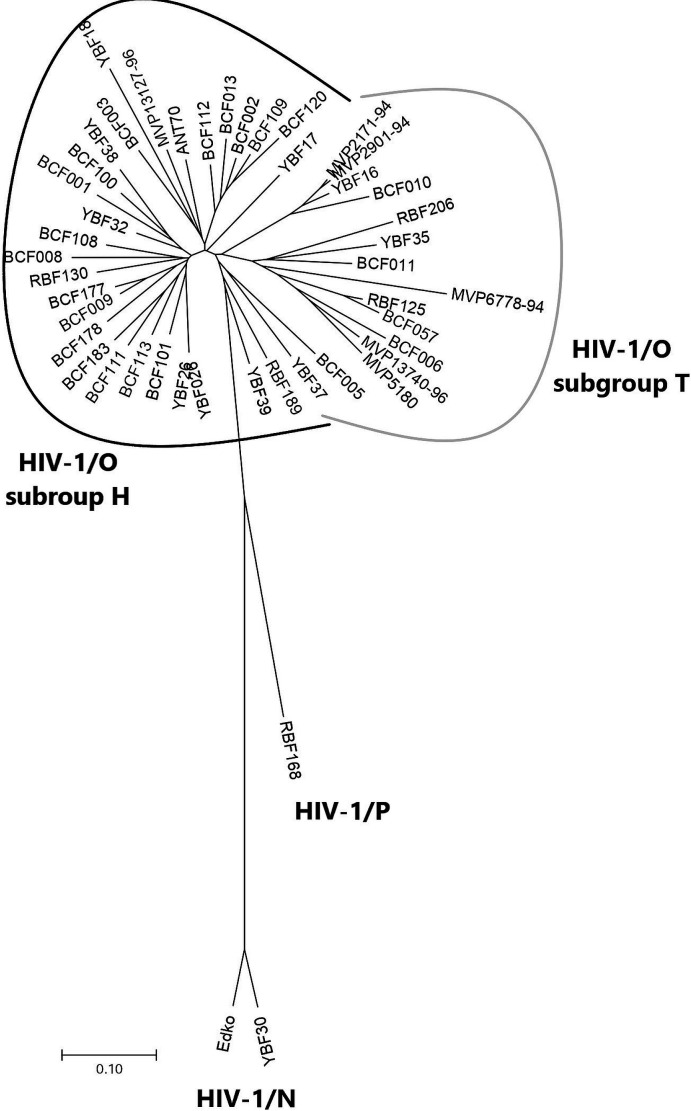 Figure 1
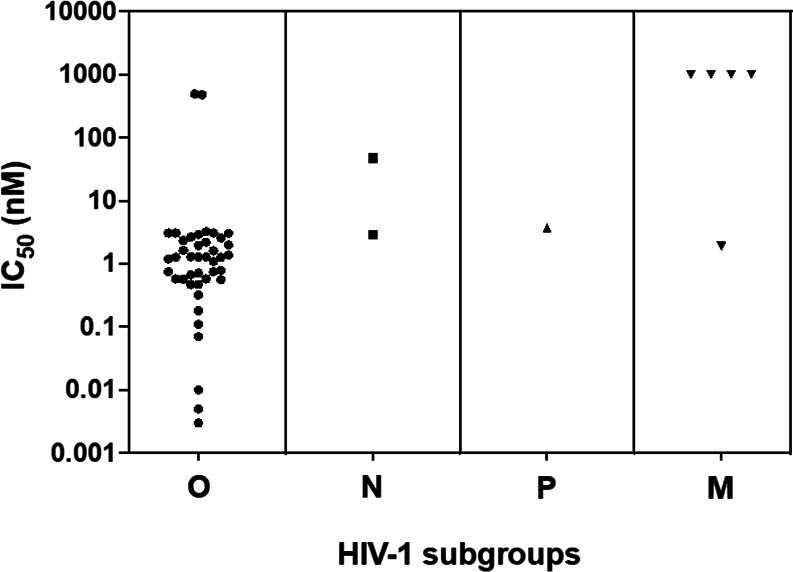 Figure 2
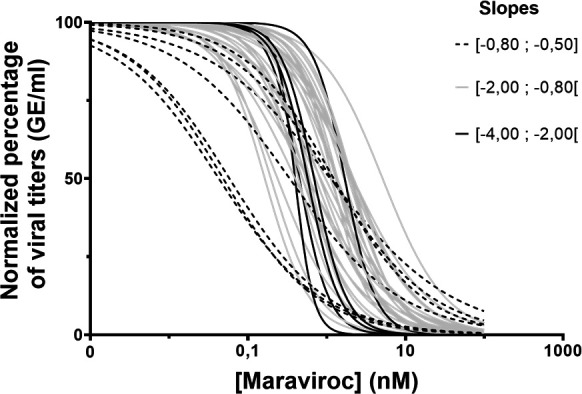 Figure 3
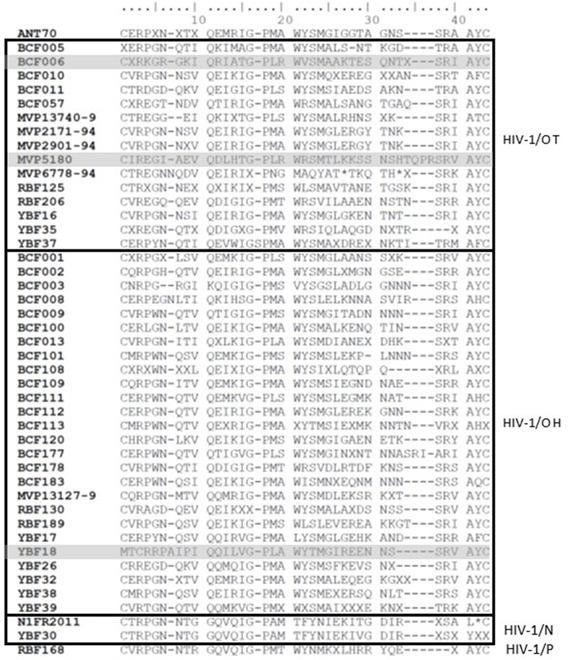 Figure 4
Peer Reviews
No public reviews on file for this paper yet. If you reviewed it on a platform where reviews are public (OpenReview, ICLR, NeurIPS, ICML), you can paste yours below so the community can read it here.
Videos
No videos yet. Explain this paper in a talk, walkthrough, or lecture? Add one.
Taxonomy
TopicsHIV Research and Treatment · HIV/AIDS drug development and treatment · HIV/AIDS Research and Interventions