Base preference for inosine 3′-riboendonuclease activity of human endonuclease V: implications for cleavage of poly-A tails containing inosine
Kazuma Mitsuoka, Jung In Kim, Aya Yoshida, Akane Matsumoto, Narumi Aoki-Shioi, Shigenori Iwai, Isao Kuraoka

TL;DR
The study explores how human endonuclease V cleaves RNA containing inosine, revealing its role in maintaining RNA quality by targeting specific base preferences.
Contribution
The study identifies the base preference of hEndoV for cleaving RNA with inosine, providing new insight into its in vivo function.
Findings
hEndoV cleavage activity is highest with 2′-OH modification in ribose.
hEndoV shows specificity for adenine at the 3′-end of hypoxanthine at the cleavage site.
hEndoV recognizes and cleaves inosine on poly A tails to maintain RNA quality.
Abstract
Deamination of bases is a form of DNA damage that occurs spontaneously via the hydrolysis and nitrosation of living cells, generating hypoxanthine from adenine. E. coli endonuclease V (eEndoV) cleaves hypoxanthine-containing double-stranded DNA, whereas human endonuclease V (hEndoV) cleaves hypoxanthine-containing RNA; however, hEndoV in vivo function remains unclear. To date, hEndoV has only been examined using hypoxanthine, because it binds closely to the base located at the cleavage site. Here, we examined whether hEndoV cleaves other lesions (e.g., AP site, 6-methyladenine, xanthine) to reveal its function and whether 2′-nucleoside modification affects its cleavage activity. We observed that hEndoV is hypoxanthine-specific; its activity was the highest with 2′-OH modification in ribose. The cleavage activity of hEndoV was compared based on its base sequence. We observed that it has…
Genes, proteins, chemicals, diseases, species, mutations and cell lines named across the full text — each resolved to its canonical identifier and authoritative record.
Click any figure to enlarge with its caption.
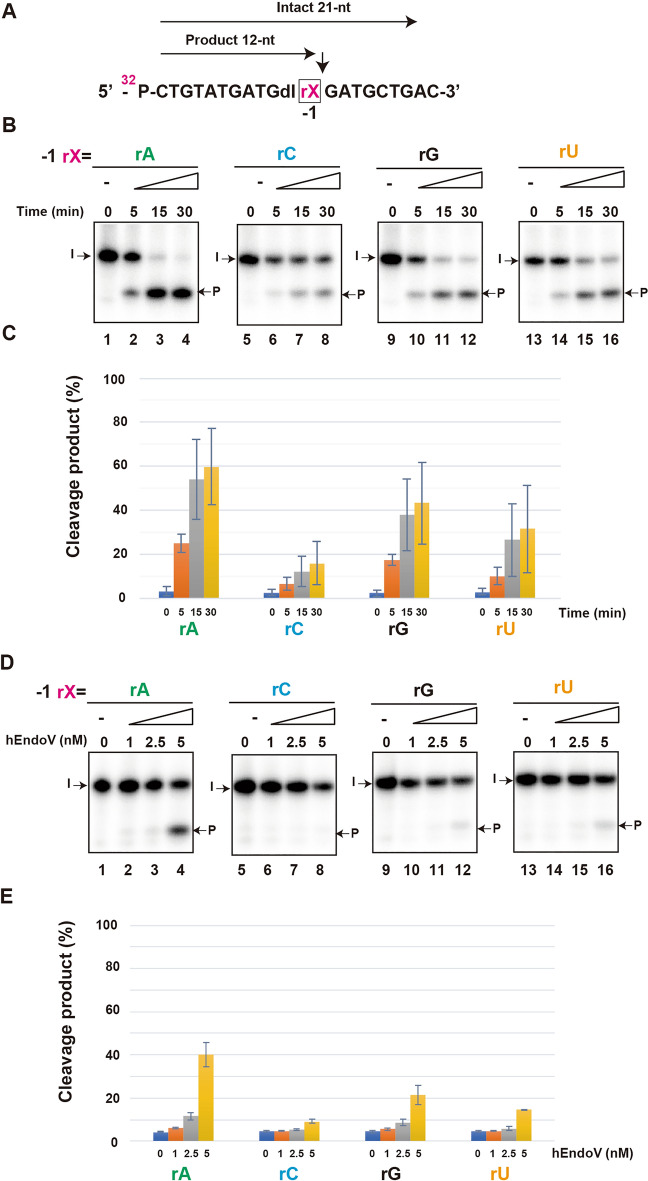 Figure 1
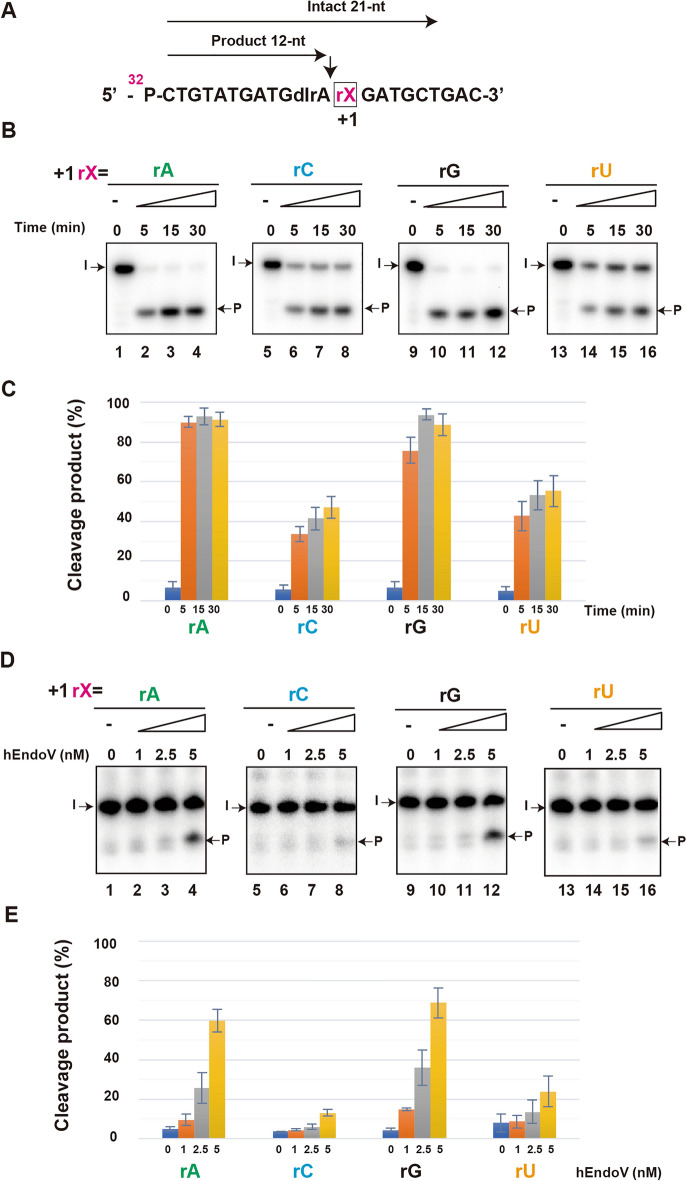 Figure 2
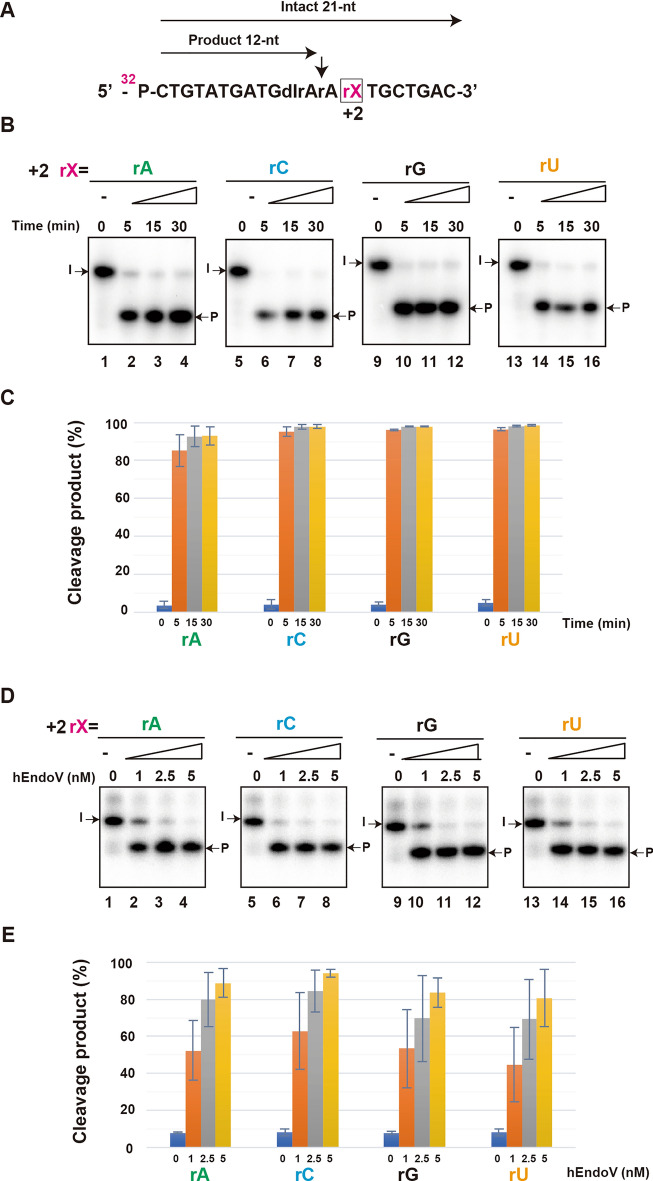 Figure 3
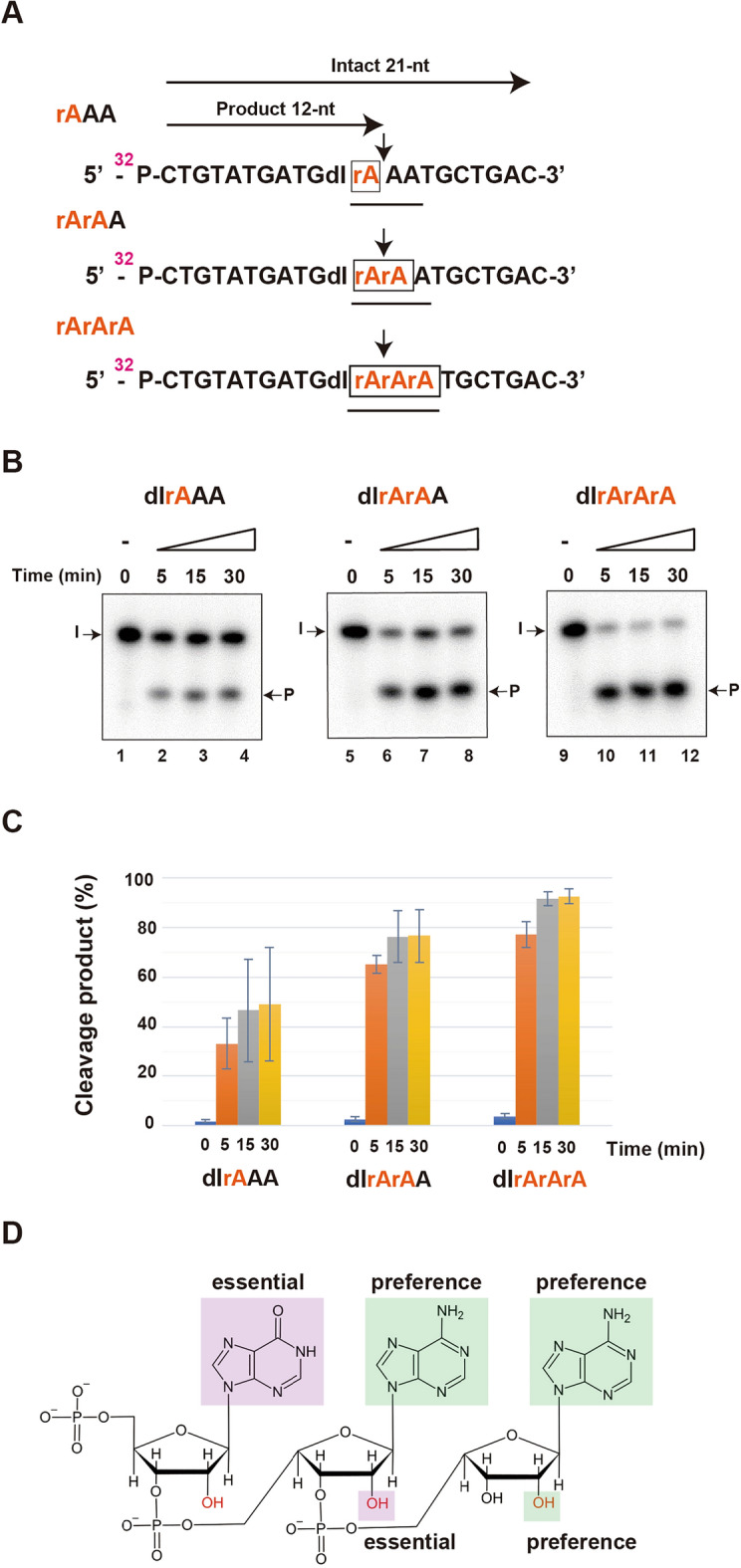 Figure 4
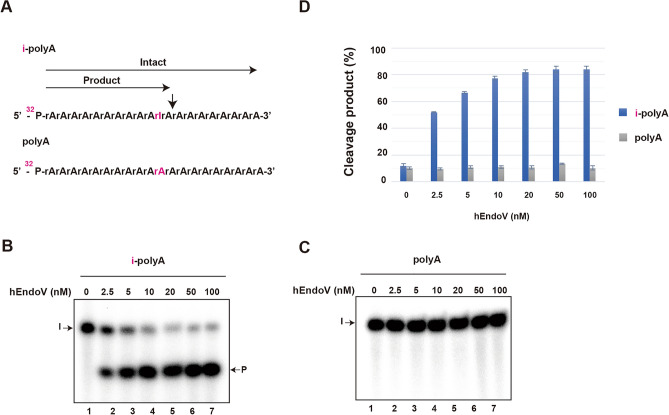 Figure 5
Peer Reviews
No public reviews on file for this paper yet. If you reviewed it on a platform where reviews are public (OpenReview, ICLR, NeurIPS, ICML), you can paste yours below so the community can read it here.
Videos
No videos yet. Explain this paper in a talk, walkthrough, or lecture? Add one.
Taxonomy
TopicsRNA regulation and disease · Cytomegalovirus and herpesvirus research · Viral Infections and Immunology Research