Effects of Serial Multiple Exemplar Training on Bidirectional Naming in Children with Autism
Roy Salomonsen, Sigmund Eldevik

TL;DR
This study shows that a specific training method can help children with autism learn to name objects both ways, improving communication skills.
Contribution
The study introduces serial multiple exemplar training as a promising method for achieving bidirectional naming in children with autism.
Findings
Three out of four children met the mastery criterion for bidirectional naming after training.
The fourth child showed improved performance, suggesting potential for the method.
Generalization of bidirectional naming was observed across settings and people.
Abstract
This study examined the effect of a serial multiple exemplar training (S-MET) procedure on bidirectional naming (BiN) in four preschool children diagnosed with autism spectrum disorder (ASD). A non-concurrent multiple baseline design was used to evaluate the effects of training listener and speaker behavior for one stimulus at a time until BiN occurred. When BiN occurred, probes were conducted to measure whether generalization occurred across settings and people. Three out of four participants’ responding met the mastery criterion for BiN, while the fourth participant improved her performance. The results of this study suggest that S-MET may be a promising intervention and contribute to our knowledge about learning histories required for BiN.
Genes, proteins, chemicals, diseases, species, mutations and cell lines named across the full text — each resolved to its canonical identifier and authoritative record.
Click any figure to enlarge with its caption.
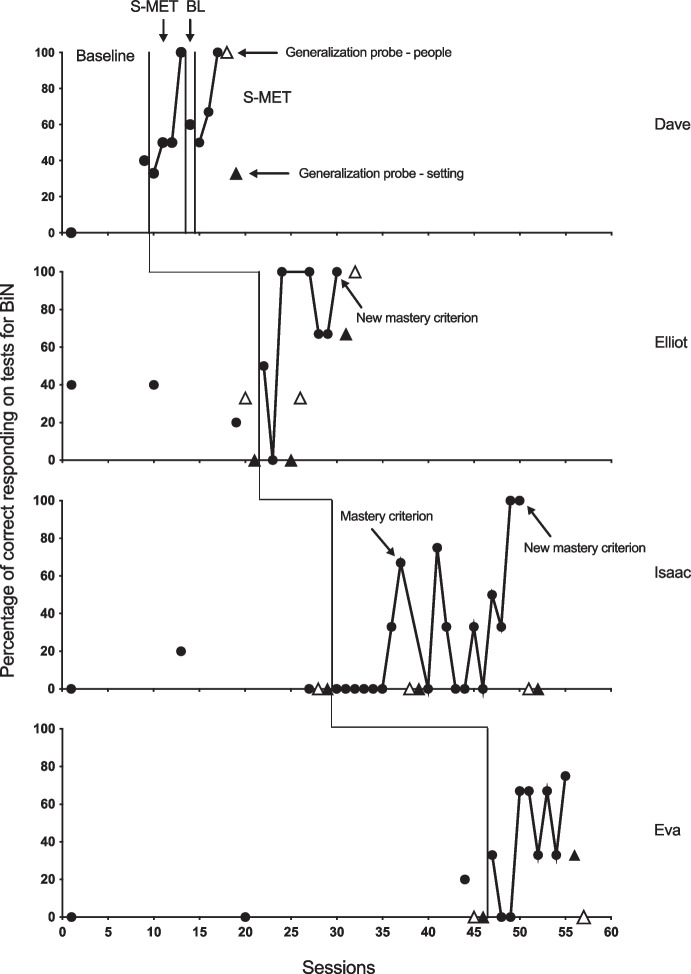 Figure 1
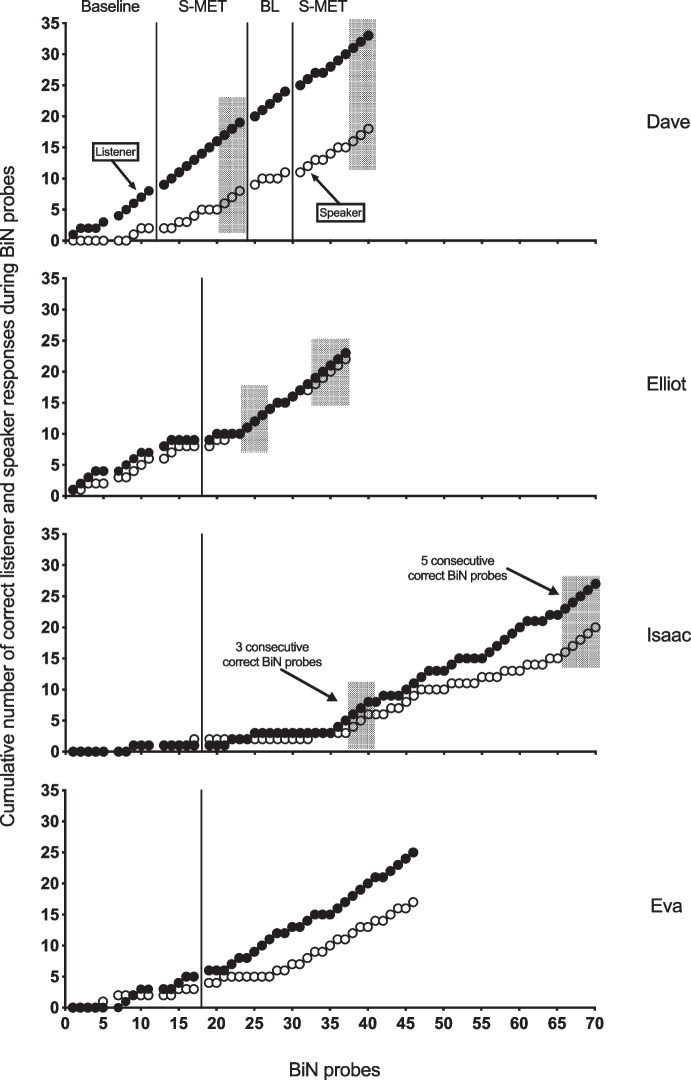 Figure 2
Peer Reviews
No public reviews on file for this paper yet. If you reviewed it on a platform where reviews are public (OpenReview, ICLR, NeurIPS, ICML), you can paste yours below so the community can read it here.
Videos
No videos yet. Explain this paper in a talk, walkthrough, or lecture? Add one.
Taxonomy
TopicsBehavioral and Psychological Studies · Autism Spectrum Disorder Research · Language Development and Disorders