Complement C3a/C3aR and C5a/C5aR deposits accelerate the progression of advanced IgA nephropathy to end-stage renal disease
Ying Wang, Shunlai Shang, Shimin Jiang, Guming Zou, Hongmei Gao, Wenge Li

TL;DR
This study finds that deposits of complement components C3a/C3aR and C5a/C5aR in advanced IgA nephropathy patients are linked to faster progression to kidney failure.
Contribution
The study identifies a novel association between complement C3a/C3aR and C5a/C5aR deposits and progression to end-stage renal disease in stage 4 IgA nephropathy.
Findings
Higher C3a, C3aR, C5a, and C5aR expression was observed in patients who progressed to ESRD.
C3a/C3aR and C5a/C5aR deposits correlated with lower eGFR and faster kidney function decline.
C3a and C5a deposits were associated with higher histological scores in IgA nephropathy.
Abstract
IgA nephropathy (IgAN) is still one of the leading causes of end-stage kidney disease (ESRD), and complement system activation is a key to the pathogenesis of IgAN. The role of complement C3a/C3aR and C5a/C5aR in late stage of IgAN remains unknown. Renal specimens of 75 IgAN patients at the stage 4 CKD were stained using immunofluorescence and immunohistochemistry. The primary outcome was a composite of end-stage renal disease (ESRD) and death. Associations of complement components with baseline clinicopathological characteristics and outcomes were assessed using multivariable Cox regression and Spearman analyses. During a median follow-up of 15.0 months, 27 patients progressed to ESRD and none died. Lower eGFR [hazards ratio (HR), 0.827, 95% confidence interval (CI), 0.732–0.935; P = 0.002] and glomerular C3 deposition (HR, 3.179, 95% CI, 1.079–9.363; P = 0.036) were predictive of time…
Genes, proteins, chemicals, diseases, species, mutations and cell lines named across the full text — each resolved to its canonical identifier and authoritative record.
Click any figure to enlarge with its caption.
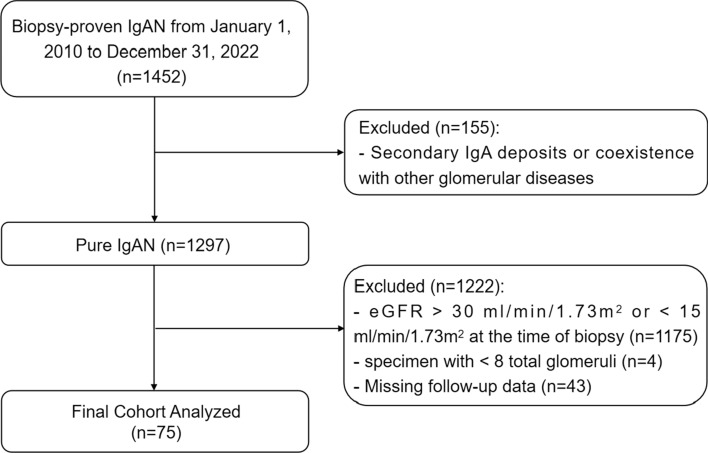 Figure 1
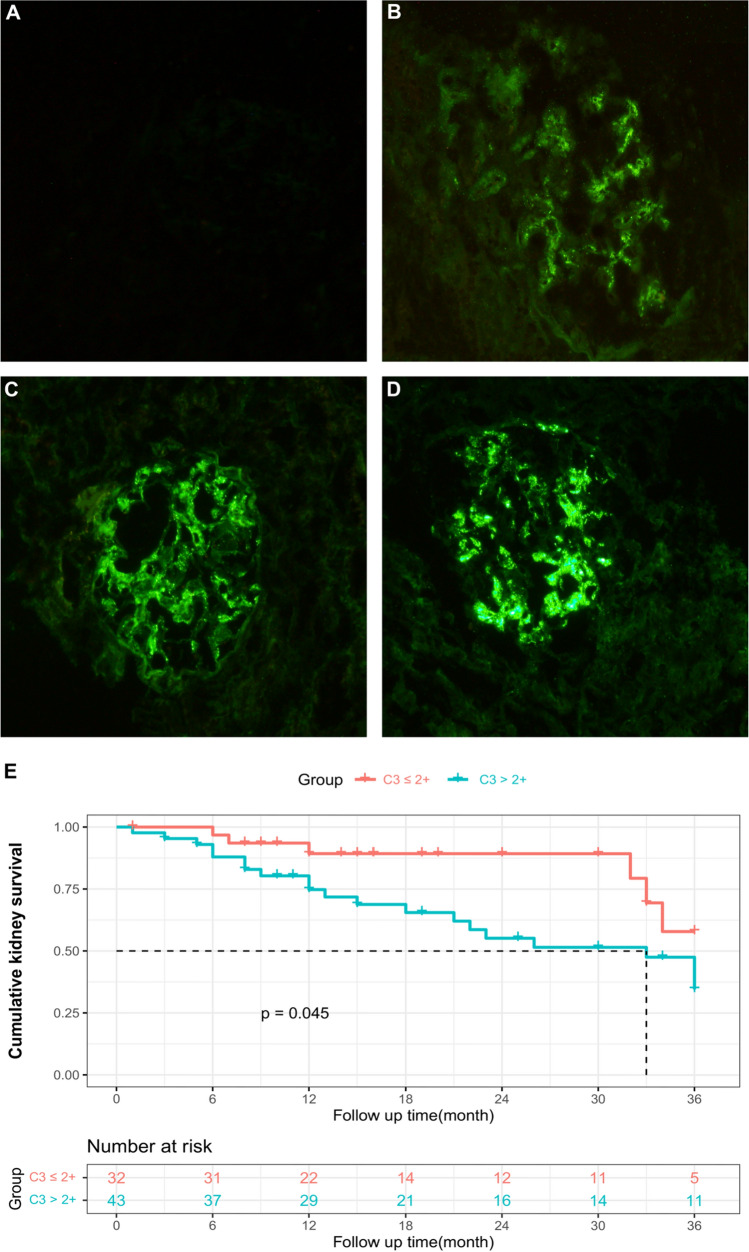 Figure 2
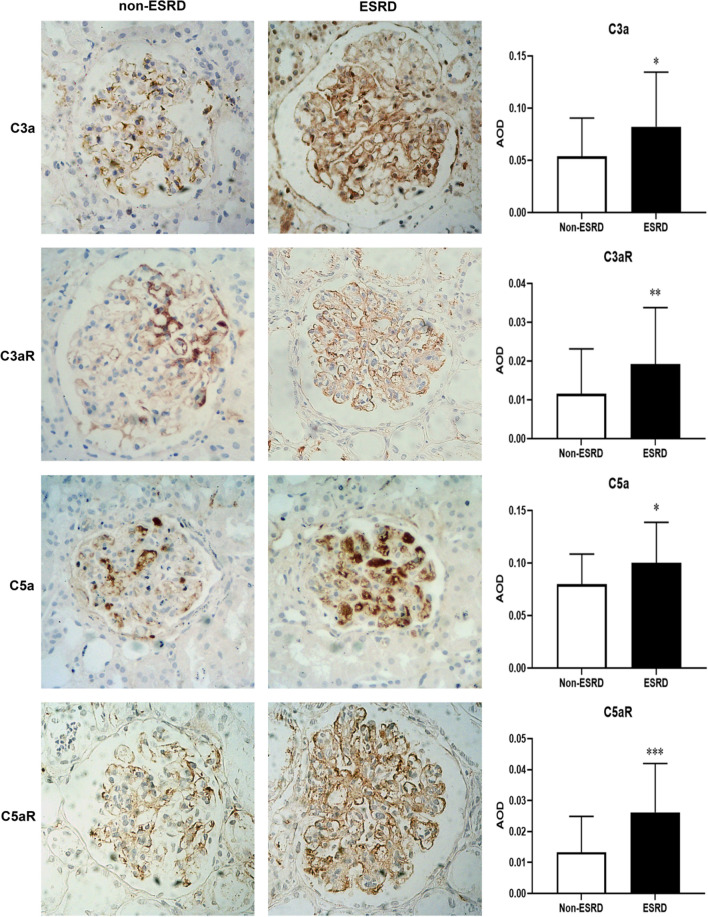 Figure 3
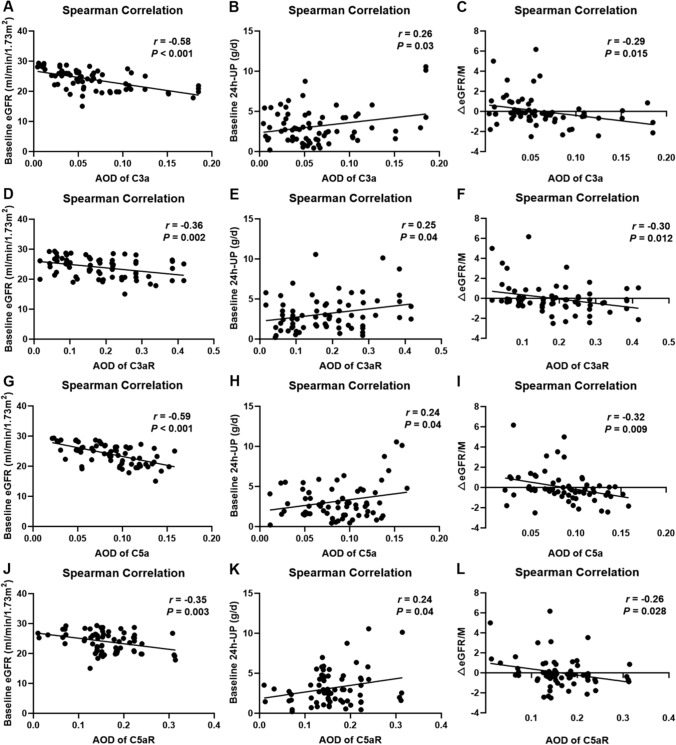 Figure 4
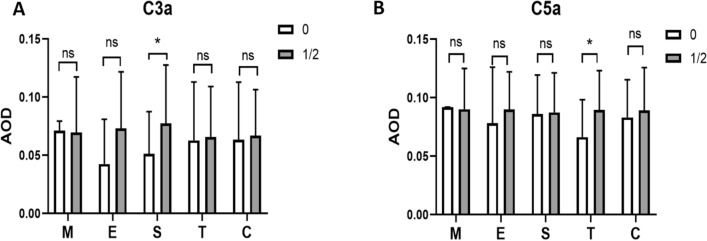 Figure 5
Peer Reviews
No public reviews on file for this paper yet. If you reviewed it on a platform where reviews are public (OpenReview, ICLR, NeurIPS, ICML), you can paste yours below so the community can read it here.
Videos
No videos yet. Explain this paper in a talk, walkthrough, or lecture? Add one.
Taxonomy
TopicsComplement system in diseases · Renal Diseases and Glomerulopathies · Blood groups and transfusion