Is allostery a fuzzy concept?
Veronica Morea, Francesco Angelucci, Andrea Bellelli

TL;DR
This review discusses how the concept of allostery in proteins is ambiguous due to multiple definitions and unclear criteria for assigning reaction mechanisms.
Contribution
The paper clarifies criteria for assigning reaction mechanisms to allosteric proteins and emphasizes the need for structural analysis.
Findings
Allostery is used in multiple ways in literature, including regulation by heterotropic ligands and cooperativity in ligand binding.
Proteins considered allosteric may follow various mechanisms beyond the two-state model, such as ligand-induced fit or dissociation-association.
Reaction mechanism assignment is often imprecise without sufficient experimental evidence.
Abstract
Allostery is an important property of biological macromolecules which regulates diverse biological functions such as catalysis, signal transduction, transport, and molecular recognition. However, the concept was expressed using two different definitions by J. Monod and, over time, more have been added by different authors, making it fuzzy. Here, we reviewed the different meanings of allostery in the current literature and found that it has been used to indicate that the function of a protein is regulated by heterotropic ligands, and/or that the binding of ligands and substrates presents homotropic positive or negative cooperativity, whatever the hypothesized or demonstrated reaction mechanism might be. Thus, proteins defined to be allosteric include not only those that obey the two‐state concerted model, but also those that obey different reaction mechanisms such as ligand‐induced fit,…
Genes, proteins, chemicals, diseases, species, mutations and cell lines named across the full text — each resolved to its canonical identifier and authoritative record.
Click any figure to enlarge with its caption.
 Figure 1
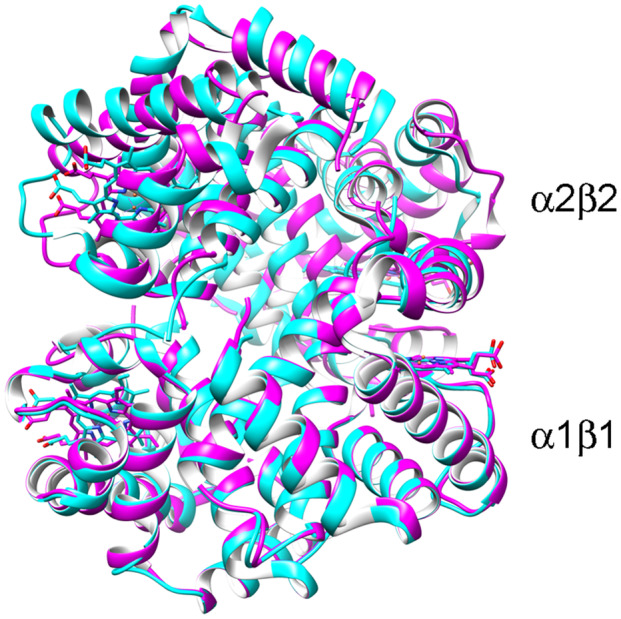 Figure 2
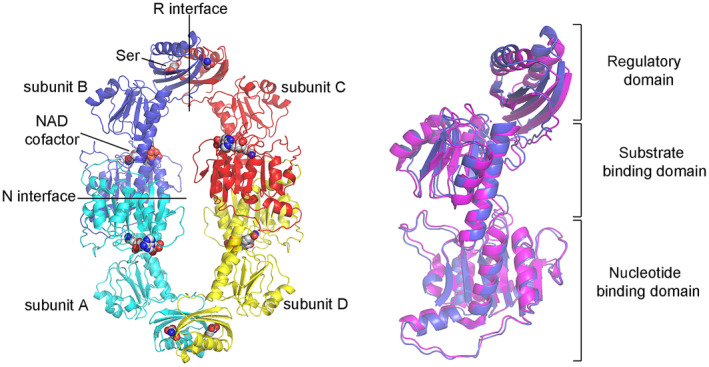 Figure 3
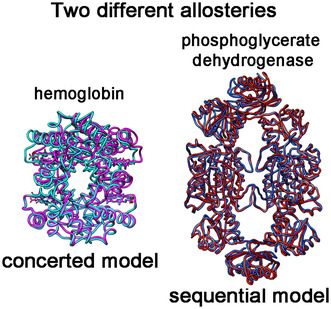 Figure 4
Peer Reviews
No public reviews on file for this paper yet. If you reviewed it on a platform where reviews are public (OpenReview, ICLR, NeurIPS, ICML), you can paste yours below so the community can read it here.
Videos
No videos yet. Explain this paper in a talk, walkthrough, or lecture? Add one.
Taxonomy
TopicsBiotin and Related Studies · Protein Structure and Dynamics · Computational Drug Discovery Methods