Decoding human in vitro terminal erythropoiesis originating from umbilical cord blood mononuclear cells and pluripotent stem cells
Xiaoling Wang, Wei Zhang, Siqi Zhao, Hao Yan, Zijuan Xin, Tiantian Cui, Ruge Zang, Lingping Zhao, Haiyang Wang, Junnian Zhou, Xuan Li, Wen Yue, Jiafei Xi, Zhaojun Zhang, Xiangdong Fang, Xuetao Pei

TL;DR
This study compares red blood cell development from cord blood and stem cells, identifying factors that hinder adult globin expression and maturation in stem cell-derived cells.
Contribution
The study provides a single-cell atlas of terminal erythropoiesis and identifies CD99high progenitors and regulators affecting globin expression and enucleation.
Findings
PSCE showed absent BCL11A and ZBTB7A, limiting adult globin expression.
CD99high cells are a proliferative subpopulation in erythroid progenitors.
TRIB3 agonists enhance adult globin expression in PSCE.
Abstract
Ex vivo red blood cell (RBC) production generates unsatisfactory erythroid cells. A deep exploration into terminally differentiated cells is required to understand the impairments for RBC generation and the underlying mechanisms. Here, we mapped an atlas of terminally differentiated cells from umbilical cord blood mononuclear cells (UCBMN) and pluripotent stem cells (PSC) and observed their dynamic regulation of erythropoiesis at single‐cell resolution. Interestingly, we detected a few progenitor cells and non‐erythroid cells from both origins. In PSC‐derived erythropoiesis (PSCE), the expression of haemoglobin switch regulators (BCL11A and ZBTB7A) were significantly absent, which could be the restraint for its adult globin expression. We also found that PSCE were less active in stress erythropoiesis than in UCBMN‐derived erythropoiesis (UCBE), and explored an agonist of stress…
Genes, proteins, chemicals, diseases, species, mutations and cell lines named across the full text — each resolved to its canonical identifier and authoritative record.
Click any figure to enlarge with its caption.
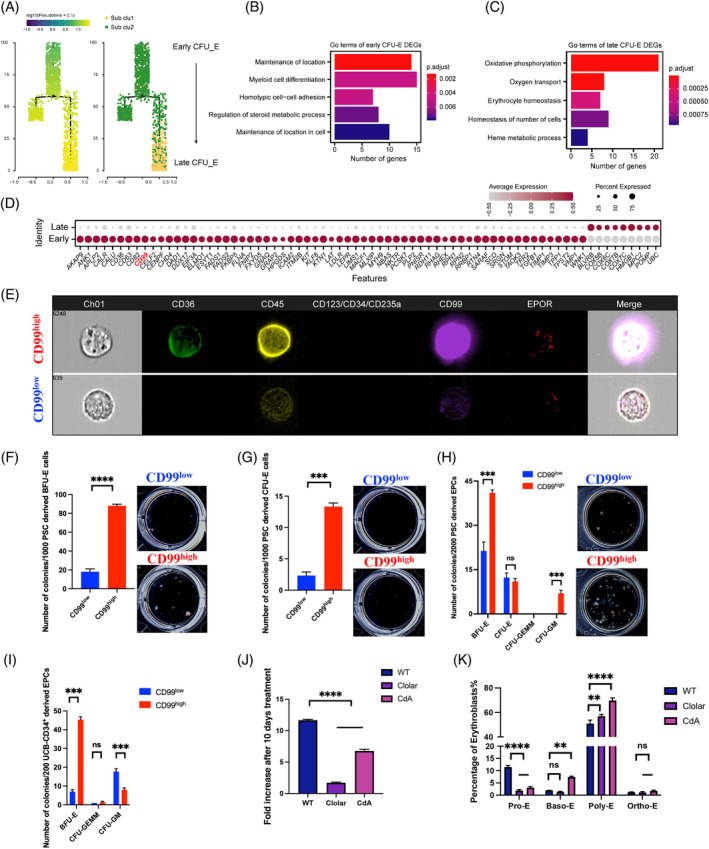 Figure 1
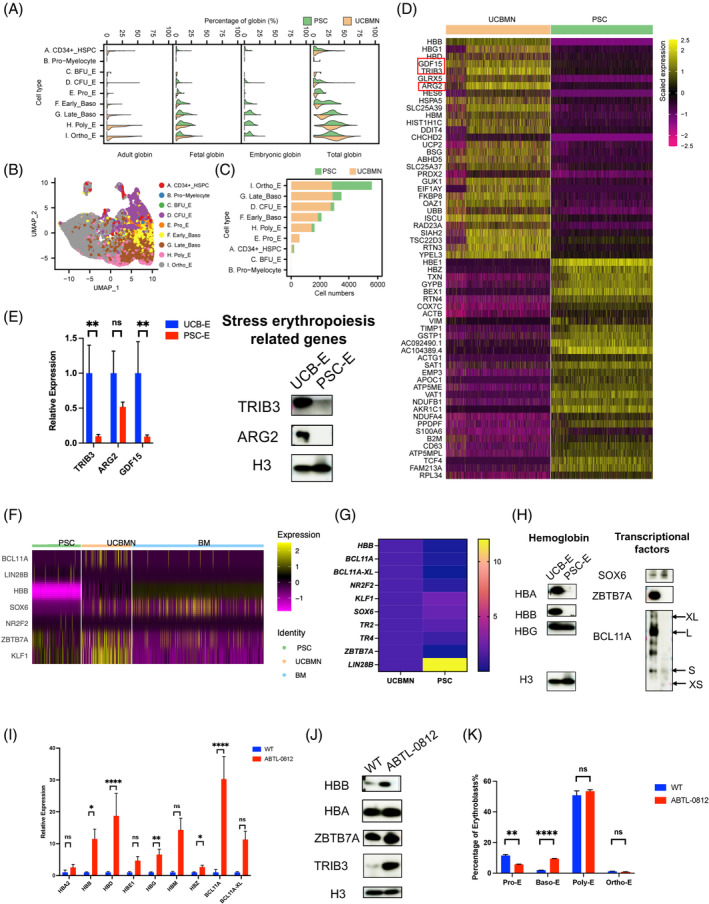 Figure 2
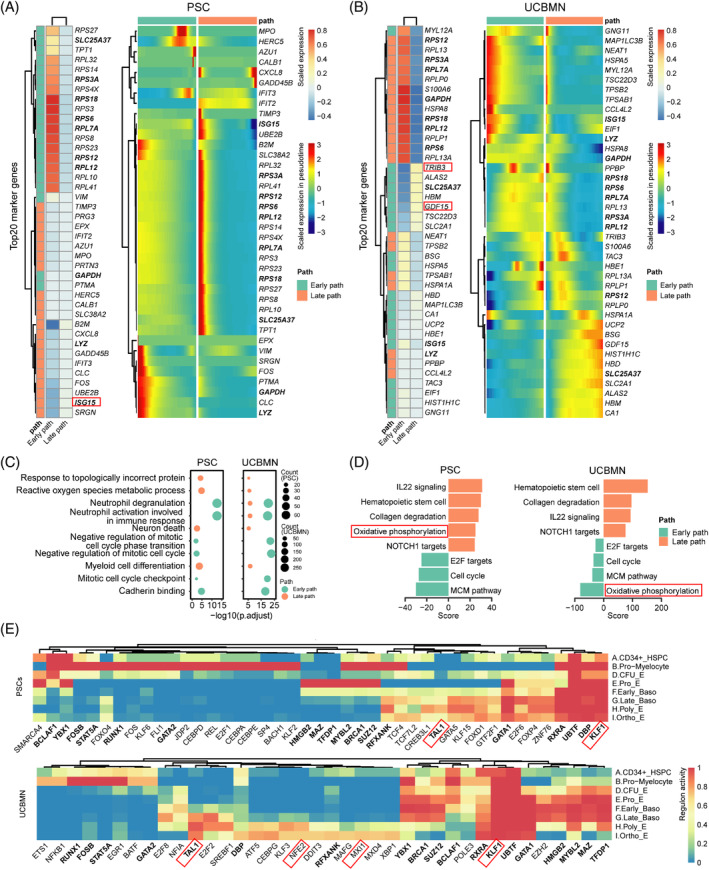 Figure 3
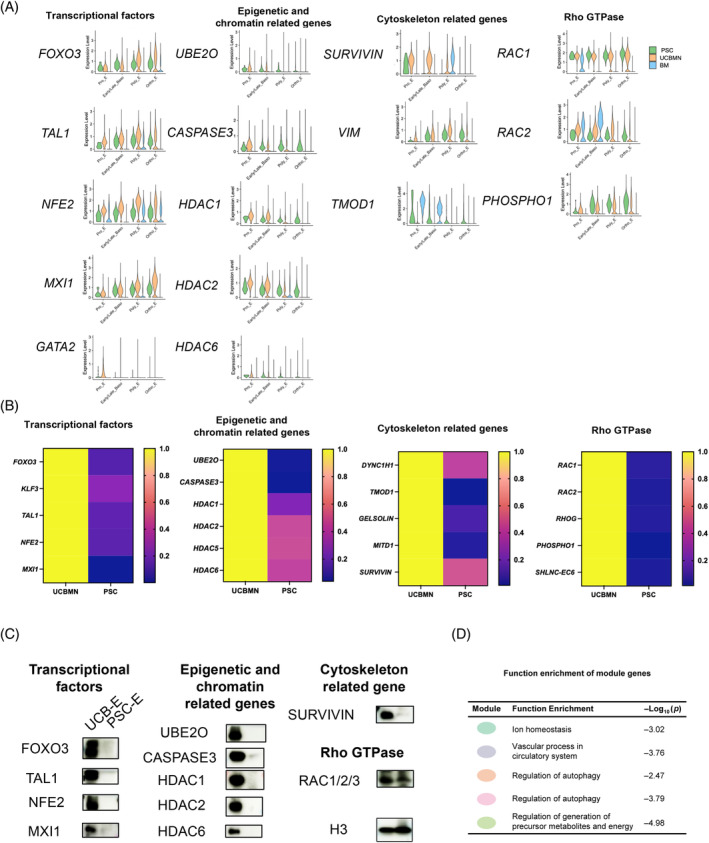 Figure 4
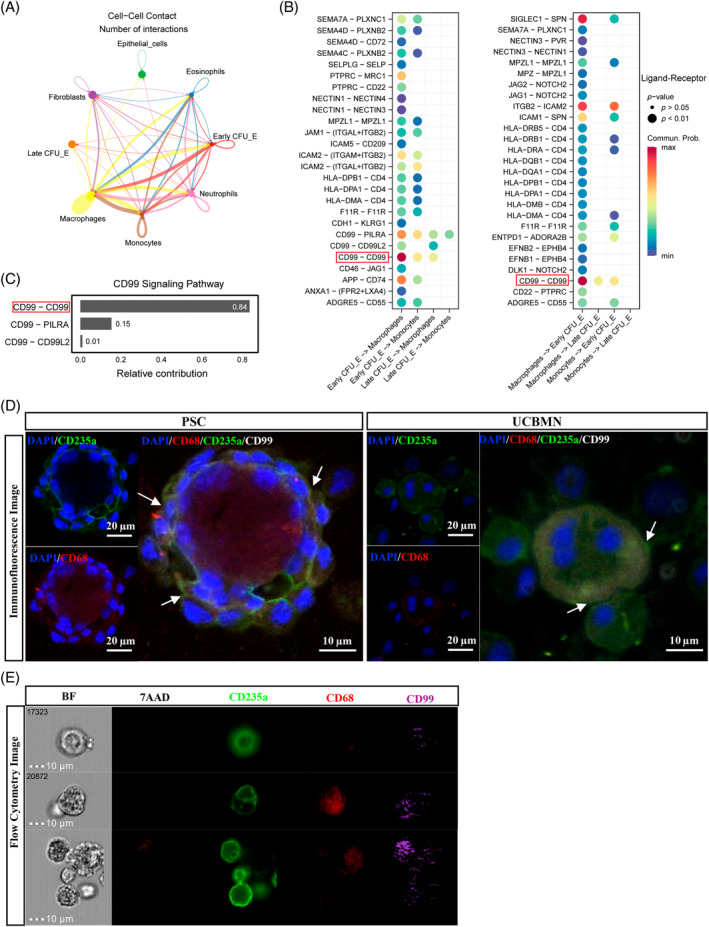 Figure 5
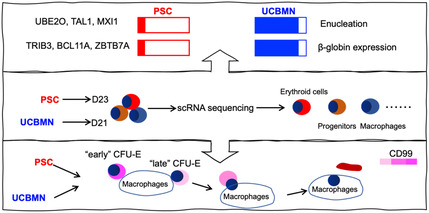 Figure 6
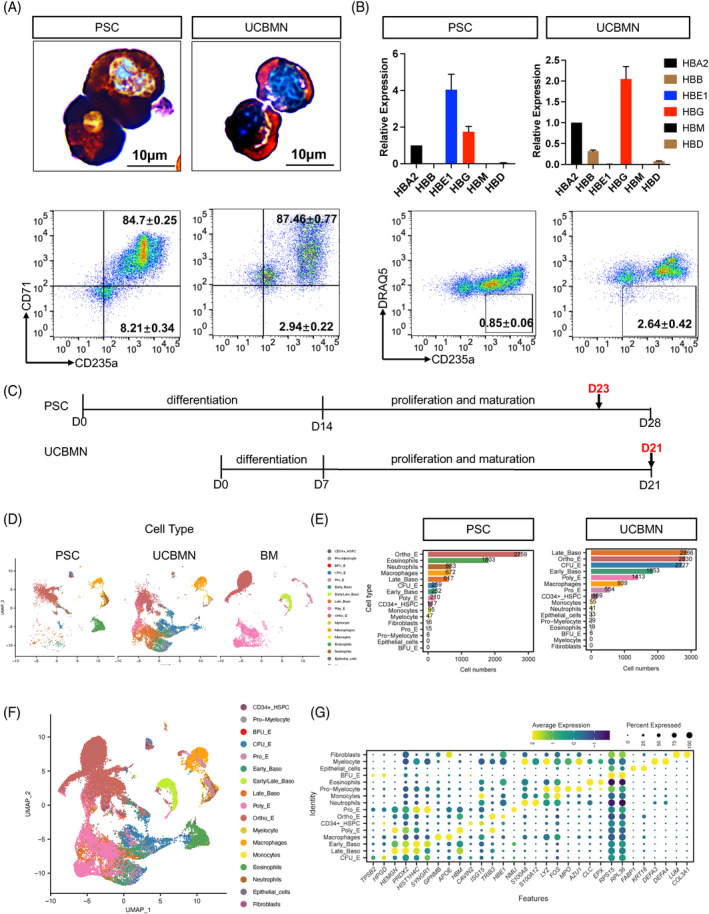 Figure 7
Peer Reviews
No public reviews on file for this paper yet. If you reviewed it on a platform where reviews are public (OpenReview, ICLR, NeurIPS, ICML), you can paste yours below so the community can read it here.
Videos
No videos yet. Explain this paper in a talk, walkthrough, or lecture? Add one.
Taxonomy
TopicsLinguistics and Discourse Analysis · Cultural Insights and Digital Impacts