Biomechanical Properties of Novel Porous Scaffold Core and Hollow Lateral Hole Pedicle Screws: A Comparative Study in Bama Pigs
Yong Hu, Xijiong Chen, Zhentao Chu, Linwei Luo, Zhiwei Gan, Jianbin Zhong, Zhenshan Yuan, Bingke Zhu, Weixin Dong

TL;DR
A new type of pedicle screw with a porous scaffold design showed better stability and resistance to loosening in pig spine implants.
Contribution
The study introduces a novel porous scaffold core pedicle screw and demonstrates its superior biomechanical performance compared to existing designs.
Findings
PSCPSs showed significantly higher maximal pull-out forces than HLHPSs before and after cyclic bending.
PSCPSs exhibited better fatigue tolerance with only a 7.43% decrease in pull-out force after 800 cycles, compared to 14.89% for HLHPSs.
Both screw types buckled rather than broke in bending tests, with no significant differences in maximal bending load or modulus of elasticity.
Abstract
Screw loosening is a common complication of internal fixation of pedicle screw. Therefore, the development of a pedicle screw with low loosening rate and high biosafety is of great clinical significance. This study aimed to investigate whether the application of a porous scaffold structure can improve the stability of pedicle screws by comparing the biomechanical properties of novel porous scaffold core pedicle screws (PSCPSs) with those of hollow lateral hole pedicle screws (HLHPSs) in a porcine lumbar spine. Thirty‐two pedicle screws of both types were implanted bilaterally into the L1–4 vertebrae of four Bama pigs, with our newly designed PSCPSs on the right and HLHPSs on the left. All the Bama pigs were sacrificed 16 weeks postoperatively, and the lumbar spine was freed into individual vertebrae. Biomechanical properties of both the pedicle screws were evaluated using pull‐out…
Genes, proteins, chemicals, diseases, species, mutations and cell lines named across the full text — each resolved to its canonical identifier and authoritative record.
Click any figure to enlarge with its caption.
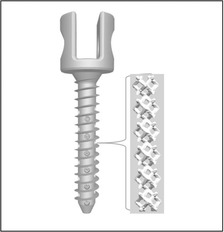 Figure 1
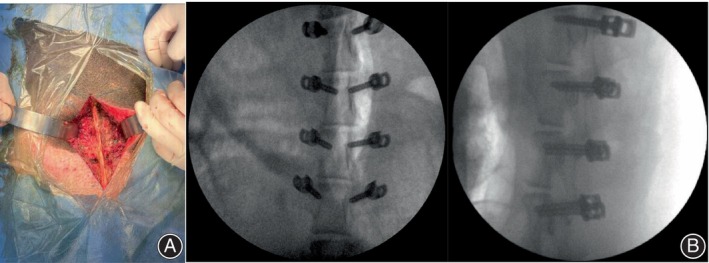 Figure 2
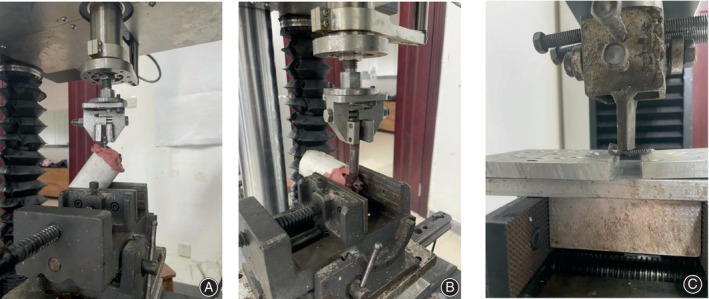 Figure 3
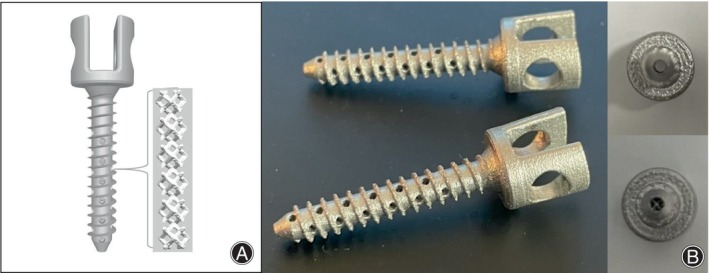 Figure 4
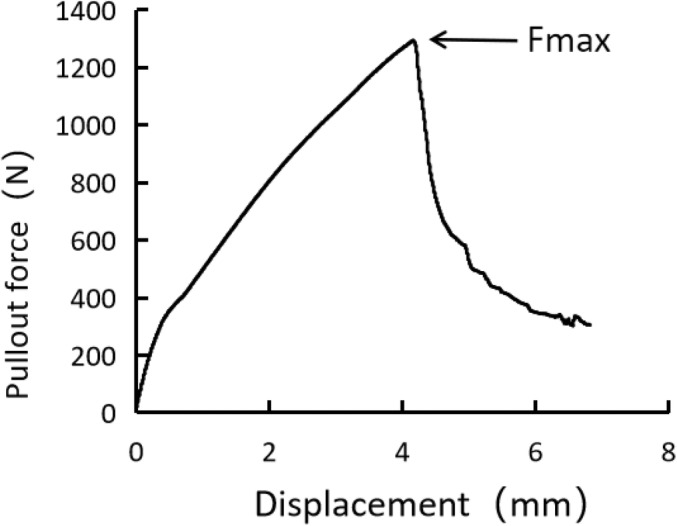 Figure 5
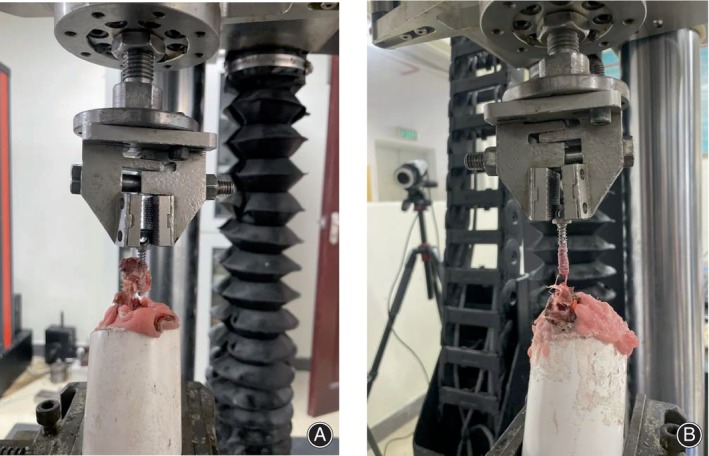 Figure 6
Peer Reviews
No public reviews on file for this paper yet. If you reviewed it on a platform where reviews are public (OpenReview, ICLR, NeurIPS, ICML), you can paste yours below so the community can read it here.
Videos
No videos yet. Explain this paper in a talk, walkthrough, or lecture? Add one.
Taxonomy
TopicsMedical Imaging and Analysis · Spine and Intervertebral Disc Pathology · Orthopedic Surgery and Rehabilitation