Geographical validation of the Smart Triage Model by age group
Cherri Zhang, Matthew O. Wiens, Dustin Dunsmuir, Yashodani Pillay, Charly Huxford, David Kimutai, Emmanuel Tenywa, Mary Ouma, Joyce Kigo, Stephen Kamau, Mary Chege, Nathan Kenya-Mugisha, Savio Mwaka, Guy A. Dumont, Niranjan Kissoon, Samuel Akech, J Mark Ansermino

TL;DR
This study validates a clinical prediction model for identifying critically ill children in low-resource settings, finding it effective for most age groups but less so for neonates, prompting model updates.
Contribution
The study externally validates and updates the Smart Triage model for neonates in low-resource settings, improving its predictive accuracy.
Findings
The original model showed good discrimination for children under five (AUROC 0.81) but poor performance for neonates (AUROC 0.62).
After revision, the neonatal model achieved improved discrimination (AUROC 0.83) with new risk thresholds.
The updated model is suitable for use in local healthcare facilities across different age groups.
Abstract
Infectious diseases in neonates account for half of the under-five mortality in low- and middle-income countries. Data-driven algorithms such as clinical prediction models can be used to efficiently detect critically ill children in order to optimize care and reduce mortality. Thus far, only a handful of prediction models have been externally validated and are limited to neonatal in-hospital mortality. The aim of this study is to externally validate a previously derived clinical prediction model (Smart Triage) using a combined prospective baseline cohort from Uganda and Kenya with a composite endpoint of hospital admission, mortality, and readmission. We evaluated model discrimination using area under the receiver-operator curve (AUROC) and visualized calibration plots with age subsets (< 30 days, ≤ 2 months, ≤ 6 months, and < 5 years). Due to reduced performance in neonates (< 1…
Genes, proteins, chemicals, diseases, species, mutations and cell lines named across the full text — each resolved to its canonical identifier and authoritative record.
Click any figure to enlarge with its caption.
 Figure 1
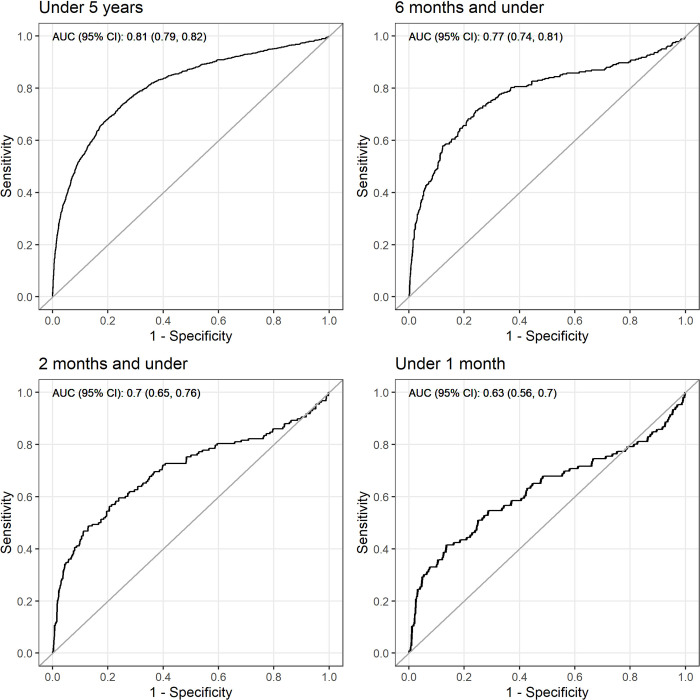 Figure 2
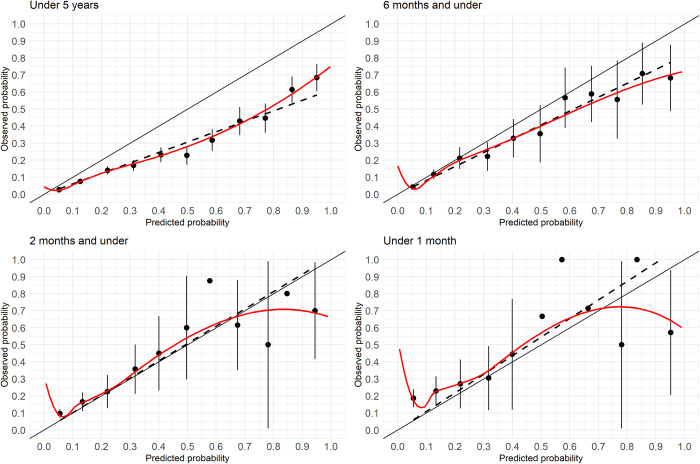 Figure 3
 Figure 4
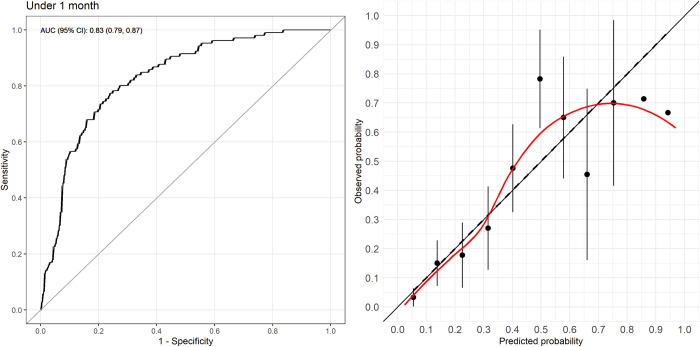 Figure 5
 Figure 6
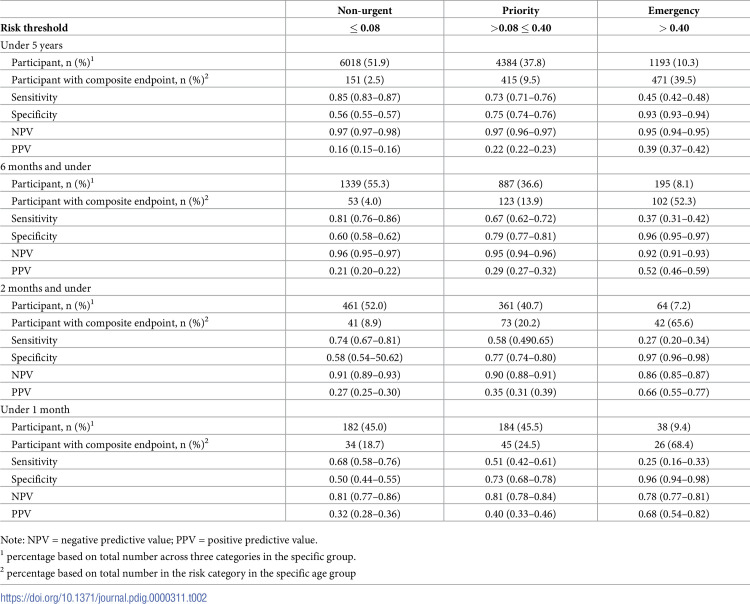 Figure 7
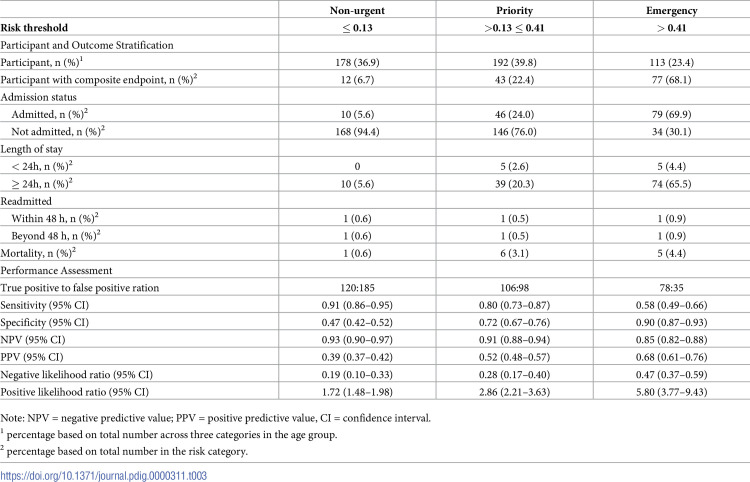 Figure 8
Peer Reviews
No public reviews on file for this paper yet. If you reviewed it on a platform where reviews are public (OpenReview, ICLR, NeurIPS, ICML), you can paste yours below so the community can read it here.
Videos
No videos yet. Explain this paper in a talk, walkthrough, or lecture? Add one.
Taxonomy
TopicsEmergency and Acute Care Studies · Neonatal Respiratory Health Research · Sepsis Diagnosis and Treatment