Peak response regularization for localization
Jiawei Yu, Jinzhen Yao, Chuangxin Zhao, Xianhong Zhao, Qintao Hu

TL;DR
This paper introduces a method to improve the accuracy of deep learning models by refining feature responses to better locate targets in images.
Contribution
The paper proposes Peak Response Regularization (PRR), a novel method to suppress sub-peaks and enforce target-centered peak responses in feature maps.
Findings
PRR effectively suppresses sub-peaks caused by interference and background noise.
The method improves performance across multiple image tasks like pose detection and object tracking.
PRR achieves these improvements with minimal computational overhead.
Abstract
Deep convolutional neural networks approaches often assume that the feature response has a Gaussian distribution with target-centered peak response, which can be used to guide the target location and classification. Nevertheless, such an assumption is implausible when there is progressive interference from other targets and/or background noise, which produces sub-peaks on the tracking response map and causes model drift. In this paper, we propose a feature response regularization approach for sub-peak response suppression and peak response enforcement and aim to handle progressive interference systematically. Our approach, referred to as Peak Response Regularization (PRR), applies simple-yet-efficient method to aggregate and align discriminative features, which convert local extremal response in discrete feature space to extremal response in continuous space, which enforces the…
Genes, proteins, chemicals, diseases, species, mutations and cell lines named across the full text — each resolved to its canonical identifier and authoritative record.
Click any figure to enlarge with its caption.
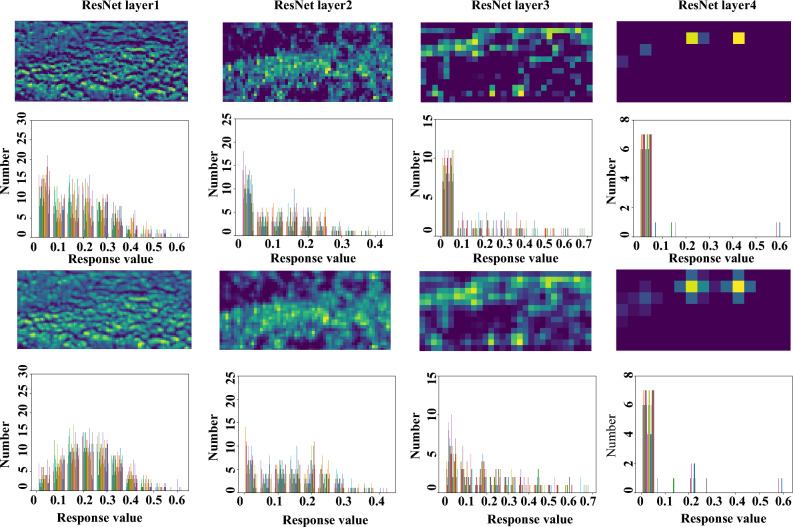 Figure 1
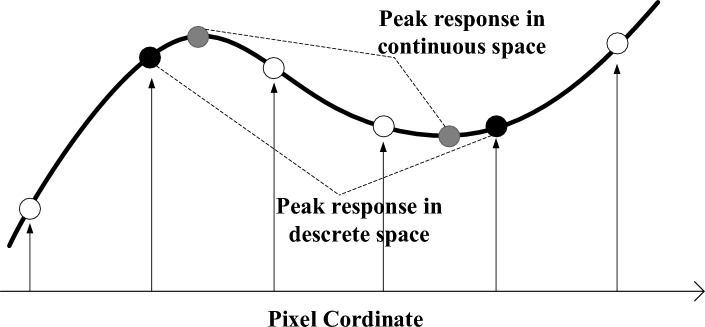 Figure 2
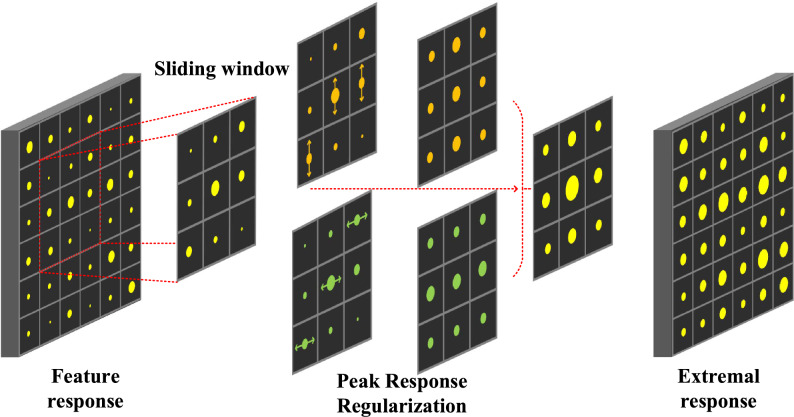 Figure 3
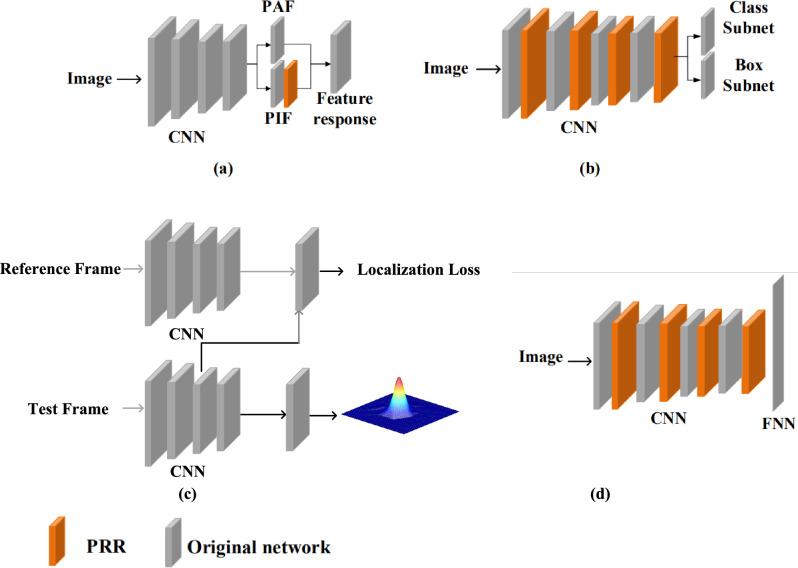 Figure 4
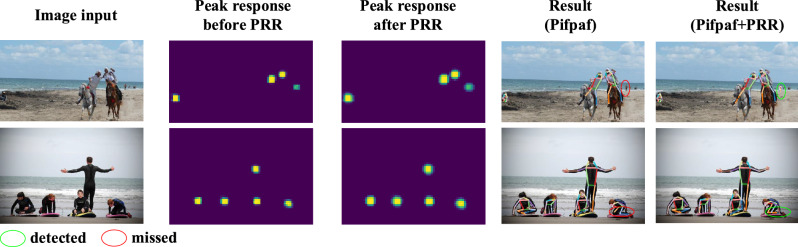 Figure 5
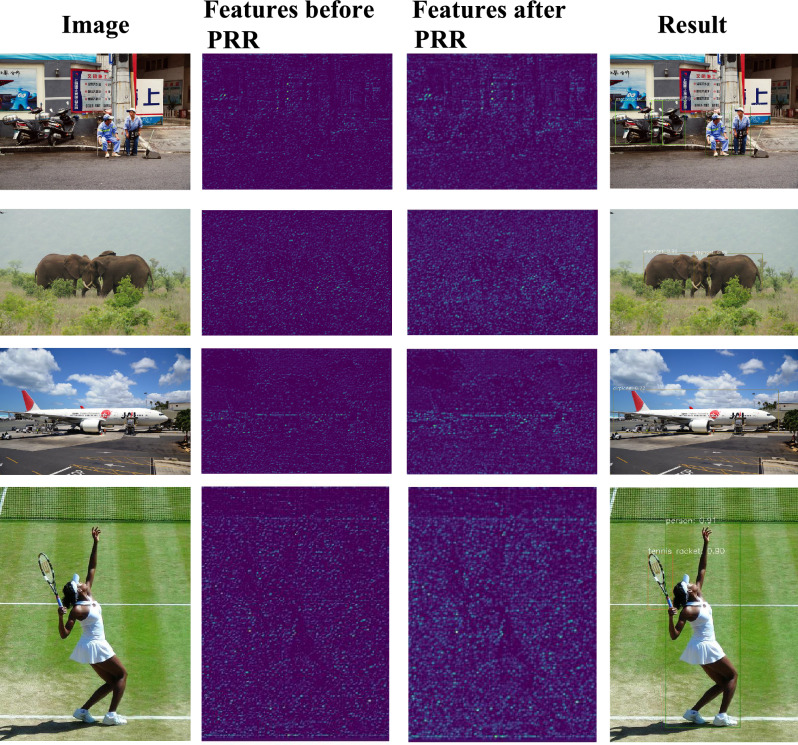 Figure 6
Peer Reviews
No public reviews on file for this paper yet. If you reviewed it on a platform where reviews are public (OpenReview, ICLR, NeurIPS, ICML), you can paste yours below so the community can read it here.
Videos
No videos yet. Explain this paper in a talk, walkthrough, or lecture? Add one.
Taxonomy
TopicsVideo Surveillance and Tracking Methods · Human Pose and Action Recognition · Advanced Neural Network Applications