Qualitative and quantitative spermatic cord abnormalities at CT predict symptomatic scrotal pathology
Ryan T. Whitesell, John F. Brunner, Heather R. Collins, Douglas H. Sheafor

TL;DR
This study shows that CT scans can accurately predict scrotal issues by analyzing spermatic cord abnormalities.
Contribution
The study introduces a quantitative method for assessing spermatic cord enhancement on CT to predict scrotal pathology.
Findings
25% differential cord enhancement on CECT had 88.9% diagnostic accuracy for scrotal pathology.
CECT outperformed NECT in predicting scrotal pathology with higher reader confidence and AUC.
Qualitative abnormalities on both CECT and NECT were significant predictors of scrotal pathology.
Abstract
To evaluate quantitative and qualitative spermatic cord CT abnormalities and presence of unilateral or bilateral symptomatic scrotal pathology (SSP) at ultrasound. This retrospective study included 122 male patients (mean age 47.8 years) undergoing scrotal ultrasound within 24 h of contrast-enhanced CT (n = 85), non-contrast CT (NECT, n = 32) or CT-Urogram (n = 5). CECT quantitative analysis assessed differential cord enhancement using maximum Hounsfield unit measurements. Three fellowship trained body radiologists independently assessed qualitative cord abnormalities for both CECT and NECT. Qualitative and quantitative findings were compared with the presence of SSP. Reader performance, interobserver agreement and reader confidence were assessed for NECT and CECT. Quantitative cutoff points were identified which maximized accuracy, specificity, negative predictive value, and other…
Genes, proteins, chemicals, diseases, species, mutations and cell lines named across the full text — each resolved to its canonical identifier and authoritative record.
Click any figure to enlarge with its caption.
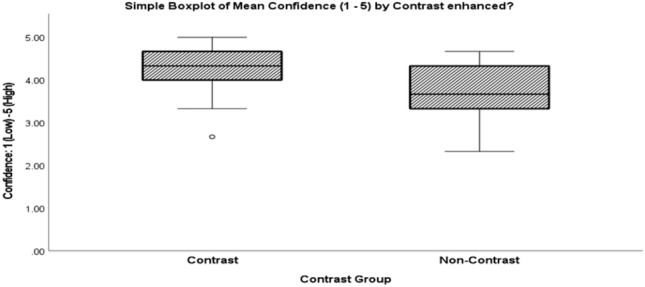 Figure 10
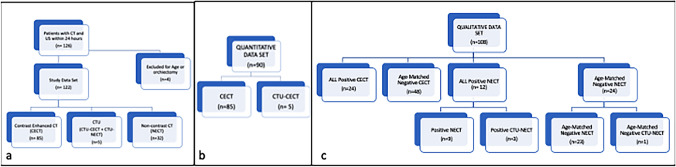 Figure 1
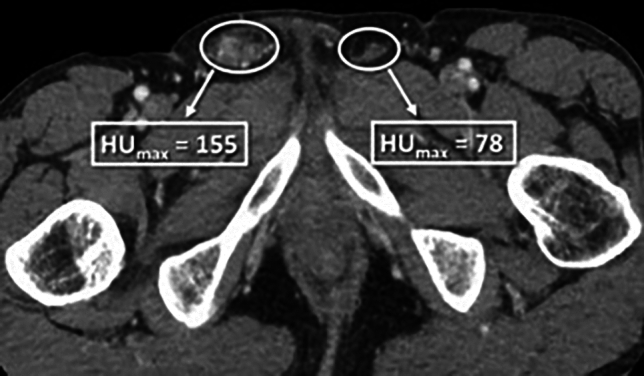 Figure 2
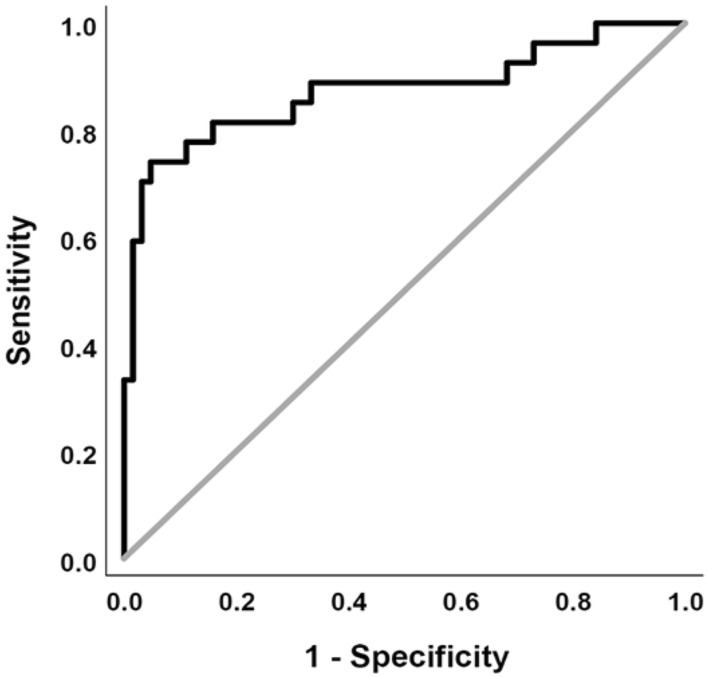 Figure 3
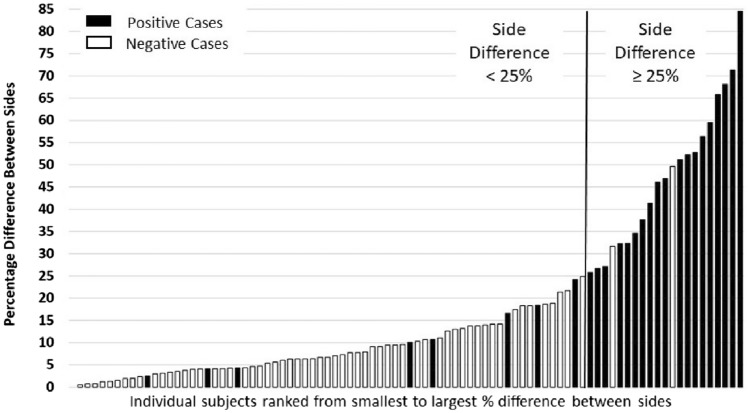 Figure 4
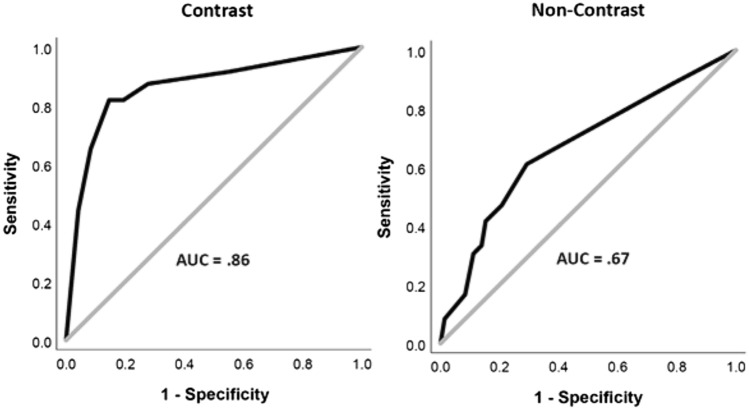 Figure 5
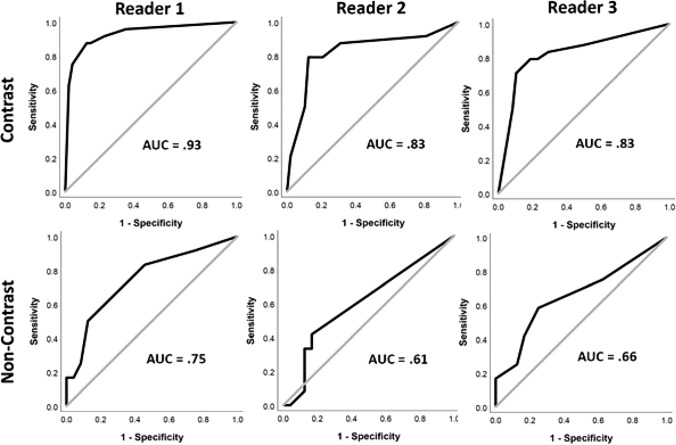 Figure 6
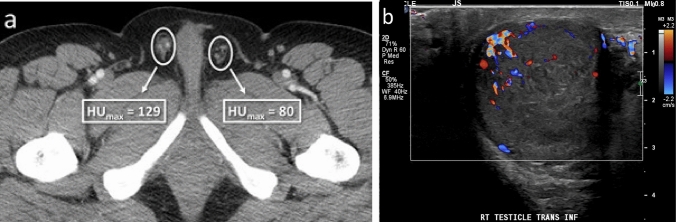 Figure 7
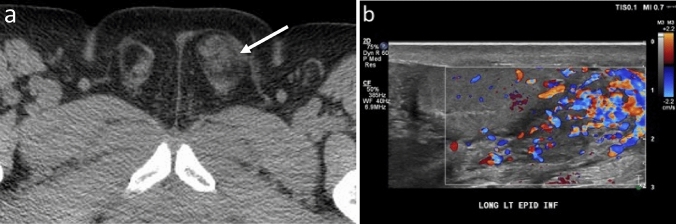 Figure 8
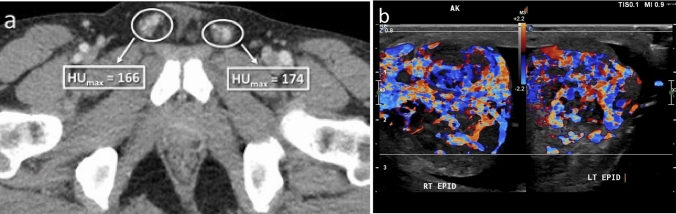 Figure 9
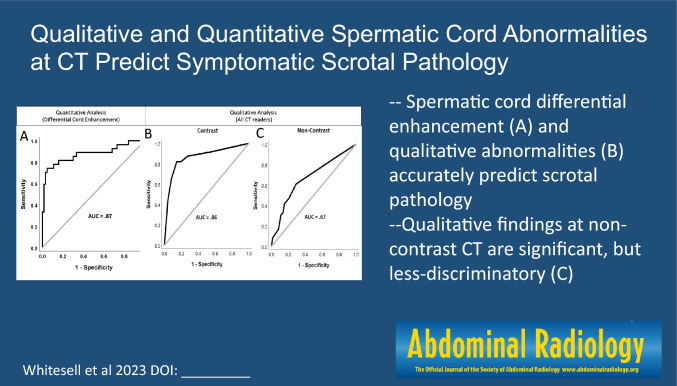 Figure 11
Peer Reviews
No public reviews on file for this paper yet. If you reviewed it on a platform where reviews are public (OpenReview, ICLR, NeurIPS, ICML), you can paste yours below so the community can read it here.
Videos
No videos yet. Explain this paper in a talk, walkthrough, or lecture? Add one.
Taxonomy
TopicsTesticular diseases and treatments · Urologic and reproductive health conditions · Urological Disorders and Treatments