Chromosomal copy number and mutational status are required to authenticate ovarian cancer cell lines as appropriate cell models
Britta Stordal, Angela M. Farrelly, Bryan T. Hennessy

TL;DR
This study shows that ovarian cancer cell line IGROV-1 has inconsistent genetic profiles, suggesting the need for better authentication methods.
Contribution
The study introduces the need for chromosomal copy number and mutational status analysis alongside STR fingerprinting for cell line authentication.
Findings
IGROV-1-NKI and IGROV-1-MDA have different chromosomal profiles and low STR match between them.
IGROV-1-MDA is more resistant to cisplatin and olaparib than IGROV-1-NKI.
IGROV-1 has a mutational profile consistent with both Type I and Type II ovarian cancer.
Abstract
The mutational status of ovarian cancer cell line IGROV-1 is inconsistent across the literature, suggestive of multiple clonal populations of the cell line. IGROV-1 has previously been categorised as an inappropriate model for high-grade serous ovarian cancer. IGROV-1 cells were obtained from the Netherlands Cancer Institute (IGROV-1-NKI) and the MD Anderson Cancer Centre (IGROV-1-MDA). Cell lines were STR fingerprinted and had their chromosomal copy number analysed and BRCA1/2 genes sequenced. Mutation status of ovarian cancer-related genes were extracted from the literature. The IGROV-1-NKI cell line has a tetraploid chromosomal profile. In contrast, the IGROV-1-MDA cell line has pseudo-normal chromosomes. The IGROV-1-NKI and IGROV-MDA are both STR matches (80.7% and 84.6%) to the original IGROV-1 cells isolated in 1985. However, IGROV-1-NKI and IGROV-1-MDA are not an STR match to…
Genes, proteins, chemicals, diseases, species, mutations and cell lines named across the full text — each resolved to its canonical identifier and authoritative record.
Click any figure to enlarge with its caption.
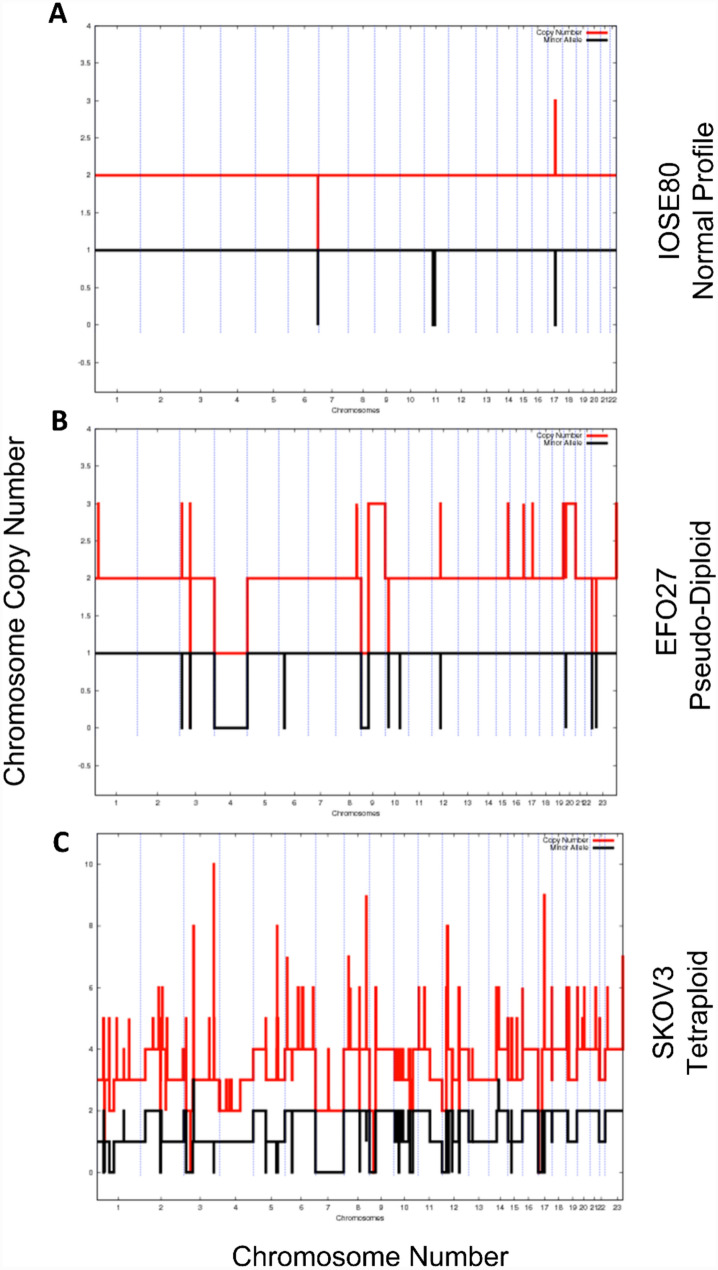 Figure 1
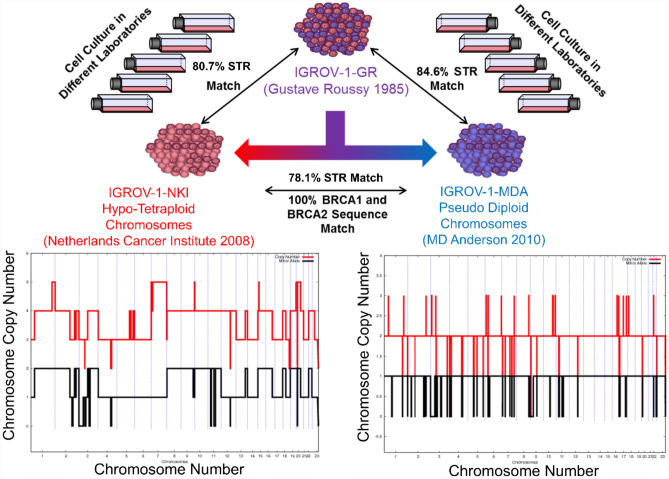 Figure 2
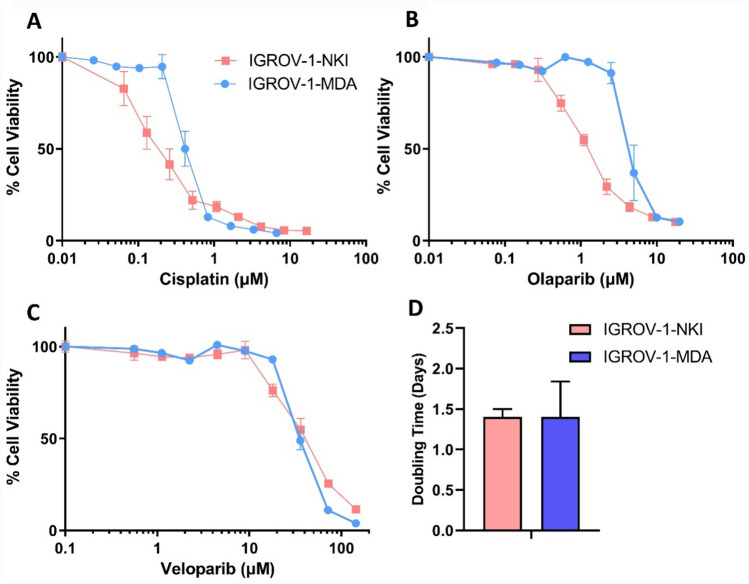 Figure 3
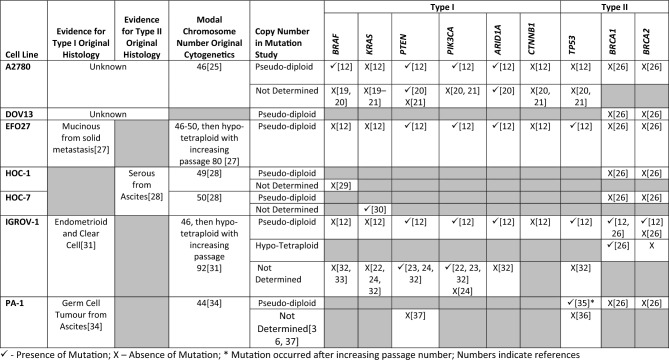 Figure 4
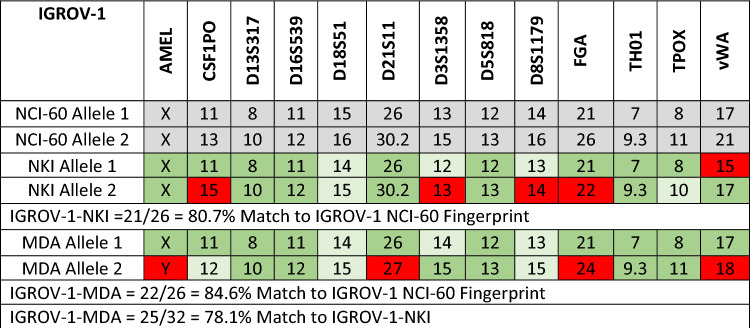 Figure 5
Peer Reviews
No public reviews on file for this paper yet. If you reviewed it on a platform where reviews are public (OpenReview, ICLR, NeurIPS, ICML), you can paste yours below so the community can read it here.
Videos
No videos yet. Explain this paper in a talk, walkthrough, or lecture? Add one.
Taxonomy
TopicsOvarian cancer diagnosis and treatment · Cancer-related molecular mechanisms research · Cancer Genomics and Diagnostics