Spatio—Temporal distribution of a vector of cutaneous leishmaniasis: Pintomyia longiflocosa, in a population from the Colombian Andean Mountains
Astrid Muñoz-Ortiz, Miguel Beltrán, Jennifer Vargas Durango, Gelys Mestre, Erika Santamaria Herreño, Jesús E. Escovar

TL;DR
This study examines how the sand fly Pintomyia longiflocosa, a vector for cutaneous leishmaniasis, is distributed in different environments and how weather affects its population in Colombia.
Contribution
The study identifies outdoor areas and dry seasons as key factors in the density of Pintomyia longiflocosa, offering new insights for targeted vector control.
Findings
Pintomyia longiflocosa was the dominant sand fly species, making up 98.86% of the collected samples.
Outdoor areas had the highest sand fly density, with females contributing more to the population than males.
Precipitation showed a negative correlation with sand fly density, with higher rainfall leading to lower abundance.
Abstract
Leishmaniasis, a neglected disease and public health concern, is associated with various factors such as biological, social, economical conditions and climate, increasing the risk of human infection. Understanding the population dynamics of the vectors, like Pintomyia longiflocosa, and its relationship with ecological variables is crucial for developing effective strategies to control sand fly populations and combat cutaneous leishmaniasis in a tropical country like Colombia. Adult sand flies were collected in three different sample locations: outdoor, indoor, and peri-domestic areas in three houses located in the rural settlement of Campoalegre (Huila) between February 2020 and February 2021, using the CDC light traps. The sand fly density was quantified and associated with the sample locations and the sampling months using Analysis of Variance and Pearson correlations. In the period…
Genes, proteins, chemicals, diseases, species, mutations and cell lines named across the full text — each resolved to its canonical identifier and authoritative record.
Click any figure to enlarge with its caption.
 Figure 1
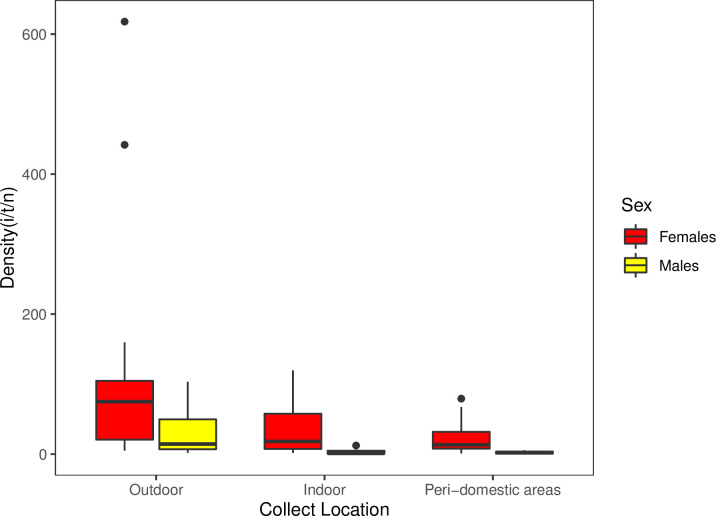 Figure 2
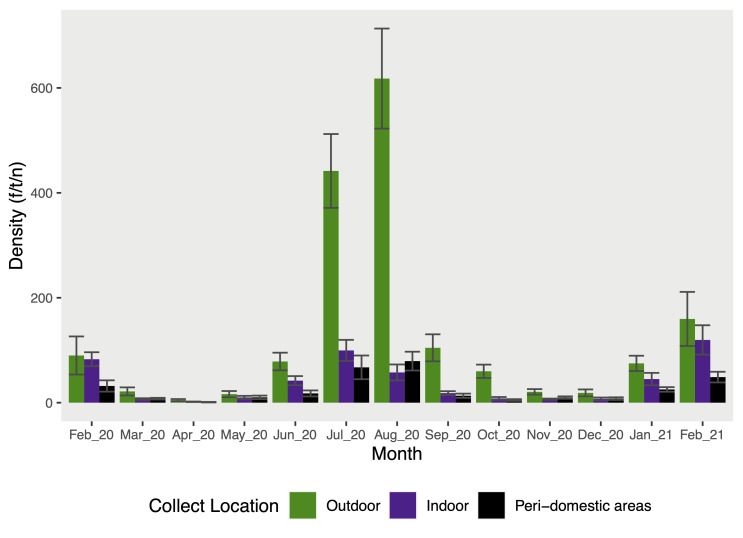 Figure 3
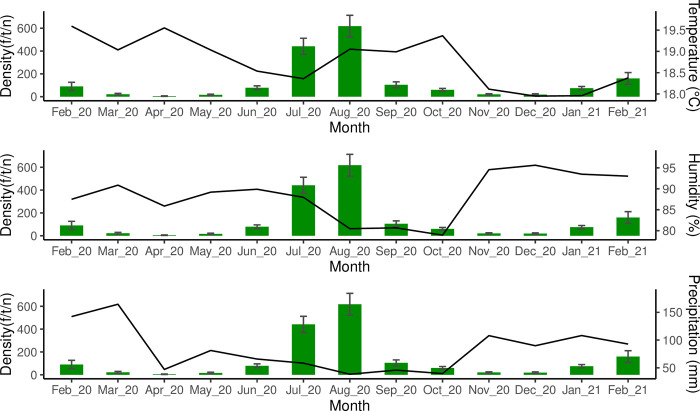 Figure 4
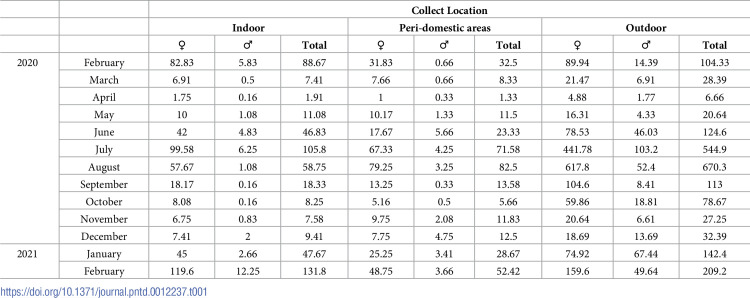 Figure 5
 Figure 6
Peer Reviews
No public reviews on file for this paper yet. If you reviewed it on a platform where reviews are public (OpenReview, ICLR, NeurIPS, ICML), you can paste yours below so the community can read it here.
Videos
No videos yet. Explain this paper in a talk, walkthrough, or lecture? Add one.
Taxonomy
TopicsResearch on Leishmaniasis Studies · Trypanosoma species research and implications