The role of Tyr34 in proton-coupled electron transfer of human manganese superoxide dismutase
Gloria Borgstahl, Jahaun Azadmanesh, Katelyn Slobodnik, Lucas Struble, Erika Cone, Medhanjali Dasgupta, William Lutz, Siddhartha Kumar, Amarnath Natarajan, Leighton Coates, Kevin Weiss, Dean Myles, Thomas Kroll

TL;DR
This paper explores how a specific tyrosine residue in an enzyme helps control harmful oxygen molecules in cells.
Contribution
The study reveals how Tyr34 modulates proton-coupled electron transfer in MnSOD through structural and computational analysis.
Findings
Tyr34 undergoes cyclic protonation and deprotonation to facilitate electron transfer.
Nitration of Tyr34 inactivates MnSOD in diseases linked to mitochondrial dysfunction.
Structural and quantum chemistry data clarify Tyr34's role in PCET catalysis.
Abstract
Human manganese superoxide dismutase (MnSOD) plays a crucial role in controlling levels of reactive oxygen species (ROS) by converting superoxide (O2●−) to molecular oxygen (O2) and hydrogen peroxide (H2O2) with proton-coupled electron transfers (PCETs). The reactivity of human MnSOD is determined by the state of a key catalytic residue, Tyr34, that becomes post-translationally inactivated by nitration in various diseases associated with mitochondrial dysfunction. We previously reported that Tyr34 has an unusual pKa due to its proximity to the Mn metal and undergoes cyclic deprotonation and protonation events to promote the electron transfers of MnSOD. To shed light on the role of Tyr34 MnSOD catalysis, we performed neutron diffraction, X-ray spectroscopy, and quantum chemistry calculations of Tyr34Phe MnSOD in various enzymatic states. The data identifies the contributions of Tyr34 in…
Genes, proteins, chemicals, diseases, species, mutations and cell lines named across the full text — each resolved to its canonical identifier and authoritative record.
Click any figure to enlarge with its caption.
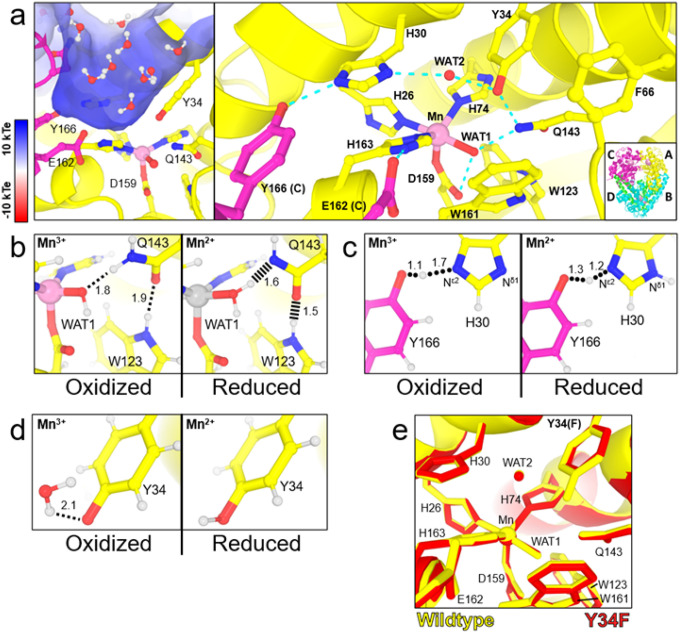 Figure 1
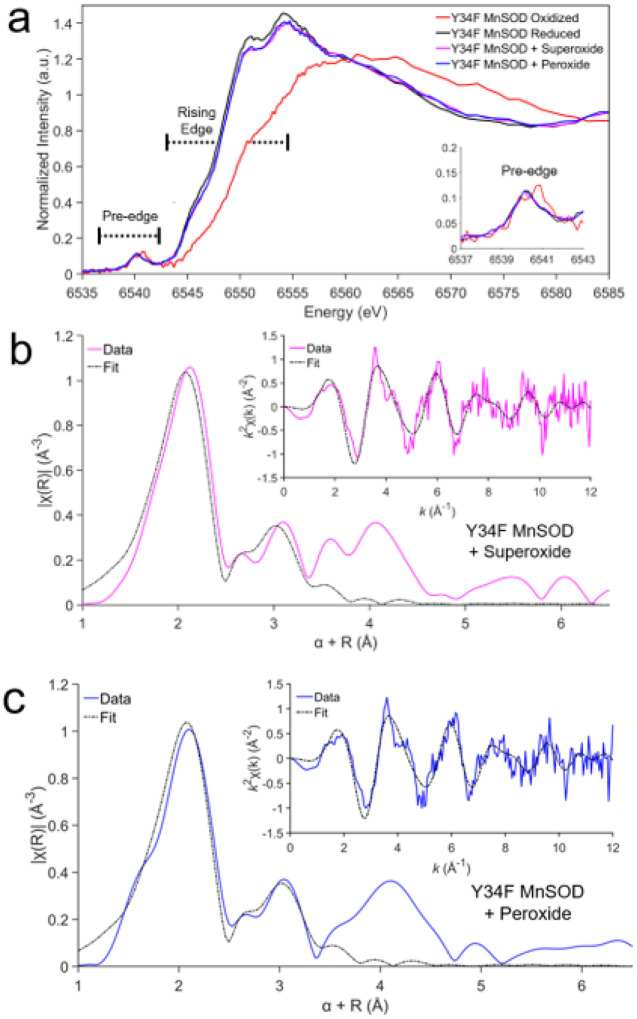 Figure 2
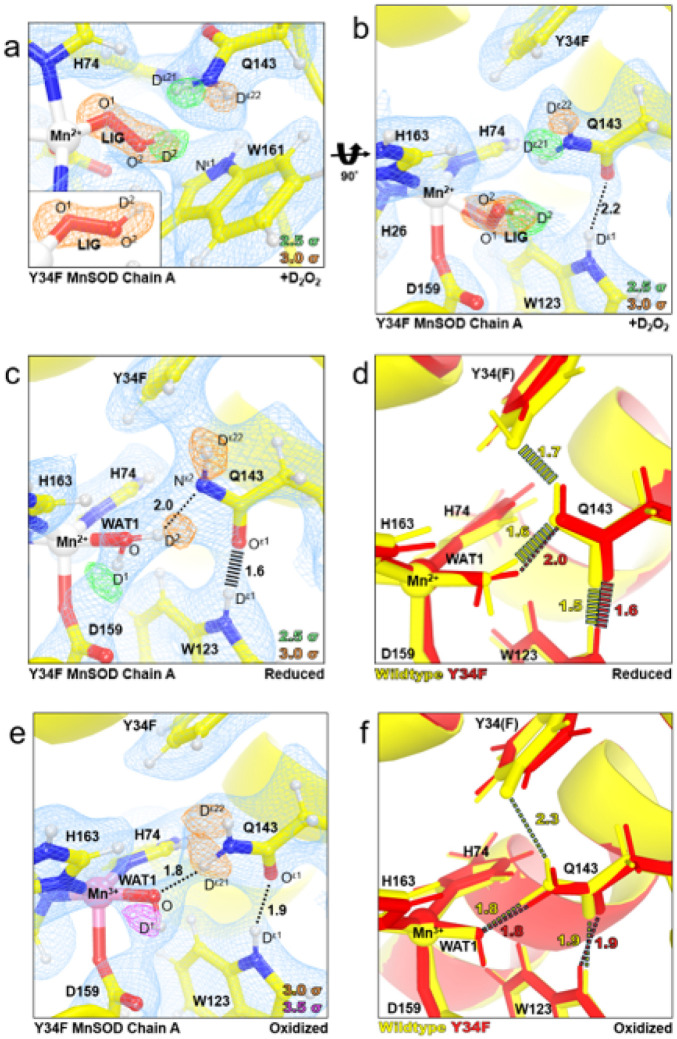 Figure 3
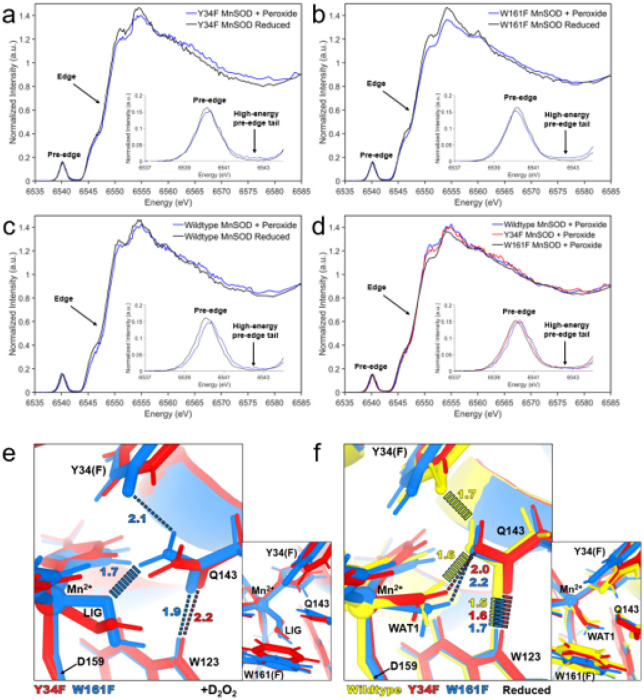 Figure 4
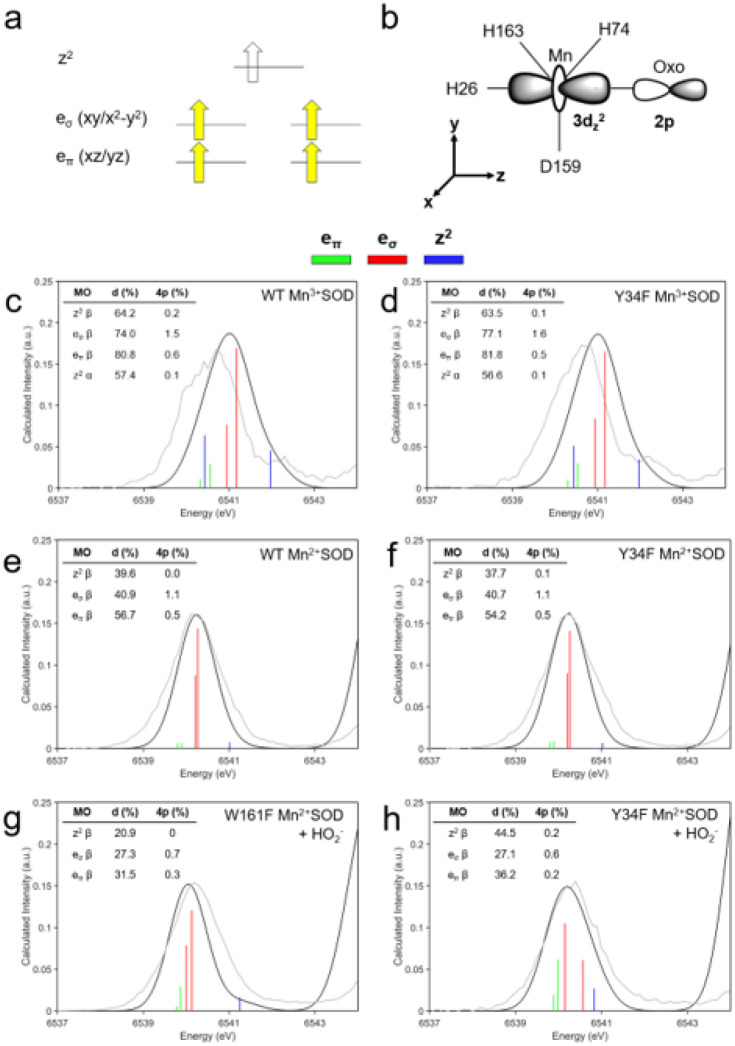 Figure 5
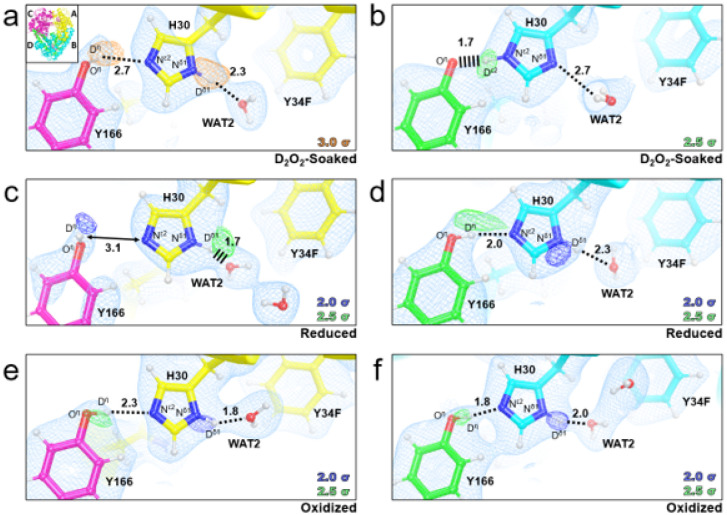 Figure 6
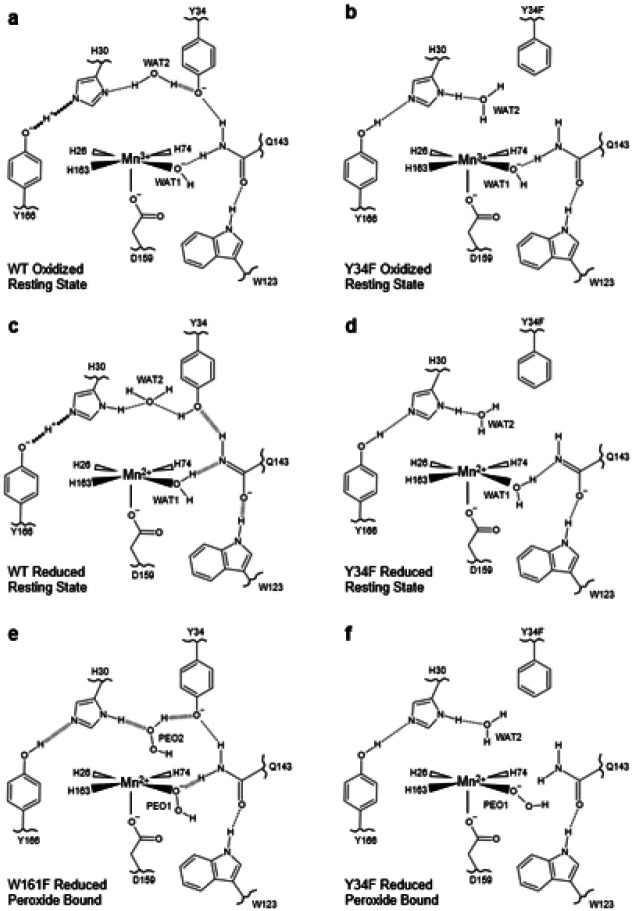 Figure 7
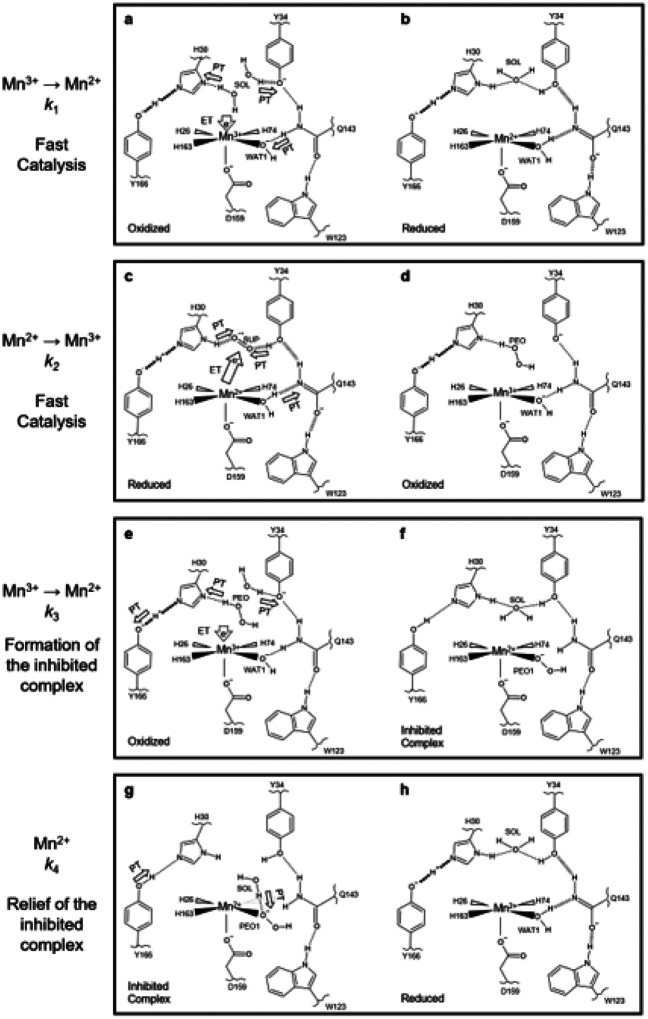 Figure 8
Peer Reviews
No public reviews on file for this paper yet. If you reviewed it on a platform where reviews are public (OpenReview, ICLR, NeurIPS, ICML), you can paste yours below so the community can read it here.
Videos
No videos yet. Explain this paper in a talk, walkthrough, or lecture? Add one.
Taxonomy
TopicsGlutathione Transferases and Polymorphisms · Electron Spin Resonance Studies · Biochemical effects in animals