Sex-Specific Risk Factors and Clinical Dementia Outcomes for White Matter Hyperintensities in a large South Korean Cohort
Noah Schweitzer, Sang Joon Son, Rebecca C. Thurston, Jinghang Li, Chang-Le Chen, Howard Aizenstein, Shaolin Yang, Bistra Iordanova, Chang Hyung Hong, Hyun Woong Roh, Yong Hyuk Cho, Sunhwa Hong, You Jin Nam, Dong Yun Lee, Bumhee Park, Na-Rae Kim, Jin Wook Choi, Jaeyoun Cheong

TL;DR
This study finds that elderly women in South Korea are more vulnerable to brain changes linked to dementia and diabetes than men, highlighting the need for sex-specific approaches in treatment.
Contribution
The study identifies sex-specific risk factors and outcomes for white matter hyperintensities in cerebral small vessel disease.
Findings
Females showed a stronger association between age and white matter hyperintensity (WMH) volume.
Type 2 Diabetes was linked to greater WMH burden in females but not in males.
Baseline WMH burden was associated with worse dementia outcomes in females but not in males.
Abstract
White matter hyperintensities (WMH) on brain MRI images are the most common feature of cerebral small vessel disease (CSVD). Studies have yielded divergent findings on the modifiable risk factors for WMH and WMH’s impact on cognitive decline. Mounting evidence suggests sex differences in WMH burden and subsequent effects on cognition. Thus, we aimed to identify sex-specific modifiable risk factors for WMH. We then explored whether there were sex-specific associations of WMH to longitudinal clinical dementia outcomes. Participants aged 49–89 years were recruited at memory clinics and underwent a T2-weighted fluid-attenuated inversion recovery (FLAIR) 3T MRI scan to measure WMH volume. Participants were then recruited for two additional follow-up visits, 1–2 years apart, where clinical dementia rating sum of boxes (CDR-SB) scores were measured. We first explored which known modifiable…
Genes, proteins, chemicals, diseases, species, mutations and cell lines named across the full text — each resolved to its canonical identifier and authoritative record.
Click any figure to enlarge with its caption.
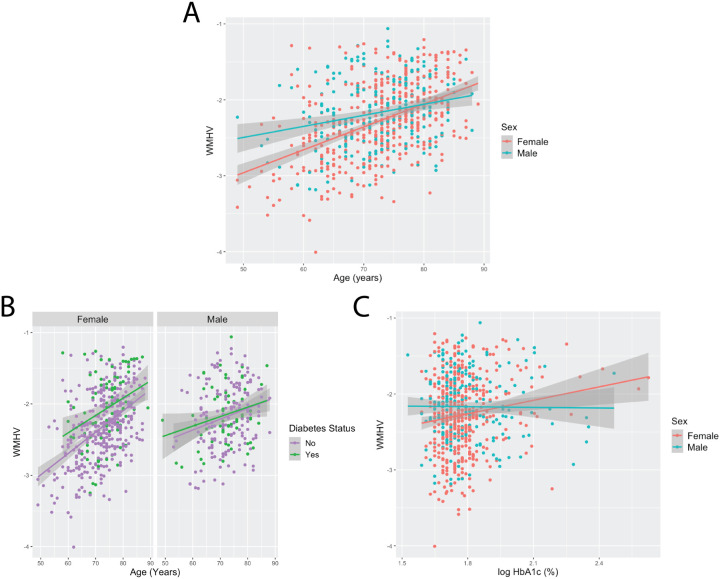 Figure 1
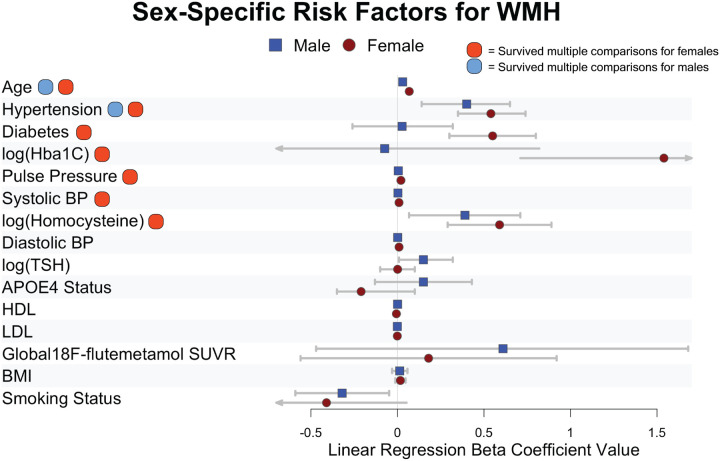 Figure 2
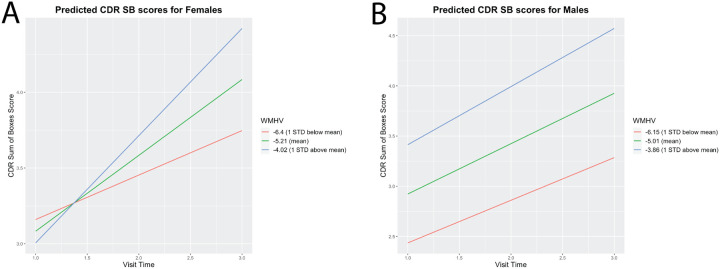 Figure 3
Peer Reviews
No public reviews on file for this paper yet. If you reviewed it on a platform where reviews are public (OpenReview, ICLR, NeurIPS, ICML), you can paste yours below so the community can read it here.
Videos
No videos yet. Explain this paper in a talk, walkthrough, or lecture? Add one.
Taxonomy
TopicsNeurological Disease Mechanisms and Treatments · Dementia and Cognitive Impairment Research · Ginkgo biloba and Cashew Applications