Maximizing Insights from Longitudinal Epigenetic Age Data: Simulations, Applications, and Practical Guidance
Anna Großbach, Matthew J. Suderman, Anke Hüls, Alexandre A. Lussier, Andrew D.A.C. Smith, Esther Walton, Erin C. Dunn, Andrew J. Simpkin

TL;DR
This paper explores how to best analyze changes in epigenetic age over time using simulations and real data, offering guidance for future studies.
Contribution
The paper provides a methodological comparison of models for analyzing longitudinal epigenetic age data and validates findings with real-world examples.
Findings
Linear mixed models and generalized estimating equations using chronological age as a time variable yield the most accurate effect sizes.
Epigenetic age accelerates in males and decelerates in children with higher birthweight when using optimal modeling approaches.
Abstract
Epigenetic Age (EA) is an age estimate, developed using DNA methylation (DNAm) states of selected CpG sites across the genome. Although EA and chronological age are highly correlated, EA may not increase uniformly with time. Departures, known as epigenetic age acceleration (EAA), are common and have been linked to various traits and future disease risk. Limited by available data, most studies investigating these relationships have been cross-sectional - using a single EA measurement. However, the recent growth in longitudinal DNAm studies has led to analyses of associations with EA over time. These studies differ in (i) their choice of model; (ii) the primary outcome (EA vs. EAA); and (iii) in their use of chronological age or age-independent time variables to account for the temporal dynamic. We evaluated the robustness of each approach using simulations and tested our results in two…
Genes, proteins, chemicals, diseases, species, mutations and cell lines named across the full text — each resolved to its canonical identifier and authoritative record.
Click any figure to enlarge with its caption.
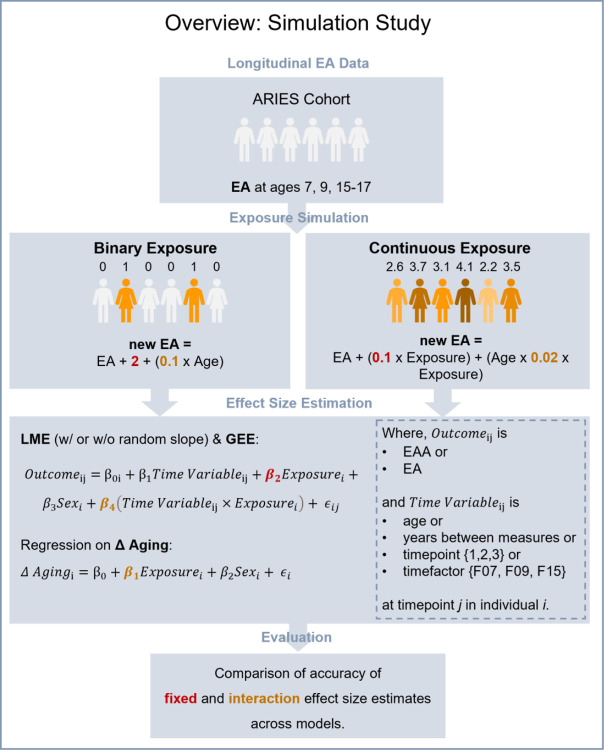 Figure 1
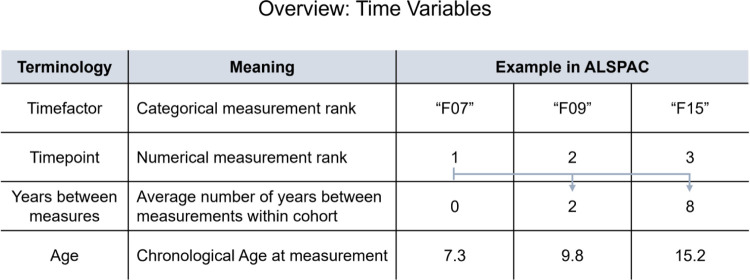 Figure 2
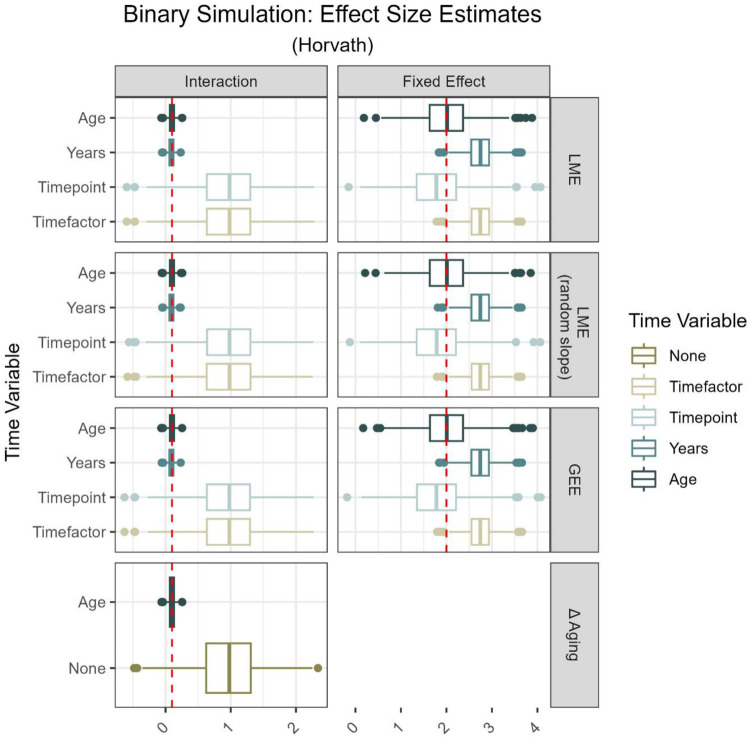 Figure 3
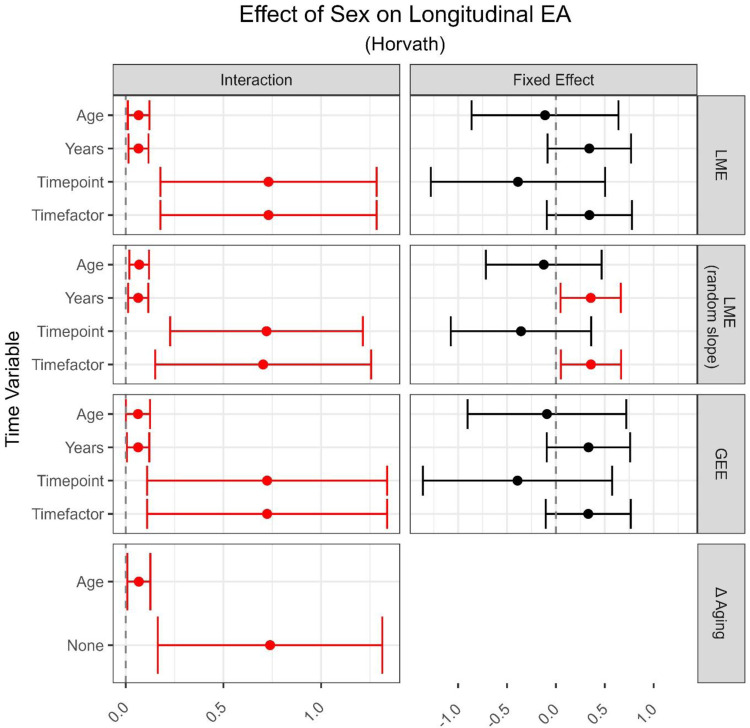 Figure 4
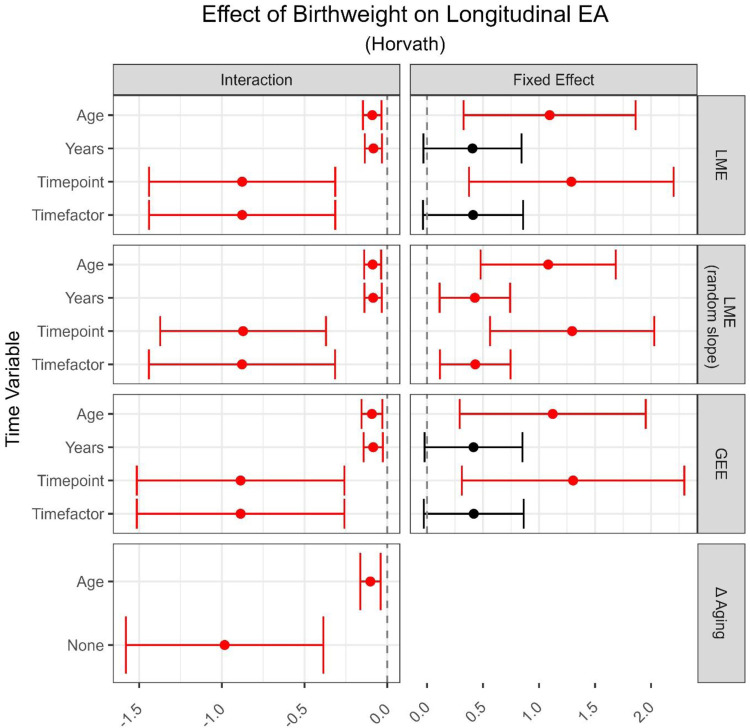 Figure 5
Peer Reviews
No public reviews on file for this paper yet. If you reviewed it on a platform where reviews are public (OpenReview, ICLR, NeurIPS, ICML), you can paste yours below so the community can read it here.
Videos
No videos yet. Explain this paper in a talk, walkthrough, or lecture? Add one.
Taxonomy
TopicsBirth, Development, and Health · Epigenetics and DNA Methylation · Health, Environment, Cognitive Aging