Tissue-Specific Quantification of Radiation-Induced Cervical Fibrosis and Correlation with Cervical Range of Motion
Hendrik Dapper, Maria Waltenberger, Steffi U. Pigorsch, Stephanie E. Combs, Katharina Bauermeister, Wolfgang Bauermeister

TL;DR
This study shows that radiation therapy causes significant tissue hardening in the neck, which is linked to reduced neck movement and worsens with age.
Contribution
The paper introduces tissue-specific quantification of radiation-induced cervical fibrosis and its correlation with cervical range of motion.
Findings
Radiation therapy significantly increases stiffness in muscle, fascia, and subcutaneous tissue compared to non-irradiated controls.
Muscle tissue shows the most pronounced stiffness changes, with hardening about twice as severe as in the general population.
Tissue stiffness correlates with cervical range of motion and is further influenced by age in irradiated patients.
Abstract
Cervical fibrosis (CF) as a late consequence in patients after radiotherapy significantly impacts the long-term symptoms, functionality, and quality of life of these cancer patients due to a hardening process of different histological tissues. Modern Shear Wave Ultrasound Elastography now enables a differentiated analysis of the changes in various tissue types. In this study, tissue-specific changes in CF induced by radiation therapy in head and neck (ENT) cancer patients were quantified and correlated with cervical range of motion (CROM). 16 patients after radiation of the cervical lymphatic drainage were selected as the observation group (OG). Further, 16 people without radiation in the head and neck region were matched by gender, age, and BMI as the control group (CG). Stiffness measurements in kilopascal (kPa; 1 Pa = 1 N m−2) were performed using shear wave elastography (SWE) to…
Genes, proteins, chemicals, diseases, species, mutations and cell lines named across the full text — each resolved to its canonical identifier and authoritative record.
Click any figure to enlarge with its caption.
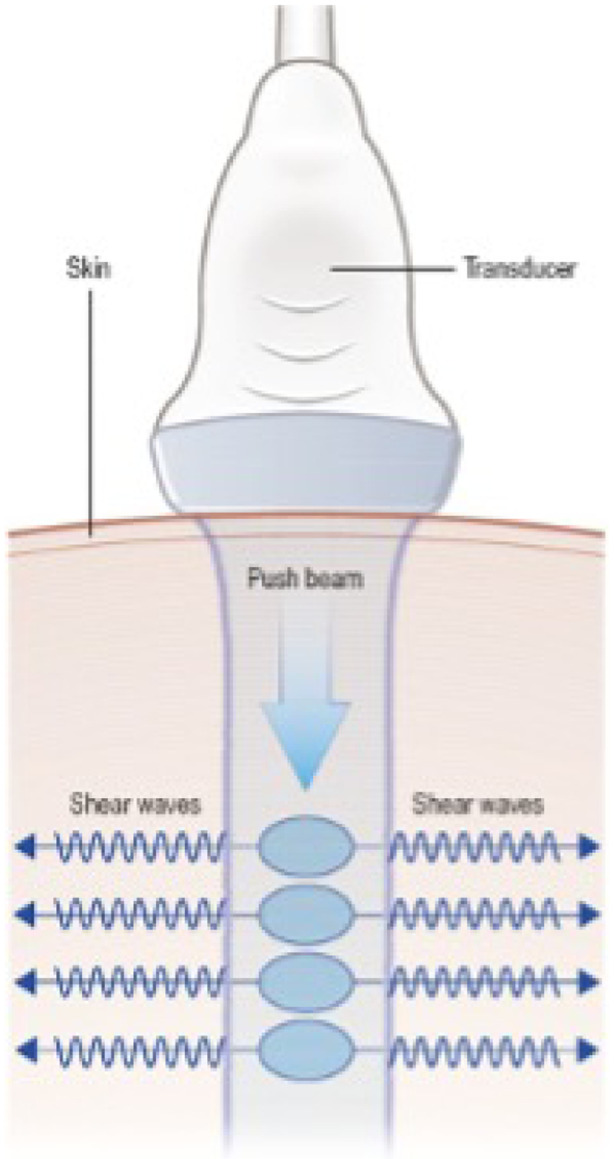 Figure 1
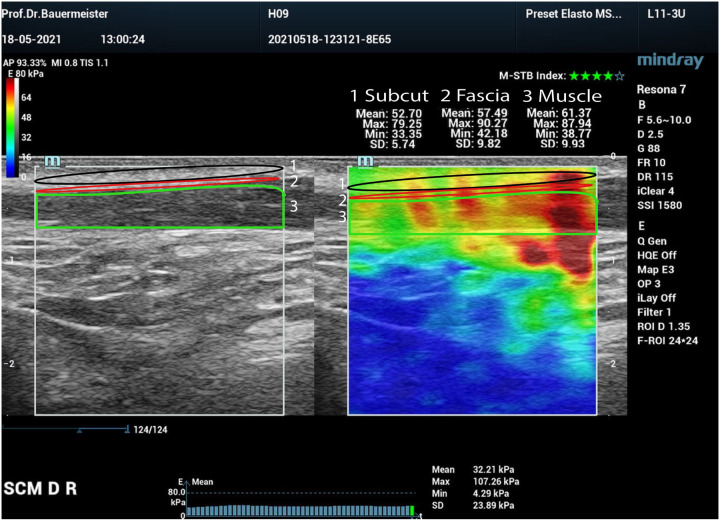 Figure 2
Peer Reviews
No public reviews on file for this paper yet. If you reviewed it on a platform where reviews are public (OpenReview, ICLR, NeurIPS, ICML), you can paste yours below so the community can read it here.
Videos
No videos yet. Explain this paper in a talk, walkthrough, or lecture? Add one.
Taxonomy
TopicsUltrasound and Hyperthermia Applications · Ultrasound Imaging and Elastography · Bone fractures and treatments