Evaluation of Aav Capsids and Delivery Approaches for Hereditary Hemorrhagic Telangiectasia Gene Therapy
Alka Yadav, Rich Liang, Kelly Press, Annika Schmidt, Zahra Shabani, Kun Leng, Calvin Wang, Abinav Sekhar, Joshua Shi, Garth W Devlin, Trevor J. Gonzalez, Aravind Asokan, Hua Su

TL;DR
This study evaluates different AAV capsids and delivery methods for gene therapy in hereditary hemorrhagic telangiectasia, focusing on reducing brain arteriovenous malformations with minimal side effects.
Contribution
The study identifies AAV.cc84 as a promising vector for targeted gene delivery to brain and nasal tissues in HHT gene therapy.
Findings
AAV.cc84 delivered intravenously transduced a high percentage of brain endothelial cells with minimal hepatocyte transduction.
Intranasal delivery of AAV.cc84 transduced nasal epithelial and skeletal muscle cells with minimal liver impact.
AAV.cc84-Alk1 delivery reduced brain arteriovenous malformation severity in a mouse model.
Abstract
Nosebleeds and intracranial hemorrhage from brain arteriovenous malformations (bAVMs) are among the most devastating symptoms of patients with hereditary hemorrhagic telangiectasis (HHT). All available managements have limitations. We showed that intravenous delivery of soluble FMS-related tyrosine kinase 1 using an adeno-associated viral vector (AAV9-sFLT1) reduced bAVM severity of endoglin deficient mice. However, minor liver inflammation and growth arrest in young mice were observed. To identify AAV variants and delivery methods that can best transduce brain and nasal tissue with an optimal transduction profile, we compared 3 engineered AAV capsids (AAV.cc47, AAV.cc84 and AAV1RX) with AAV9. A single-stranded CBA promoter driven tdTomato transgene was packaged in these capsids and delivered intravenously (i.v.) or intranasally (i.n.) to wild-type mice. A CMV promoter driven Alk1…
Genes, proteins, chemicals, diseases, species, mutations and cell lines named across the full text — each resolved to its canonical identifier and authoritative record.
Click any figure to enlarge with its caption.
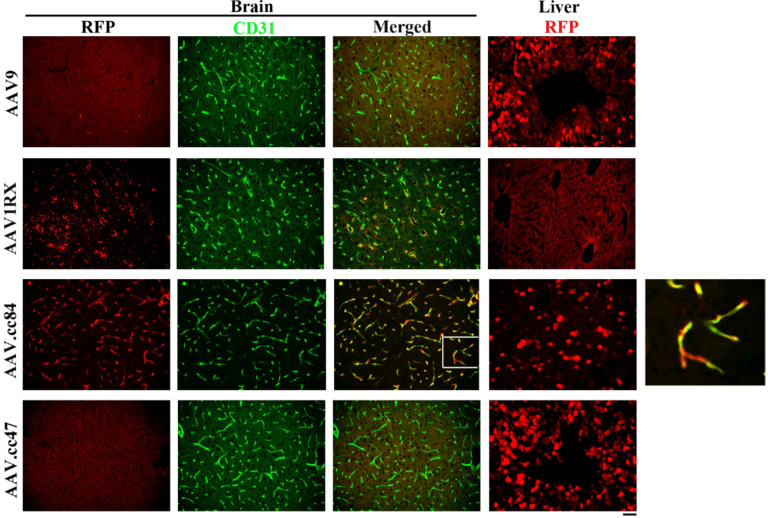 Figure 1
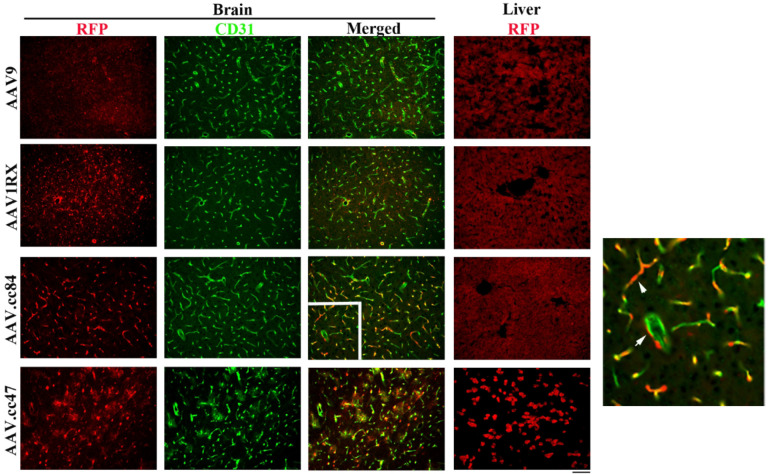 Figure 2
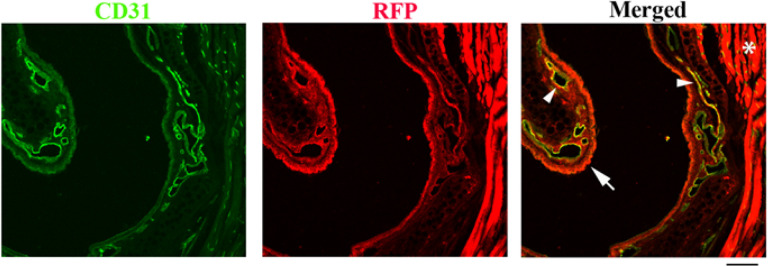 Figure 3
 Figure 4
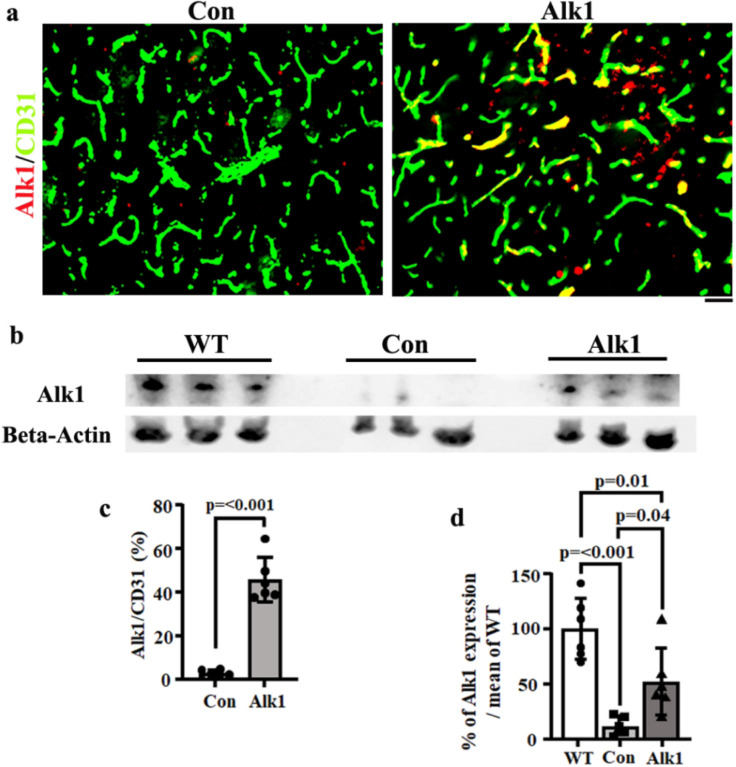 Figure 5
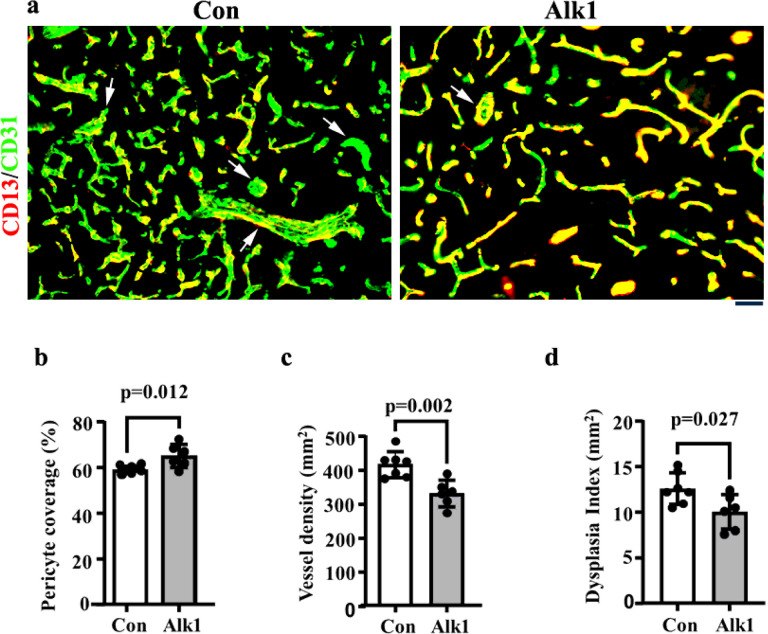 Figure 6
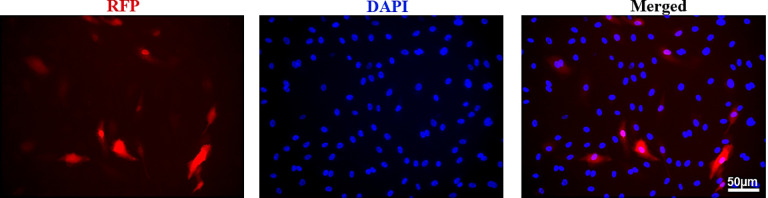 Figure 7
Peer Reviews
No public reviews on file for this paper yet. If you reviewed it on a platform where reviews are public (OpenReview, ICLR, NeurIPS, ICML), you can paste yours below so the community can read it here.
Videos
No videos yet. Explain this paper in a talk, walkthrough, or lecture? Add one.
Taxonomy
TopicsVascular Anomalies and Treatments · Vascular Malformations and Hemangiomas