Human Organoids for Rapid Validation of Gene Variants Linked to Cochlear Malformations
Mohammad Faraz Zafeer, Memoona Ramzan, Duygu Duman, Ahmet Mutlu, Serhat Seyhan, Tayyar Kalcioglu, Suat Fitoz, Brooke A. DeRosa, Shengru Guo, Derek M. Dykxhoorn, Mustafa Tekin

TL;DR
Researchers used human inner ear organoids to test the effects of gene variants linked to hearing loss and cochlear malformations, helping identify which genetic changes cause these conditions.
Contribution
The study introduces human inner ear organoids as a rapid tool for validating the pathogenicity of gene variants associated with cochlear malformations.
Findings
Inner ear organoids derived from patient-specific iPSCs showed developmental defects when carrying candidate gene variants.
Variants in FGF3, GREB1L, and PBXIP1 were functionally linked to cochlear malformations through organoid analysis.
SNVs in patient-derived organoids displayed similar abnormalities as gene knockout models, supporting their causal role.
Abstract
Developmental anomalies of the hearing organ, the cochlea, are diagnosed in approximately one-fourth of individuals with congenital deafness. Most patients with cochlear malformations remain etiologically undiagnosed due to insufficient knowledge about underlying genes or the inability to make conclusive interpretations of identified genetic variants. We used exome sequencing for genetic evaluation of hearing loss associated with cochlear malformations in three probands from unrelated families. We subsequently generated monoclonal induced pluripotent stem cell (iPSC) lines, bearing patient-specific knockins and knockouts using CRISPR/Cas9 to assess pathogenicity of candidate variants. We detected FGF3 (p.Arg165Gly) and GREB1L (p.Cys186Arg), variants of uncertain significance in two recognized genes for deafness, and PBXIP1(p.Trp574*) in a candidate gene. Upon differentiation of iPSCs…
Genes, proteins, chemicals, diseases, species, mutations and cell lines named across the full text — each resolved to its canonical identifier and authoritative record.
Click any figure to enlarge with its caption.
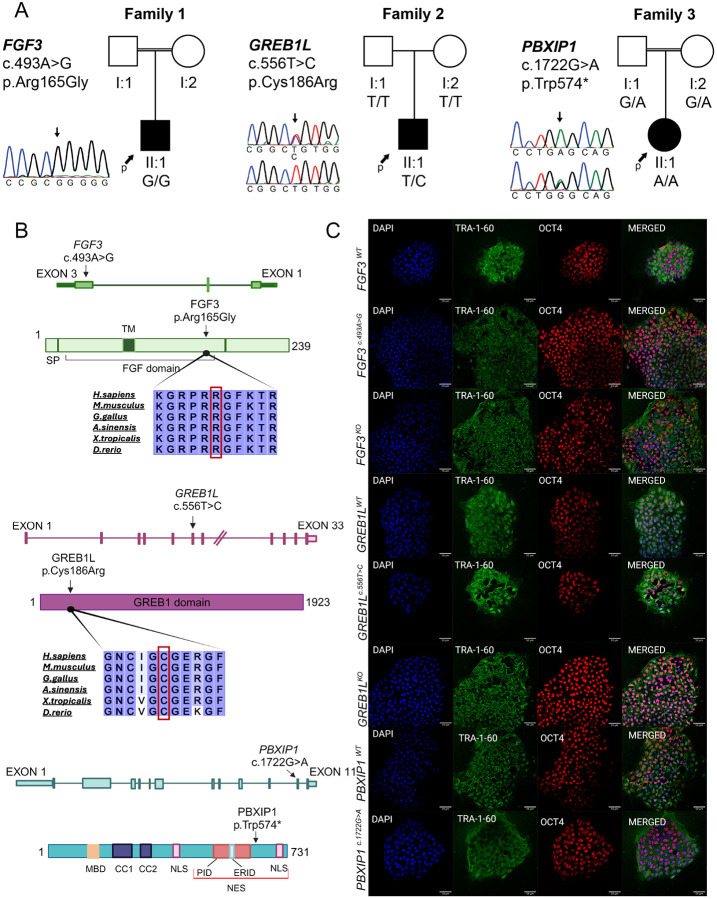 Figure 1
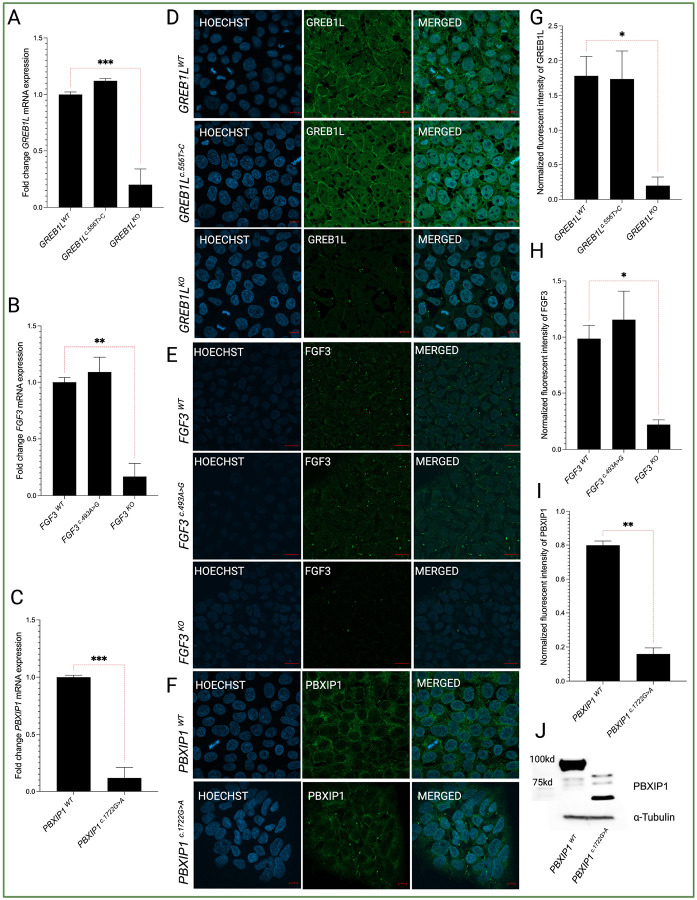 Figure 2
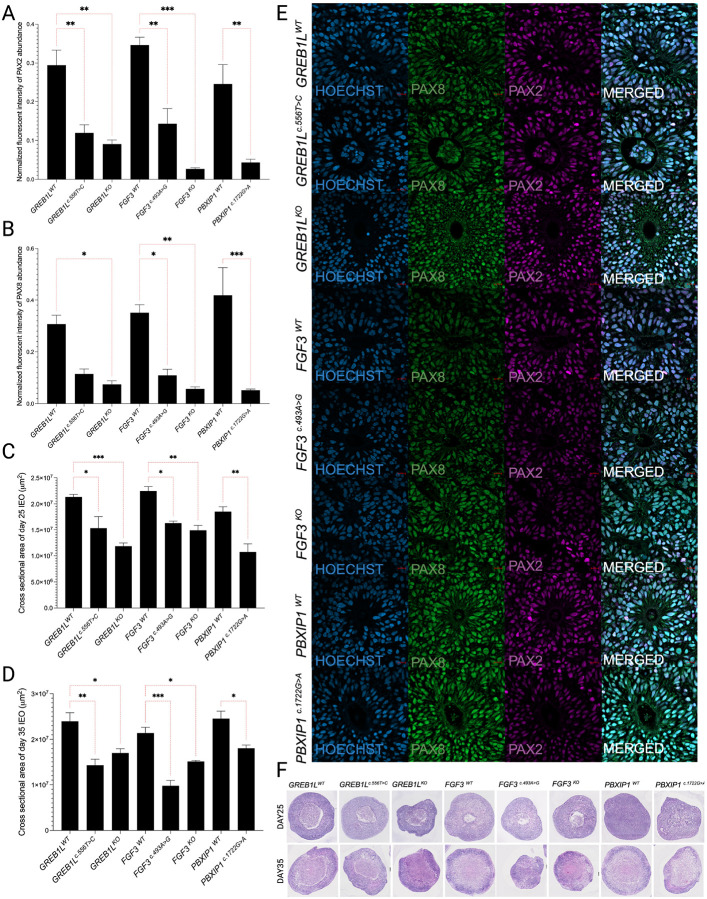 Figure 3
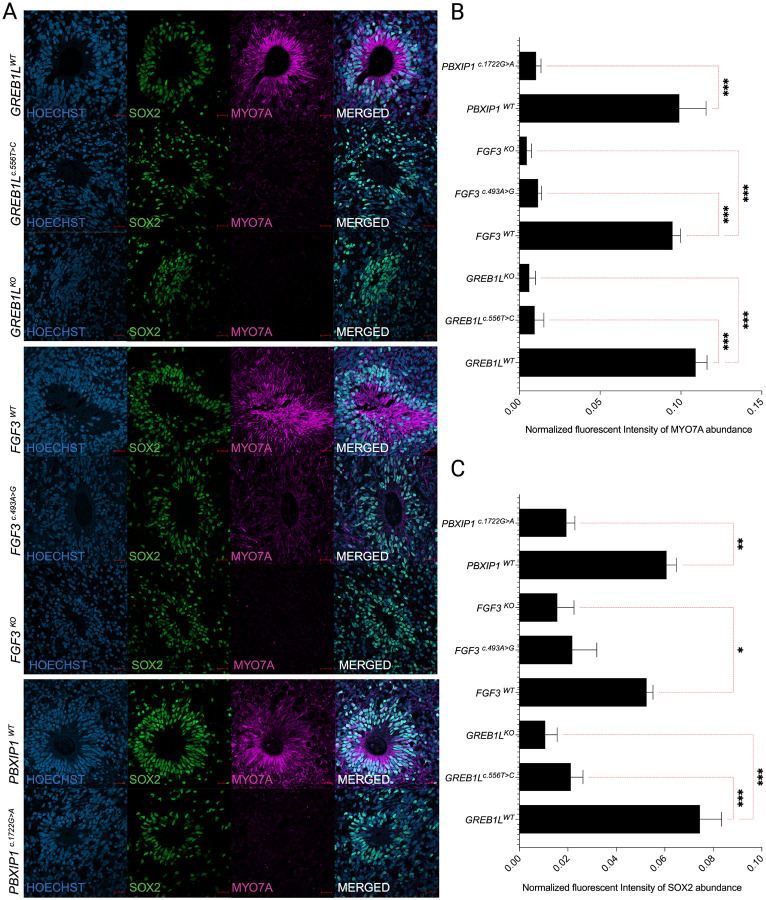 Figure 4
Peer Reviews
No public reviews on file for this paper yet. If you reviewed it on a platform where reviews are public (OpenReview, ICLR, NeurIPS, ICML), you can paste yours below so the community can read it here.
Videos
No videos yet. Explain this paper in a talk, walkthrough, or lecture? Add one.
Taxonomy
TopicsCongenital heart defects research · Hearing, Cochlea, Tinnitus, Genetics · Congenital gastrointestinal and neural anomalies