Identification and serological responses to a novel Plasmodium vivax merozoite surface protein 1 (PvMSP-1) derived synthetic peptide: a putative biomarker for malaria exposure
Aline Marzano-Miranda, Gustavo Pereira Cardoso-Oliveira, Ingrid Carla de Oliveira, Luiza Carvalho Mourão, Letícia Reis Cussat, Vanessa Gomes Fraga, Carlos Delfin Chávez Olórtegui, Cor Jesus Fernandes Fontes, Daniella Castanheira Bartholomeu, Erika M. Braga

TL;DR
This study identifies a synthetic peptide from a malaria parasite protein that could serve as a biomarker for detecting past exposure to P. vivax malaria.
Contribution
The study introduces a novel synthetic peptide (p314) as a potential serological biomarker for P. vivax exposure.
Findings
Peptide p314 was specifically recognized by IgG antibodies in most P. vivax-infected individuals.
p314 showed higher recognition by IgG1 and IgG3 in P. vivax-infected individuals compared to P. falciparum-infected and uninfected individuals.
The peptide p314 is part of a conserved region of PvMSP-1, supporting its potential as a malaria transmission biomarker.
Abstract
The integration of diagnostic methods holds promise for advancing the surveillance of malaria transmission in both endemic and non-endemic regions. Serological assays emerge as valuable tools to identify and delimit malaria transmission, serving as a complementary method to rapid diagnostic tests (RDT) and thick smear microscopy. Here, we evaluate the potential of antibodies directed against peptides encompassing the entire amino acid sequence of the PvMSP-1 Sal-I strain as viable serological biomarkers for P. vivax exposure. We screened peptides encompassing the complete amino acid sequence of the Plasmodium vivax Merozoite Surface Protein 1 (PvMSP-1) Sal-I strain as potential biomarkers for P. vivax exposure. Here, immunodominant peptides specifically recognized by antibodies from individuals infected with P. vivax were identified using the SPOT-synthesis technique followed by…
Genes, proteins, chemicals, diseases, species, mutations and cell lines named across the full text — each resolved to its canonical identifier and authoritative record.
Click any figure to enlarge with its caption.
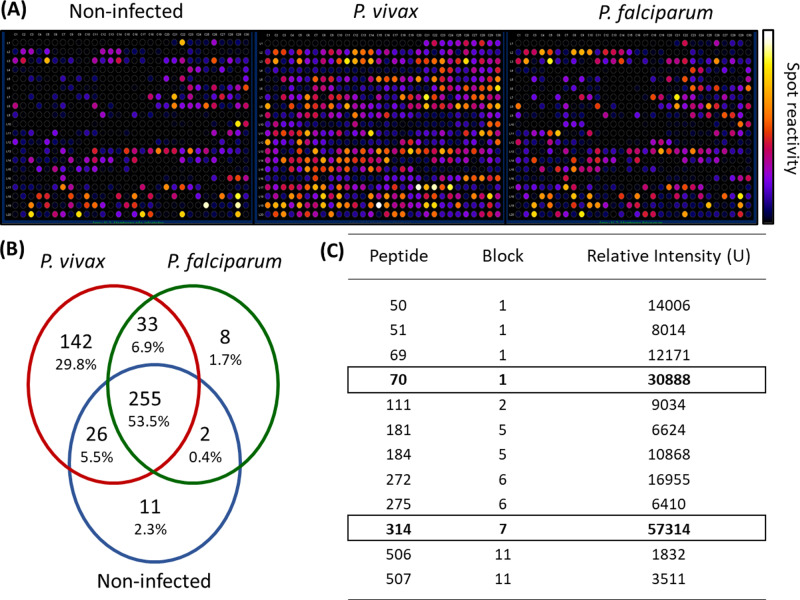 Figure 1
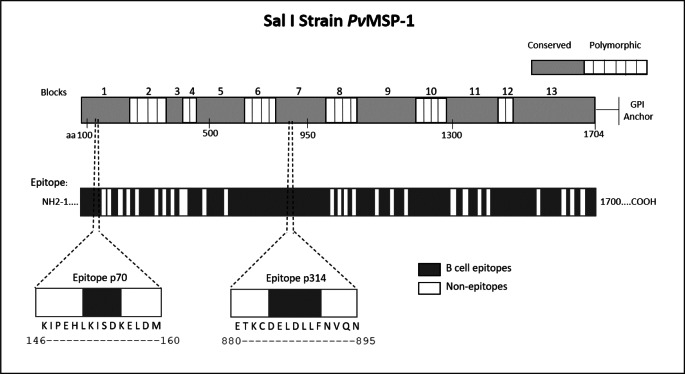 Figure 2
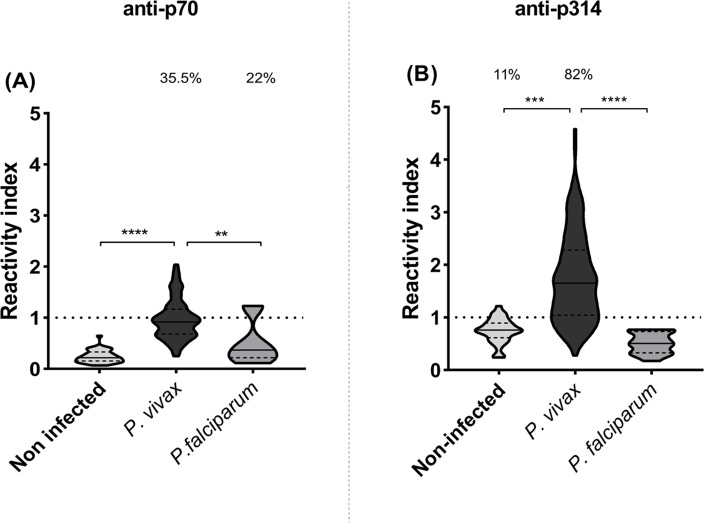 Figure 3
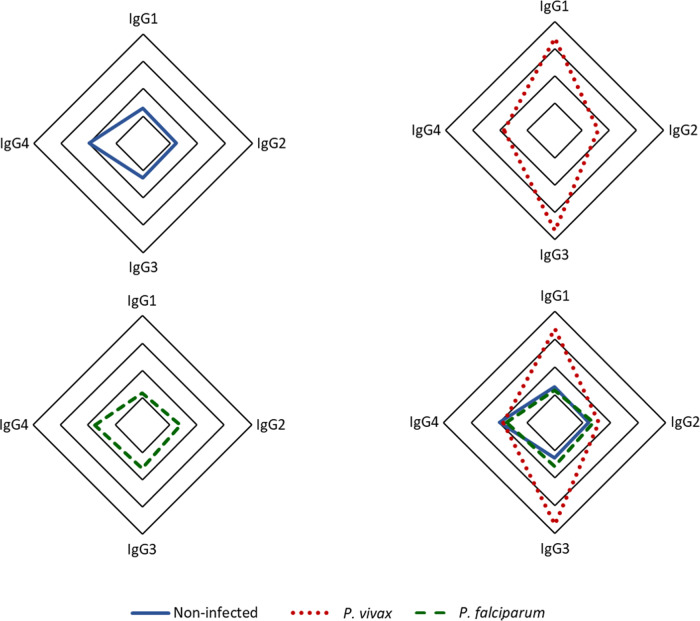 Figure 4
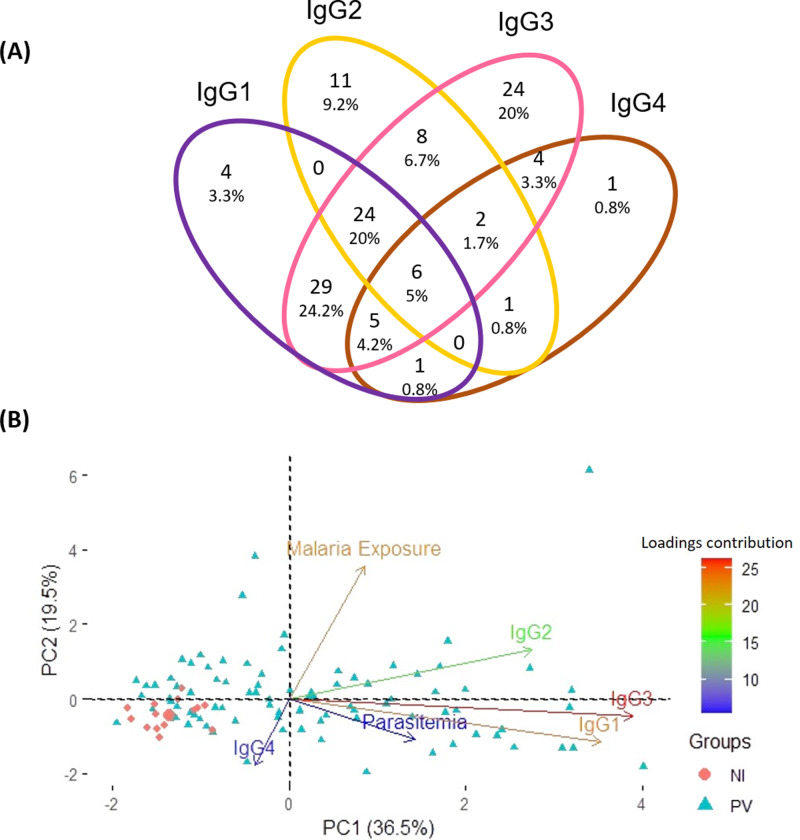 Figure 5
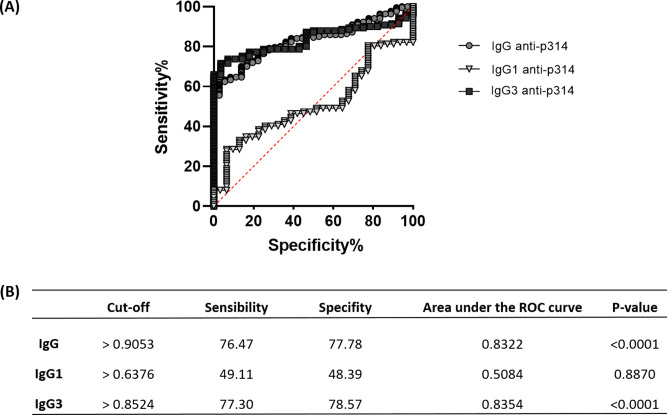 Figure 6
Peer Reviews
No public reviews on file for this paper yet. If you reviewed it on a platform where reviews are public (OpenReview, ICLR, NeurIPS, ICML), you can paste yours below so the community can read it here.
Videos
No videos yet. Explain this paper in a talk, walkthrough, or lecture? Add one.
Taxonomy
TopicsMalaria Research and Control · Invertebrate Immune Response Mechanisms · vaccines and immunoinformatics approaches