Spatiotemporal Regulation of Cell Fate in Living Systems Using Photoactivatable Artificial DNA Membraneless Organelles
Lili Zhang, Mei Chen, Zhiqiang Wang, Minjuan Zhong, Hong Chen, Ting Li, Linlin Wang, Zhihui Zhao, Xiao-Bing Zhang, Guoliang Ke, Yanlan Liu, Weihong Tan

TL;DR
Researchers created synthetic DNA-based membraneless organelles that can control cell fate with spatiotemporal precision in living systems.
Contribution
A self-stabilizing DNA membraneless organelle is developed for precise spatiotemporal regulation of cell fate in complex physiological systems.
Findings
DNA coacervates assembled via phase separation enable self-stabilization and function encoding.
Photoactivatable DNA membraneless organelles were used to manage cancer in a mouse model.
The method avoids surface coating or hybridization, maintaining molecular communication properties.
Abstract
Coacervates formed by liquid–liquid phase separation emerge as important biomimetic models for studying the dynamic behaviors of membraneless organelles and synchronously motivating the creation of smart architectures with the regulation of cell fate. Despite continuous progress, it remains challenging to balance the trade-offs among structural stability, versatility, and molecular communication for regulation of cell fate and systemic investigation in a complex physiological system. Herein, we present a self-stabilizing and fastener-bound gain-of-function methodology to create a new type of synthetic DNA membraneless organelle (MO) with high stability and controlled bioactivity on the basis of DNA coacervates. Specifically, long single-strand DNA generated by rolling circle amplification (RCA) is selected as the scaffold that assembles into membraneless coacervates via phase…
Genes, proteins, chemicals, diseases, species, mutations and cell lines named across the full text — each resolved to its canonical identifier and authoritative record.
Click any figure to enlarge with its caption.
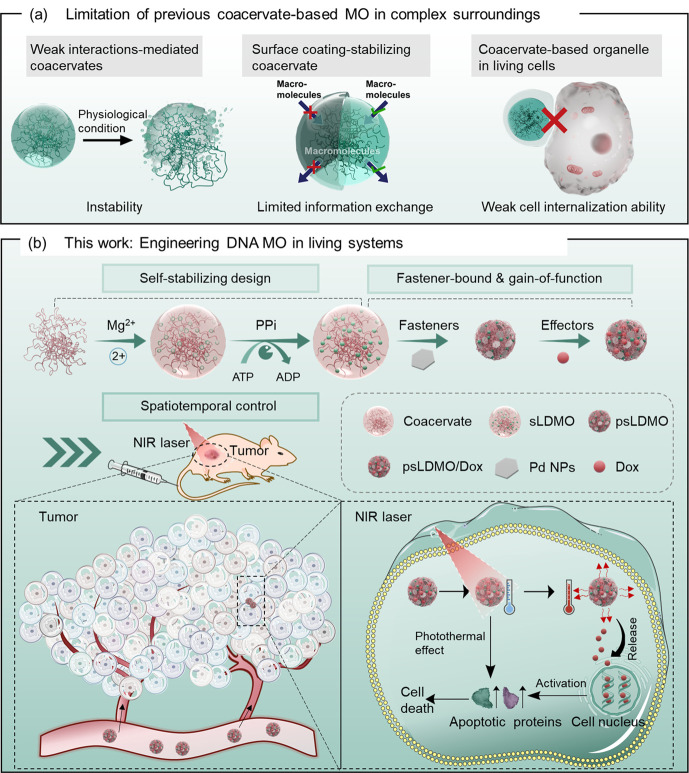 Figure 1
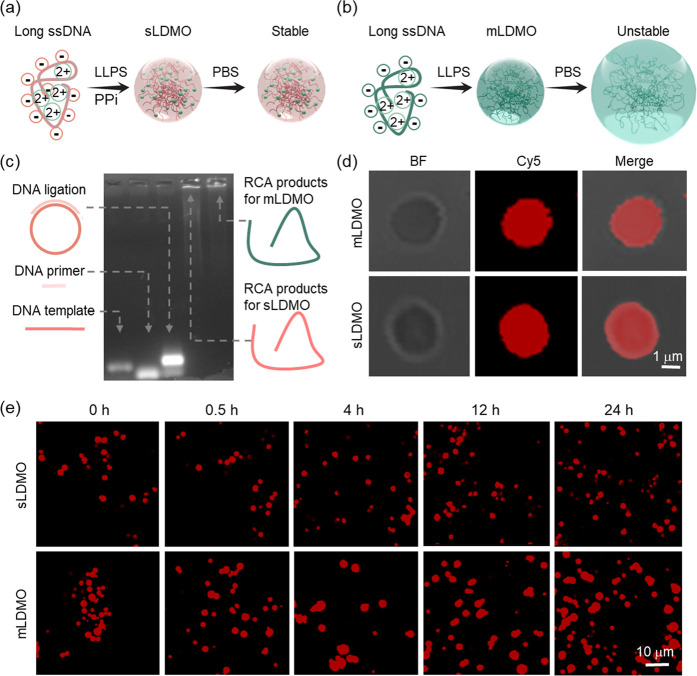 Figure 2
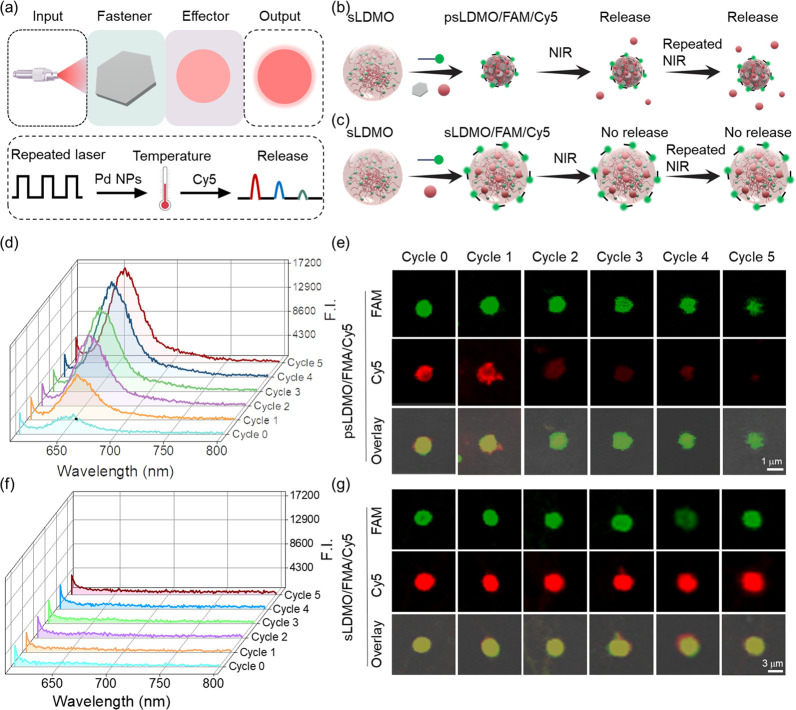 Figure 3
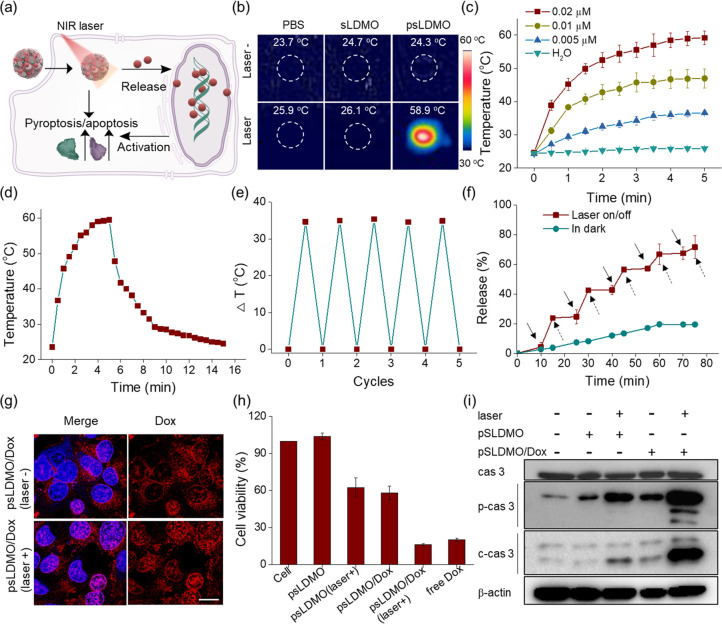 Figure 4
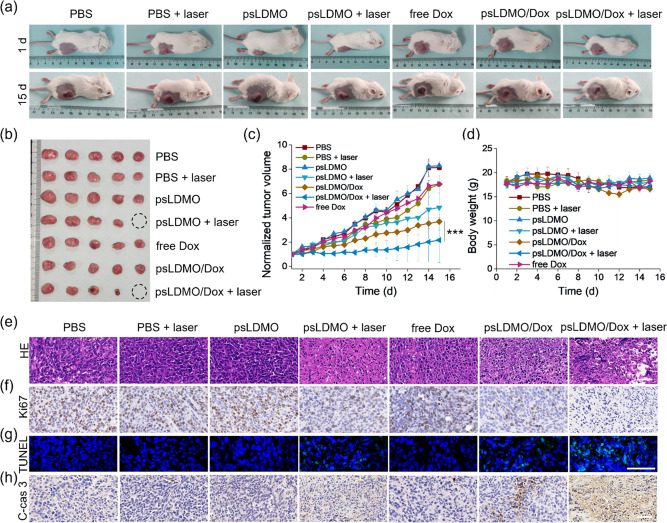 Figure 5
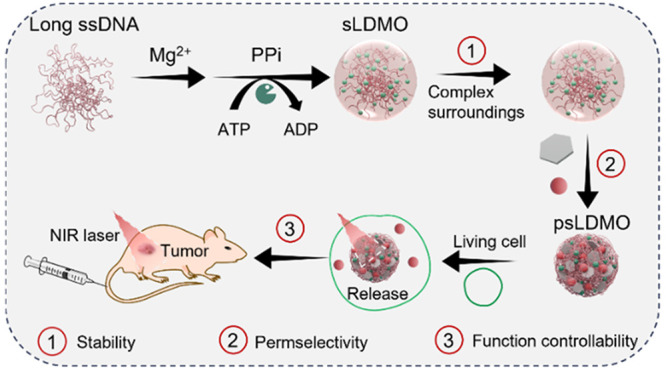 Figure 6
Peer Reviews
No public reviews on file for this paper yet. If you reviewed it on a platform where reviews are public (OpenReview, ICLR, NeurIPS, ICML), you can paste yours below so the community can read it here.
Videos
No videos yet. Explain this paper in a talk, walkthrough, or lecture? Add one.
Taxonomy
TopicsMediterranean and Iberian flora and fauna