Extrafacial Acquired Dermal Melanocytosis: An Exceptionally Rare Example With Bilateral Multifocal Disease
Umar A Hussain, Kruti Gandhi, Jamie A Tschen

TL;DR
This paper reports a rare case of a skin condition with melanocytes in the dermis appearing on non-face areas and affecting both sides of the body.
Contribution
The novelty is the presentation of a rare case with bilateral and multifocal purely extrafacial ADM.
Findings
The patient had purely extrafacial ADM with bilateral and multifocal involvement.
This case is exceptionally rare and expands the known clinical spectrum of ADM.
The patient was a 44-year-old woman from the Philippines.
Abstract
Dermal melanocytoses are a group of cutaneous disorders characterized by the presence of ectopic melanocytes in the dermis; the most well-known example is the Mongolian spot. Acquired dermal melanocytosis (ADM) is a term used to describe the onset of dermal melanocytosis occurring after its usual age of presentation (i.e., birth and infancy). ADMs usually occur on the face and can less commonly affect extrafacial sites, such as the back and limbs. Purely extrafacial ADM is extremely uncommon and, when present, is usually unifocal. Herein, we present an exceptionally rare example of purely extrafacial ADM with extensive bilateral involvement in a 44-year-old female originally from the Philippines.
Genes, proteins, chemicals, diseases, species, mutations and cell lines named across the full text — each resolved to its canonical identifier and authoritative record.
Click any figure to enlarge with its caption.
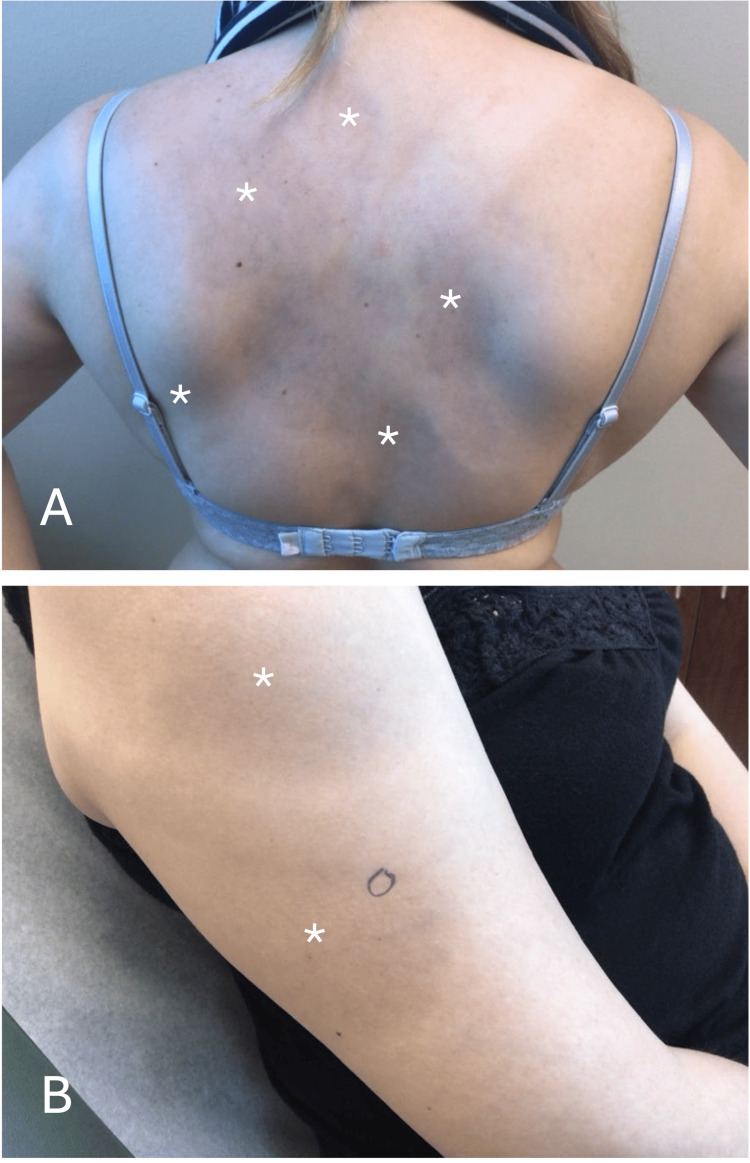 Figure 1
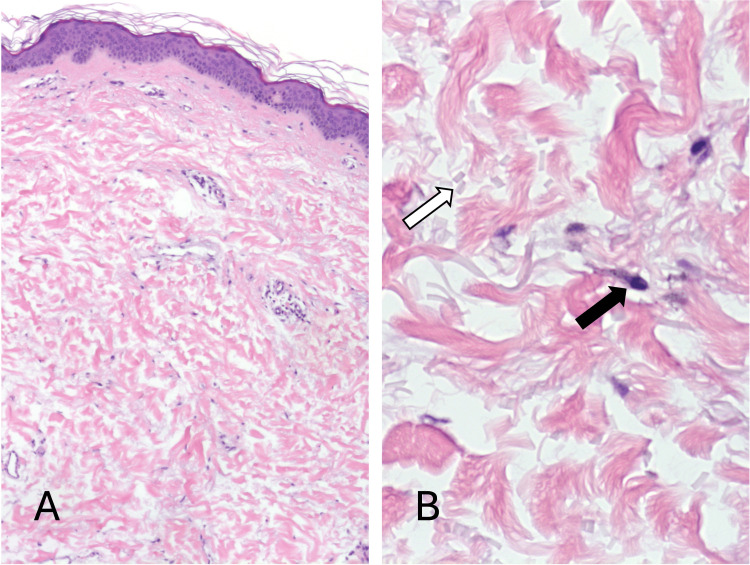 Figure 2
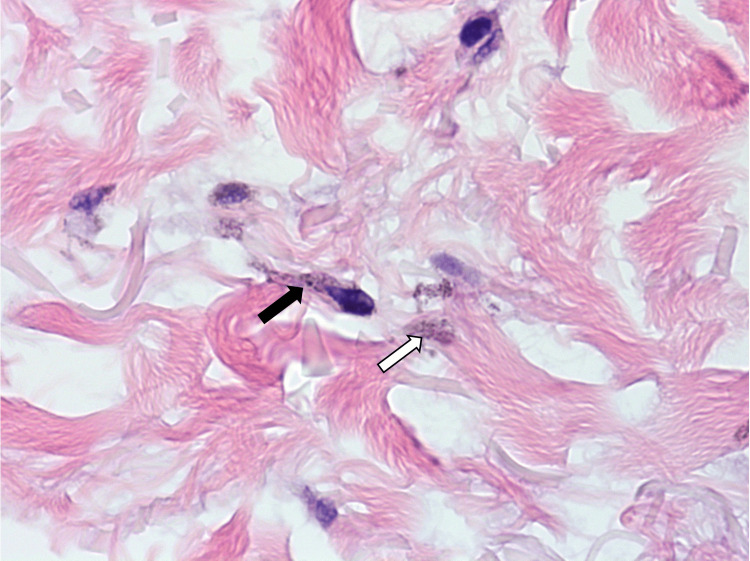 Figure 3
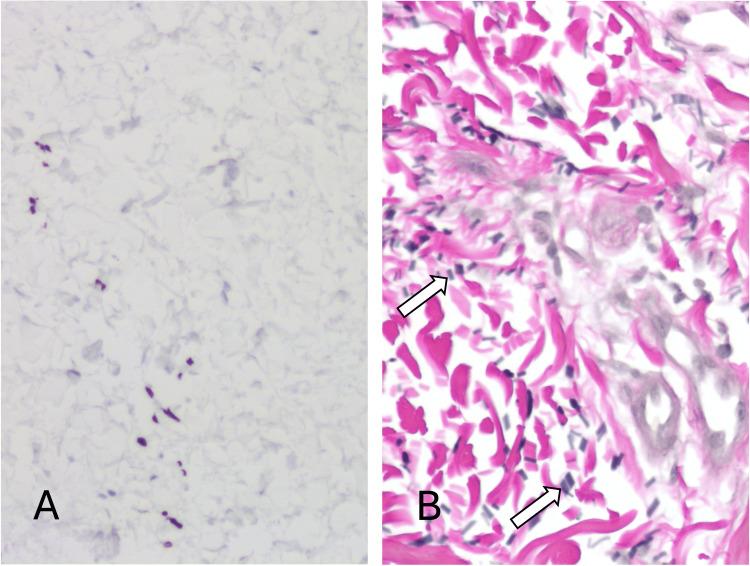 Figure 4
Peer Reviews
No public reviews on file for this paper yet. If you reviewed it on a platform where reviews are public (OpenReview, ICLR, NeurIPS, ICML), you can paste yours below so the community can read it here.
Videos
No videos yet. Explain this paper in a talk, walkthrough, or lecture? Add one.
Taxonomy
TopicsCancer and Skin Lesions · Genetic and rare skin diseases. · Mast cells and histamine