Testing ethical impact assessment for nano risk governance
Ineke MALSCH, Panagiotis Isigonis, Evert Bouman, Antreas Afantitis, Georgia Melagraki, Maria Dusinska, Erich Griessler, Neelina Hermina MALSCH, Araceli Sánchez Jiménez, Neelina Hermina MALSCH

TL;DR
This paper explores how ethical impact assessments can improve the governance of nanomaterial risks by incorporating social and ethical factors.
Contribution
The paper introduces tested ethical impact assessment tools adapted for nanomaterial risk governance.
Findings
Stakeholder feedback showed the usefulness of ethical impact assessment in nanomaterial governance.
Adapted CEN guidelines were found effective in integrating ethical aspects into risk governance.
The approach supports a broader, more inclusive risk governance framework for nanomaterials.
Abstract
Risk governance of nanomaterials and nanotechnologies is traditionally mainly limited to risk assessment, risk management and life cycle assessment. Recent approaches have experimented with widening the scope and including economic, social, and ethical aspects. This paper reports on tests and stakeholder feedback on the use of ethical impact assessment guidelines and tools adapting CEN Workshop Agreement part 2 CWA 17145-2:2017 (E)) to support risk governance of nanomaterials, in the RiskGONE project.
Genes, proteins, chemicals, diseases, species, mutations and cell lines named across the full text — each resolved to its canonical identifier and authoritative record.
Click any figure to enlarge with its caption.
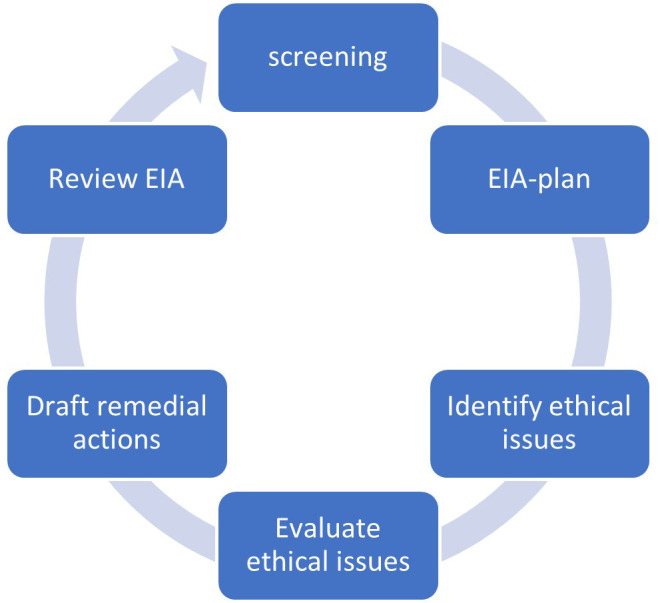 Figure 1
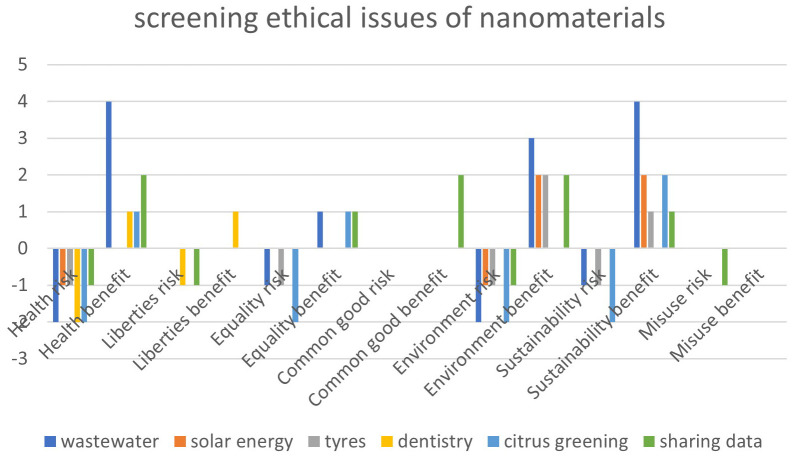 Figure 2
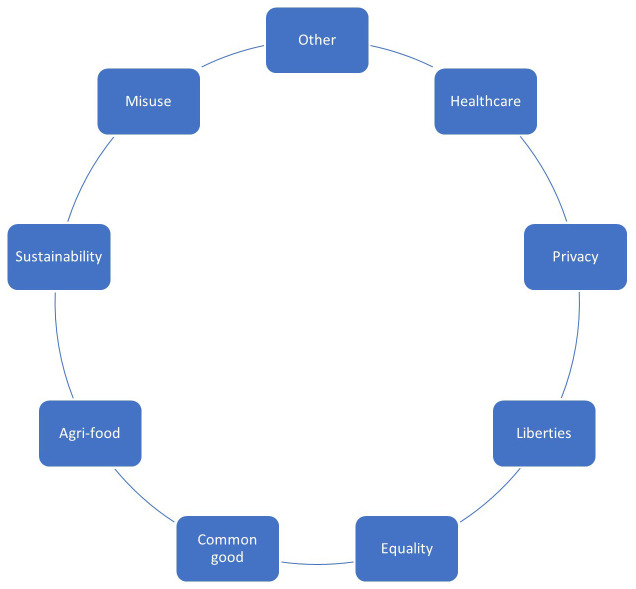 Figure 3
Peer Reviews
No public reviews on file for this paper yet. If you reviewed it on a platform where reviews are public (OpenReview, ICLR, NeurIPS, ICML), you can paste yours below so the community can read it here.
Videos
No videos yet. Explain this paper in a talk, walkthrough, or lecture? Add one.
Taxonomy
TopicsNanoparticles: synthesis and applications · Recycling and Waste Management Techniques · Chemistry and Chemical Engineering