Implications of unconventional histological subtypes on magnetic resonance imaging and oncological outcomes in patients who have undergone radical prostatectomy
Koichiro Kurokawa, Yasutaka Yamada, Shinichi Sakamoto, Takuro Horikoshi, Kodai Sato, Sakie Nanba, Yoshihiro Kubota, Manato Kanesaka, Ayumi Fujimoto, Nobuyoshi Takeuchi, Hiroki Shibata, Tomokazu Sazuka, Yusuke Imamura, Toyonori Tsuzuki, Takashi Uno, Tomohiko Ichikawa

TL;DR
Unconventional prostate cancer types are linked to worse outcomes after surgery, even when tumors appear localized, suggesting they are more aggressive.
Contribution
This study identifies unconventional histology prostate cancers as independent predictors of poor prognosis, regardless of tumor location.
Findings
Unconventional histology tumors are associated with higher progression rates even in cases with negative resection margins.
Tumor localization does not significantly affect outcomes for unconventional histology prostate cancer.
Unconventional histology tumors can have large volumes despite low MRI risk scores.
Abstract
The prognostic significance of unconventional histology (UH) subtypes including intraductal carcinoma of the prostate (IDC-P), ductal adenocarcinoma, and cribriform pattern has been investigated for prostate cancer (PCa). However, little is known about magnetic resonance imaging (MRI) features and the oncological impact of tumor localization in localized PCa with UH. Clinical data of 211 patients with acinar adenocarcinoma (conventional histology [CH]) and 82 patients with UH who underwent robotic-assisted radical prostatectomy (RARP) were reviewed. Patients with UH are more likely to be older and have higher Gleason grade group, higher Prostate Imaging-Reporting and Data System (PI-RADS) v2.1 score, and larger tumor volume (TV) than those with CH. Multivariate analysis identified the presence of UH as an independent prognostic factor for progression-free survival (PFS) (hazard ration…
Genes, proteins, chemicals, diseases, species, mutations and cell lines named across the full text — each resolved to its canonical identifier and authoritative record.
Click any figure to enlarge with its caption.
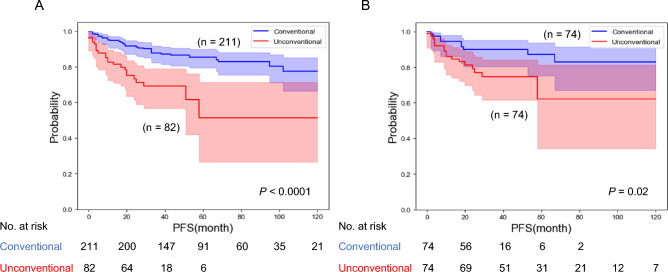 Figure 1
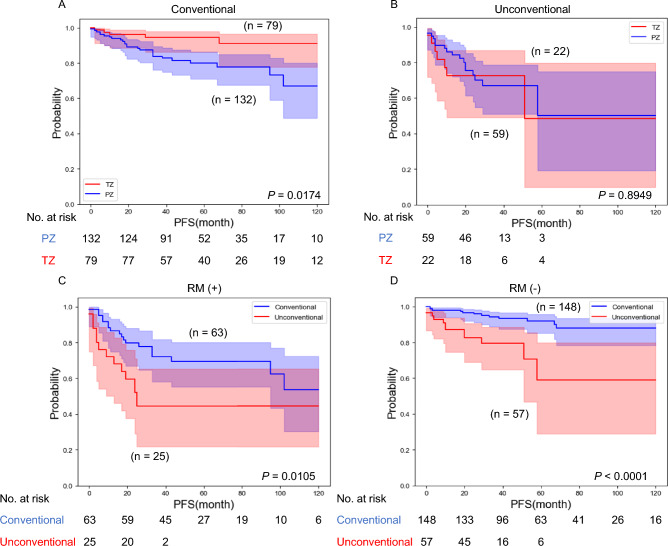 Figure 2
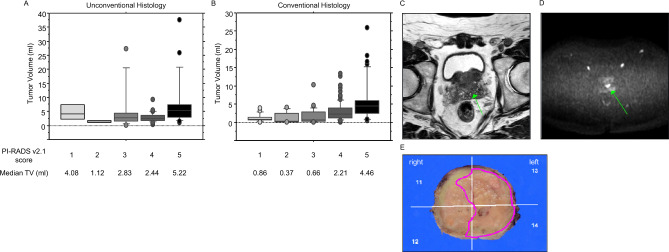 Figure 3
Peer Reviews
No public reviews on file for this paper yet. If you reviewed it on a platform where reviews are public (OpenReview, ICLR, NeurIPS, ICML), you can paste yours below so the community can read it here.
Videos
No videos yet. Explain this paper in a talk, walkthrough, or lecture? Add one.
Taxonomy
TopicsProstate Cancer Treatment and Research · Prostate Cancer Diagnosis and Treatment · Cancer, Lipids, and Metabolism