Supervised learning of enhancer–promoter specificity based on genome-wide perturbation studies highlights areas for improvement in learning
Dylan Barth, Richard Van, Jonathan Cardwell, Mira V Han

TL;DR
This paper uses machine learning to predict enhancer-promoter relationships from genomic data, revealing gaps in current understanding and improving prediction accuracy.
Contribution
The study integrates enhancer perturbation data with genomic assays to improve enhancer-promoter prediction models.
Findings
Genomic element density and contact strength are key features for enhancer-promoter prediction.
Transcription factor peaks help reduce false positives in predictions.
Integrating multiple data types improves model accuracy and understanding of enhancer regulation.
Abstract
Understanding the rules that govern enhancer-driven transcription remains a central unsolved problem in genomics. Now with multiple massively parallel enhancer perturbation assays published, there are enough data that we can utilize to learn to predict enhancer–promoter (EP) relationships in a data-driven manner. We applied machine learning to one of the largest enhancer perturbation studies integrated with transcription factor (TF) and histone modification ChIP-seq. The results uncovered a discrepancy in the prediction of genome-wide data compared to data from targeted experiments. Relative strength of contact was important for prediction, confirming the basic principle of EP regulation. Novel features such as the density of the enhancers/promoters in the genomic region was found to be important, highlighting our lack of understanding on how other elements in the region contribute to…
Genes, proteins, chemicals, diseases, species, mutations and cell lines named across the full text — each resolved to its canonical identifier and authoritative record.
Click any figure to enlarge with its caption.
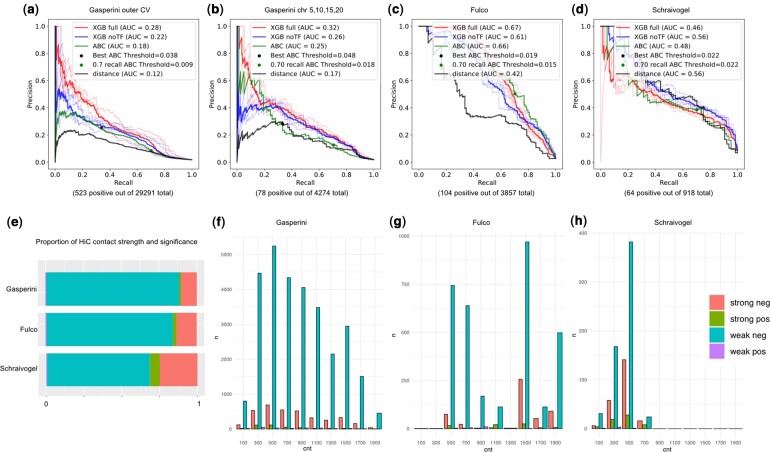 Figure 1
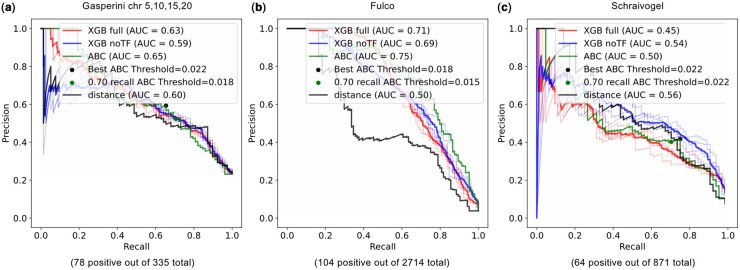 Figure 2
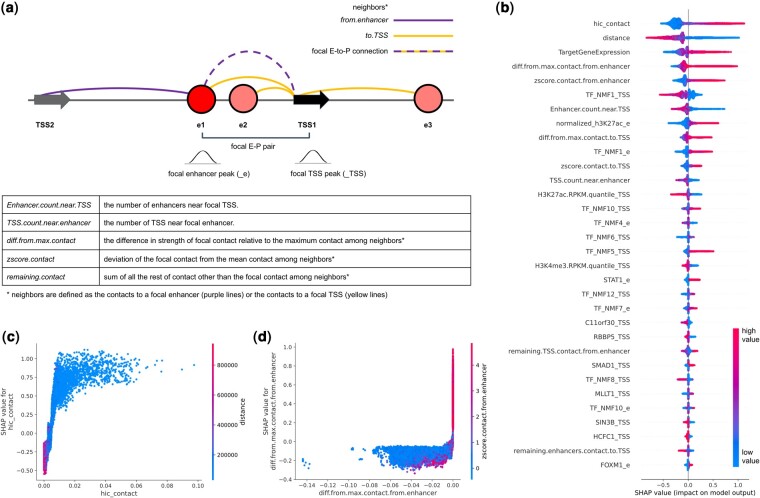 Figure 3
 Figure 4
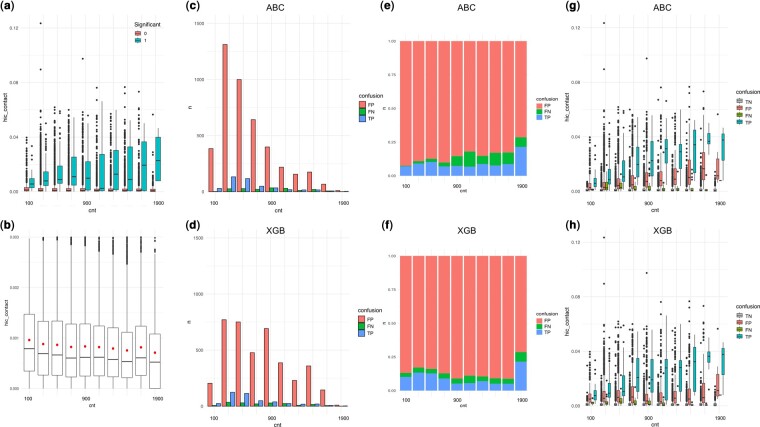 Figure 5
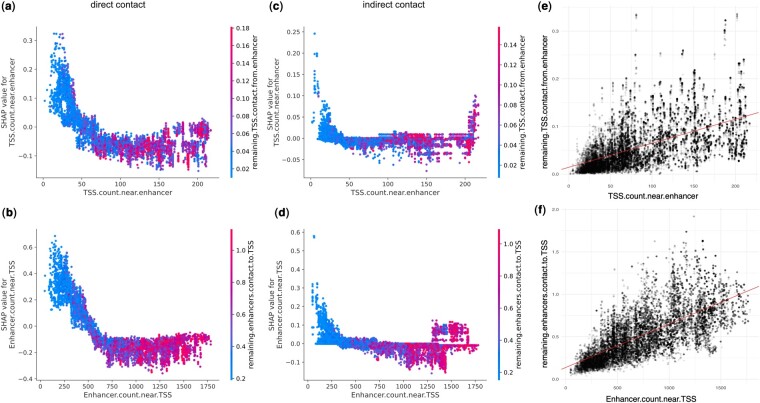 Figure 6
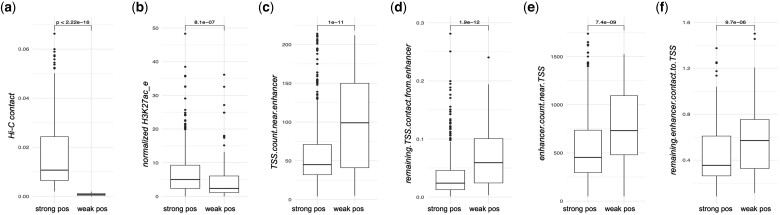 Figure 7
Peer Reviews
No public reviews on file for this paper yet. If you reviewed it on a platform where reviews are public (OpenReview, ICLR, NeurIPS, ICML), you can paste yours below so the community can read it here.
Videos
No videos yet. Explain this paper in a talk, walkthrough, or lecture? Add one.
Taxonomy
TopicsGenomics and Chromatin Dynamics · RNA and protein synthesis mechanisms · Antimicrobial Peptides and Activities