Incidence and management of secondary deformities after megaendoprosthetic proximal femur replacement in skeletally immature bone sarcoma patients
Wiebke K. Guder, Nina M. Engel, Arne Streitbürger, Christina Polan, Marcel Dudda, Lars E. Podleska, Markus Nottrott, Jendrik Hardes

TL;DR
This study examines hip and knee deformities in children after a specific type of bone replacement surgery and suggests management strategies based on remaining growth.
Contribution
The study identifies and analyzes the incidence and management of secondary hip dysplasia and genu valgum in skeletally immature patients after proximal femur replacement.
Findings
Hip dysplasia occurred in 58.3% of intraarticular resections and led to dislocation in 71.4% of those cases.
Genu valgum was observed in 41.6% of patients, with a combined incidence of 42.9% for both deformities.
Stress shielding was observed in 71.4% of patients, and management strategies varied based on patient age and growth potential.
Abstract
Megaendoprosthetic reconstruction of bone defects in skeletally immature patients has led to the development of unique complications and secondary deformities not observed in adult patient cohorts. With an increasing number of megaendoprosthetic replacements performed, orthopedic oncologists still gain experience in the incidence and type of secondary deformities caused. In this study, we report the incidence, probable cause and management outcome of two secondary deformities after megaendoprosthetic reconstruction of the proximal femur: hip dysplasia and genu valgum. Retrospective analysis of 14 patients who underwent primary and/or repeat reconstruction/surgery with a megaendoprosthetic proximal femur replacement between 2018 and 2022. Mean patient age was 9.1 years (range 4–17 years). Stress shielding was observed in 71.4%. Hip dislocation was the most frequent complication (50%).…
Genes, proteins, chemicals, diseases, species, mutations and cell lines named across the full text — each resolved to its canonical identifier and authoritative record.
Click any figure to enlarge with its caption.
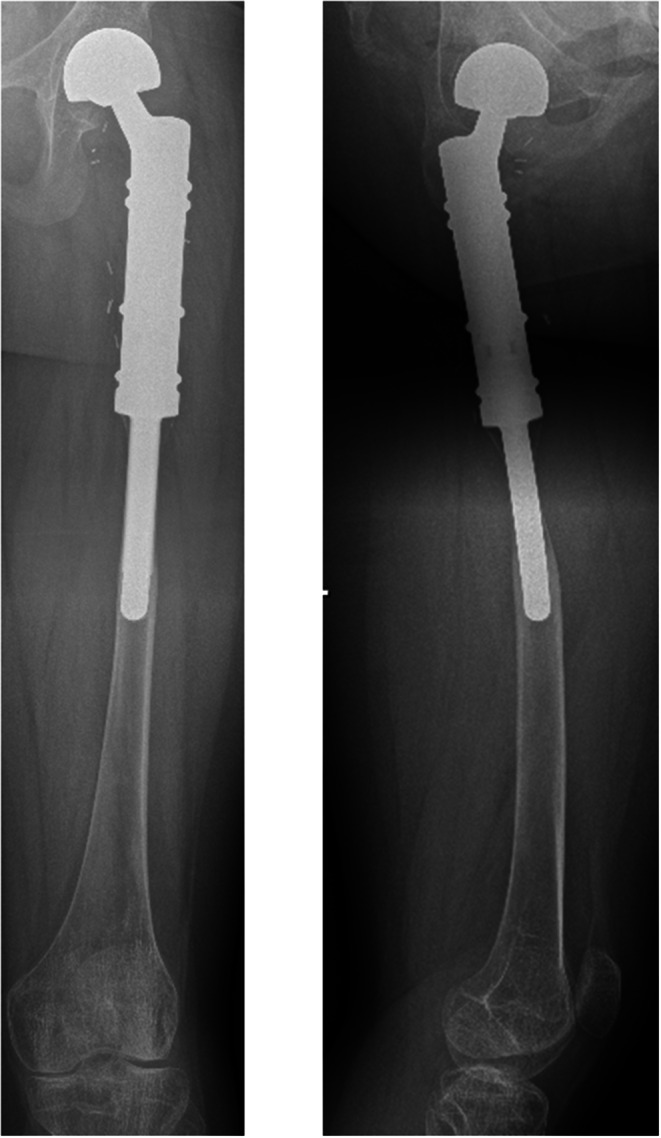 Figure 1
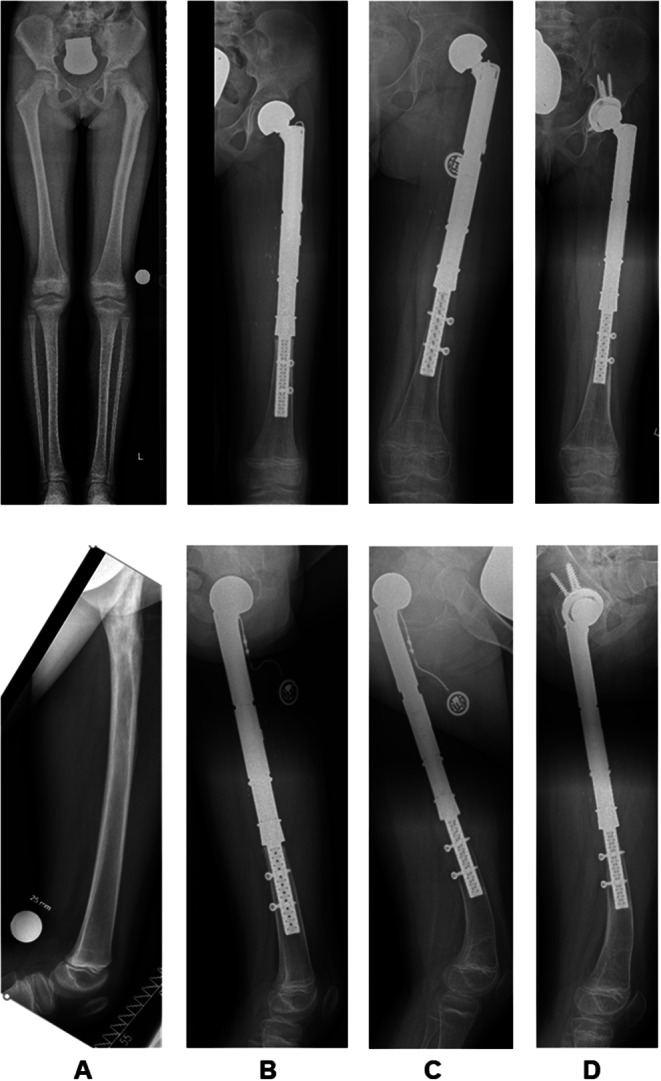 Figure 2
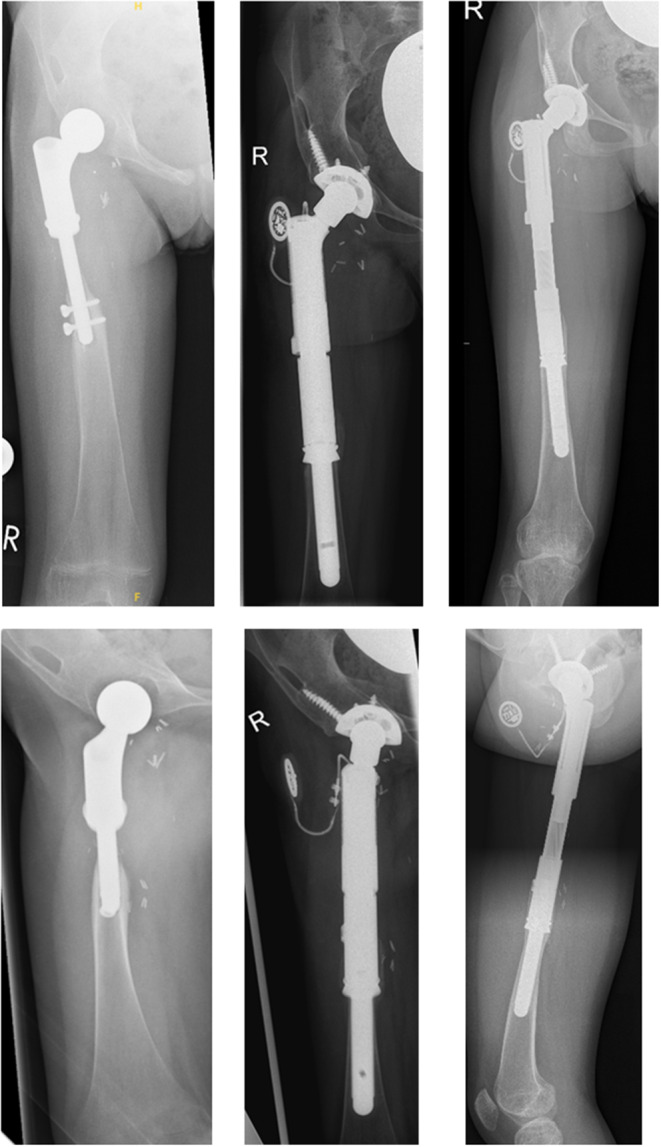 Figure 3
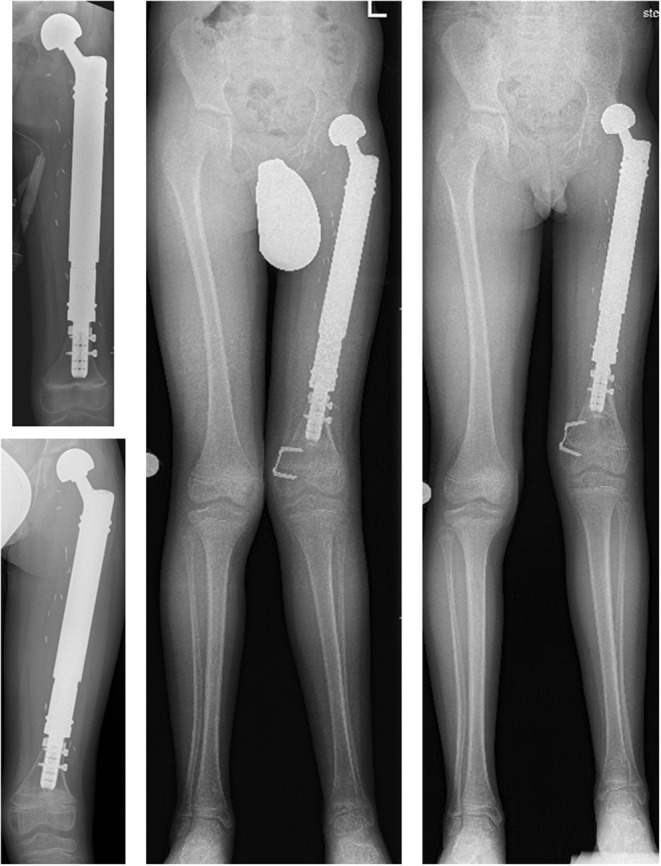 Figure 4
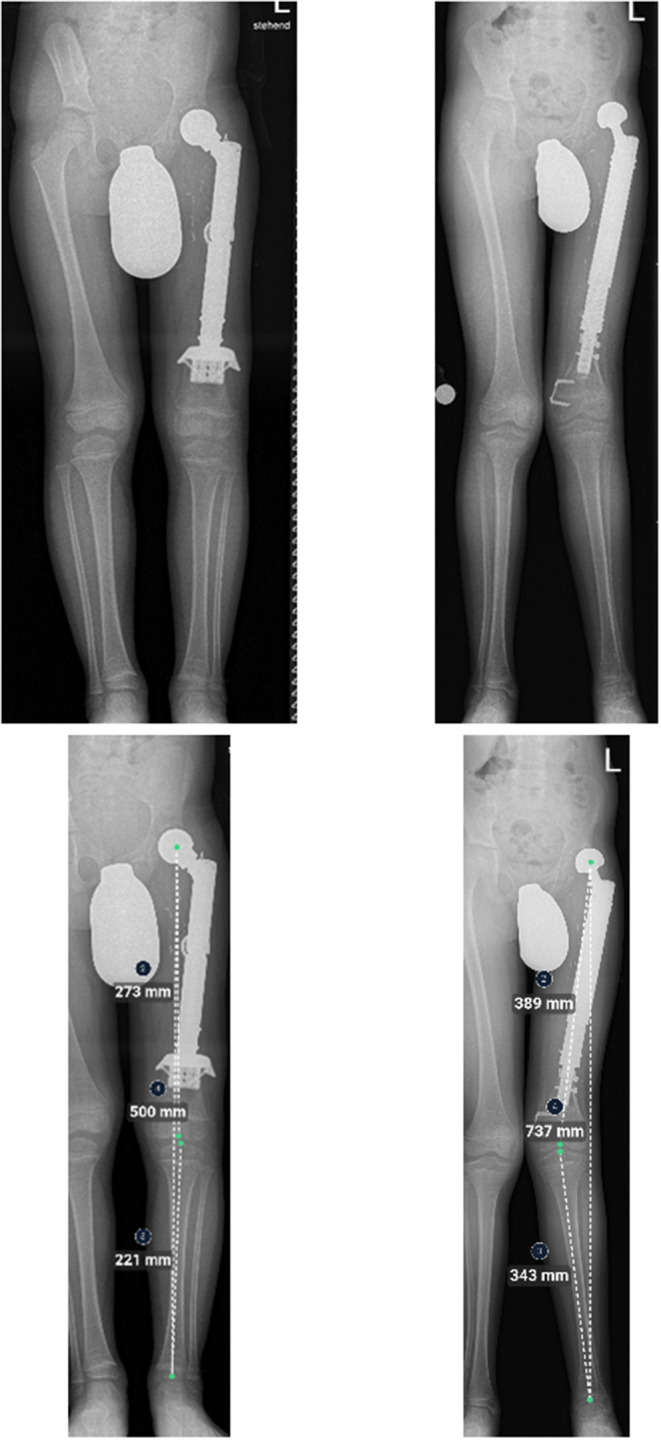 Figure 5
Peer Reviews
No public reviews on file for this paper yet. If you reviewed it on a platform where reviews are public (OpenReview, ICLR, NeurIPS, ICML), you can paste yours below so the community can read it here.
Videos
No videos yet. Explain this paper in a talk, walkthrough, or lecture? Add one.
Taxonomy
TopicsOrthopaedic implants and arthroplasty · Sarcoma Diagnosis and Treatment · Total Knee Arthroplasty Outcomes