Vaginal artery pseudoaneurysm after a hysterectomy: A case report and review of the literature
Fariba Zabihi, Somayeh Moeindarbari, Farzaneh Khoroushi, Mohammad Mishan, Khosrow Ravankhah Moghaddam

TL;DR
This case report describes the first known instance of a vaginal artery pseudoaneurysm following a hysterectomy, which was successfully treated with artery ligation.
Contribution
The novelty lies in being the first documented case of a vaginal artery pseudoaneurysm after a hysterectomy, rather than after childbirth.
Findings
A 51-year-old woman experienced massive vaginal bleeding 7 days after a hysterectomy due to a pseudoaneurysm.
Sonography identified the pseudoaneurysm, and bleeding was controlled via ligation of the left internal iliac artery.
This case expands the understanding of post-hysterectomy complications involving vascular anomalies.
Abstract
This was the first report of a pseudoaneurysm in a vaginal artery after hysterectomy, unlike other published studies that were of pseudoaneurysms in uterine or vaginal arteries after delivery. A 51‐year‐old woman presented with massive vaginal bleeding 7 days after a hysterectomy, which caused hemoglobin to drop. The patient was suspicious of having a vaginal artery pseudoaneurysm according to the sonography. Her bleeding was stopped after the ligation of her left internal iliac artery.
Genes, proteins, chemicals, diseases, species, mutations and cell lines named across the full text — each resolved to its canonical identifier and authoritative record.
Click any figure to enlarge with its caption.
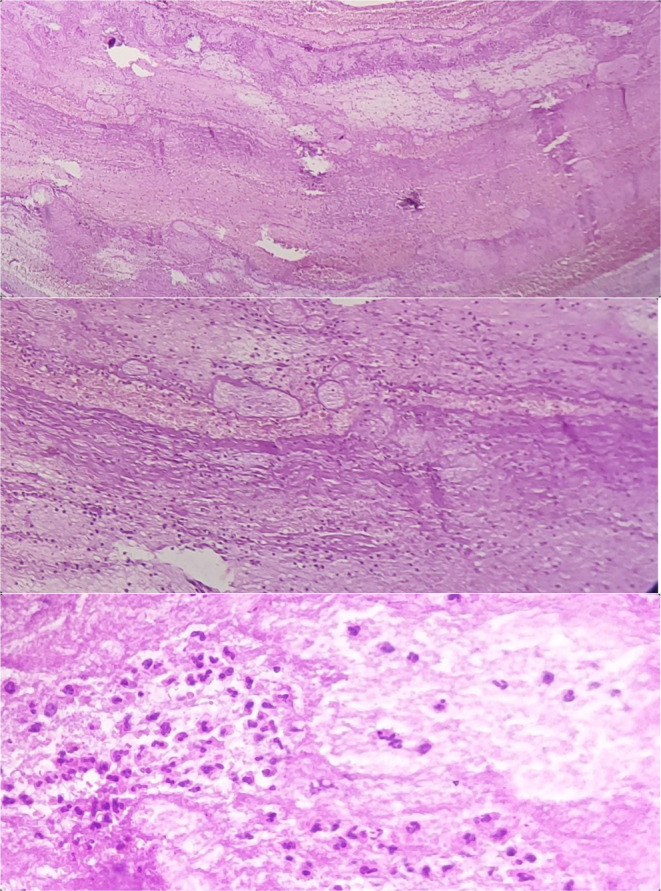 Figure 1
Peer Reviews
No public reviews on file for this paper yet. If you reviewed it on a platform where reviews are public (OpenReview, ICLR, NeurIPS, ICML), you can paste yours below so the community can read it here.
Videos
No videos yet. Explain this paper in a talk, walkthrough, or lecture? Add one.
Taxonomy
TopicsMaternal and fetal healthcare · Vascular Procedures and Complications · Cardiovascular Issues in Pregnancy