Presumed Pituitary Apoplexy Resulting in the Spontaneous Resolution of a Pituitary Neuroendocrine Tumor: A Case Report
Jordyn Mullins, Mark Bryniarski

TL;DR
A pituitary tumor shrank on its own due to a presumed apoplexy event, suggesting that surgery may not always be necessary.
Contribution
This case highlights spontaneous tumor reduction from apoplexy as a potential alternative to immediate surgery.
Findings
The pituitary tumor spontaneously reduced without treatment.
The tumor no longer compressed the optic chiasm after the event.
The case suggests conservative management could be considered in similar situations.
Abstract
Pituitary apoplexy is a result of rapid enlargement of the pituitary, due to episodes of hyperplasia, which outpaces vascular development resulting in ischemia and potential infarction of pituitary tissue. This can present in several different ways from asymptomatic to hormonal deficiencies. Here we present a case of spontaneous reduction of a non-functioning pituitary mass, likely due to apoplexy, in which the mass went from compromising the optic chiasm to complete reduction and relief of the optic chiasm. The infarction happened spontaneously without treatment and complications. This may encourage future conservative management of pituitary tumors, rather than immediate surgical intervention.
Genes, proteins, chemicals, diseases, species, mutations and cell lines named across the full text — each resolved to its canonical identifier and authoritative record.
Click any figure to enlarge with its caption.
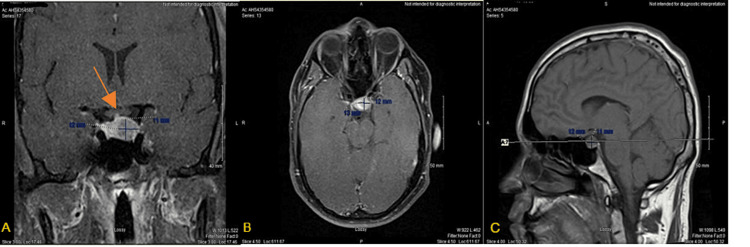 Figure 1
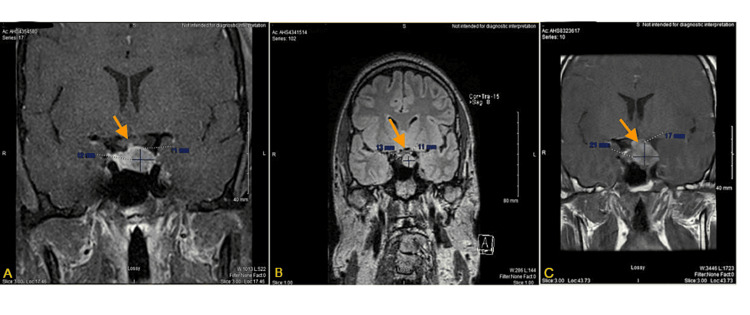 Figure 2
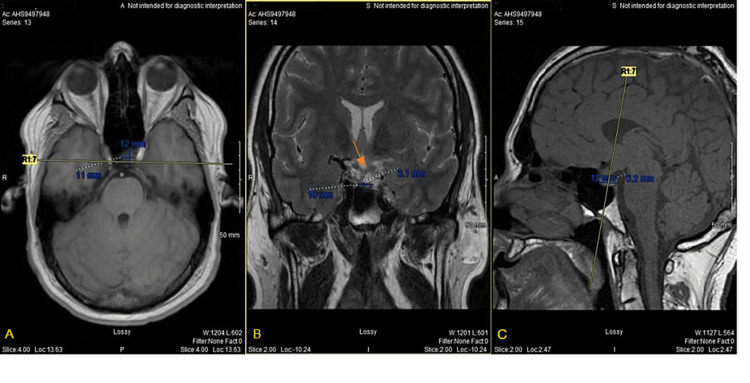 Figure 3
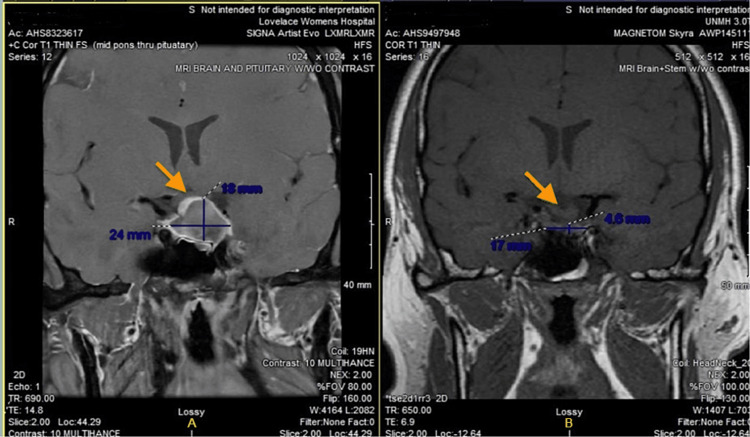 Figure 4
Peer Reviews
No public reviews on file for this paper yet. If you reviewed it on a platform where reviews are public (OpenReview, ICLR, NeurIPS, ICML), you can paste yours below so the community can read it here.
Videos
No videos yet. Explain this paper in a talk, walkthrough, or lecture? Add one.
Taxonomy
TopicsPituitary Gland Disorders and Treatments · Growth Hormone and Insulin-like Growth Factors · Adrenal and Paraganglionic Tumors