Optimal scale sizes and average-profit efficiency under uncertainty: A chance-constrained DEA approach
Leila Parhizkar Miyandehi, Alireza Amirteimoori, Sohrab Kordrostami, Mansour Soufi

TL;DR
This paper introduces a new method to evaluate profit efficiency under uncertainty, using a chance-constrained DEA approach to calculate optimal scale sizes.
Contribution
A new definition of optimal scale size based on maximizing average profit efficiency is introduced.
Findings
The average measure of profit efficiency is more accurate than comparative and profit efficiency measures.
The proposed method was applied to postal areas in Iran, demonstrating its practical use.
Profit efficiency models were adapted for stochastic environments to account for input and output errors.
Abstract
When the costs of the inputs and outputs of the units under evaluation are known, the evaluation of the profit efficiency of the units is one of the most significant evaluations that can provide valuable information about them. In this research, first, a new definition of the optimal scale size based on the maximization of the average measure of profit efficiency is presented. The average measure of profit efficiency develops the concept of economic efficiency measure by introducing a more accurate measure of efficiency compared to the measure of comparative and profit efficiency. It has been shown that the average measure of profit efficiency in a convex space is equivalent to the measure of profit efficiency in constant returns to scale technology, and then, some models are presented to calculate profit efficiency in a stochastic environment, to increase the ability of profit models…
Genes, proteins, chemicals, diseases, species, mutations and cell lines named across the full text — each resolved to its canonical identifier and authoritative record.
Click any figure to enlarge with its caption.
 Figure 1
 Figure 2
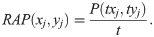 Figure 3
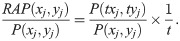 Figure 4
 Figure 5
 Figure 6
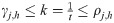 Figure 7
 Figure 8
 Figure 9
 Figure 10
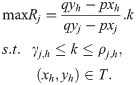 Figure 11
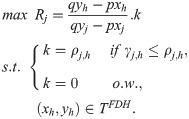 Figure 12
 Figure 13
 Figure 14
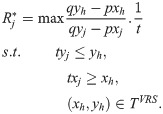 Figure 15
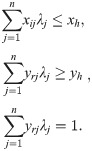 Figure 16
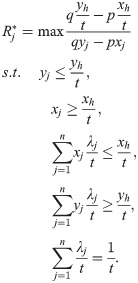 Figure 17
 Figure 18
 Figure 19
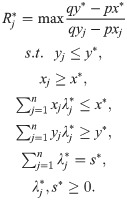 Figure 20
 Figure 21
 Figure 22
 Figure 23
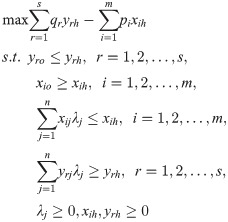 Figure 24
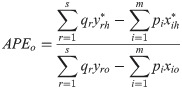 Figure 25
 Figure 26
 Figure 27
 Figure 28
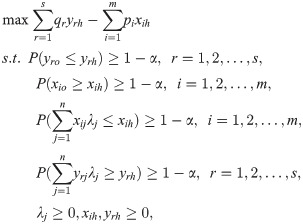 Figure 29
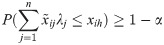 Figure 30
 Figure 31
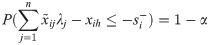 Figure 32
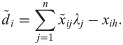 Figure 33
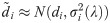 Figure 34
 Figure 35
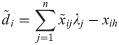 Figure 36
 Figure 37
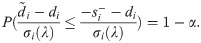 Figure 38
 Figure 39
 Figure 40
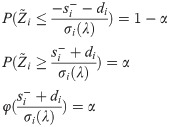 Figure 41
 Figure 42
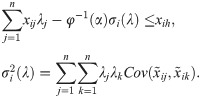 Figure 43
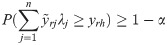 Figure 44
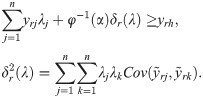 Figure 45
 Figure 46
 Figure 47
 Figure 48
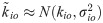 Figure 49
 Figure 50
Peer Reviews
No public reviews on file for this paper yet. If you reviewed it on a platform where reviews are public (OpenReview, ICLR, NeurIPS, ICML), you can paste yours below so the community can read it here.
Videos
No videos yet. Explain this paper in a talk, walkthrough, or lecture? Add one.
Taxonomy
TopicsEfficiency Analysis Using DEA · Economic and Environmental Valuation · Optimization and Mathematical Programming