Awareness and Interest in Rhinoplasty and Its Postoperative Complications Among Females in the Northern Border Region, Saudi Arabia
Yahia Abdelgawad Elsayed Elboraei, Rayan Alhumaidi R Alruwaili, Mohanad Talal k ALanazi, Yaser Yasen M Alnaser, Talal Maged Alenezi, Hamza A Alandijani, Mahdi Saleh Alanazi, Nawaf Lafi Ghayyadh Alruwaili, Safya E Esmaeel, Mohammad H Hussein

TL;DR
A study in Saudi Arabia found that many women are aware of rhinoplasty and its risks, but only a small percentage are interested in undergoing the surgery.
Contribution
This study provides insights into the awareness, attitudes, and knowledge of rhinoplasty and its complications among women in the Northern Border Region of Saudi Arabia.
Findings
Most participants (87.8%) had heard of rhinoplasty, and social media was the main source of information.
Only 16.7% of participants expressed interest in undergoing rhinoplasty despite dissatisfaction with their nose appearance.
Awareness of complications like breathing disorders and facial mismatch was high, but interest in surgery was low.
Abstract
Background: Rhinoplasty is a popular cosmetic surgical procedure that aims to reshape the nose, enhance its appearance, and improve nasal function. This study investigated the awareness, attitudes, and interest in rhinoplasty among females in the Northern Border Region of Saudi Arabia, as well as their knowledge of potential postoperative complications. Methods: An online survey was used to perform a cross-sectional study. Female participants aged between 18 and 45 years, living in the Northern Border Region of Saudi Arabia, were selected. The questionnaire consisted of three main sections: personal information, attitude toward rhinoplasty, and complications of rhinoplasty. Results: 905 females participated in our study. The majority (87.8%, n=795) had heard about rhinoplasty before, and 54.9% (n=497) knew someone who had undergone the surgery. Social media was the most common source…
Genes, proteins, chemicals, diseases, species, mutations and cell lines named across the full text — each resolved to its canonical identifier and authoritative record.
Click any figure to enlarge with its caption.
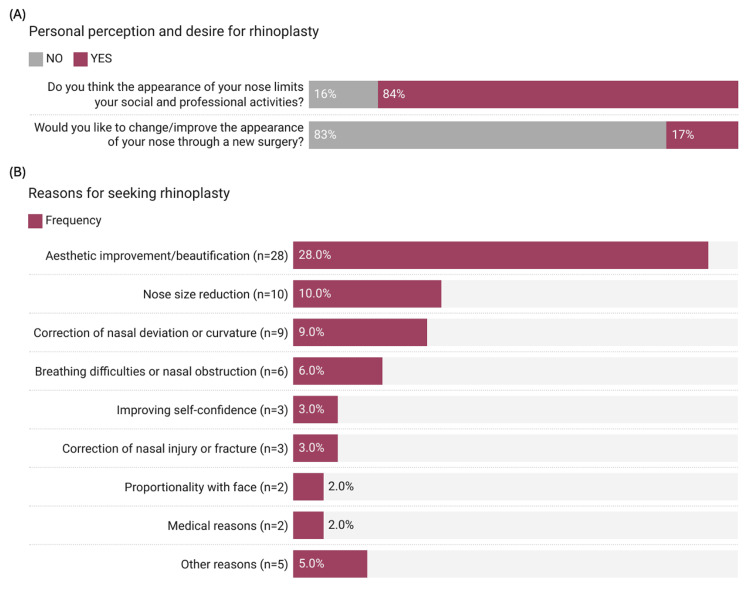 Figure 1
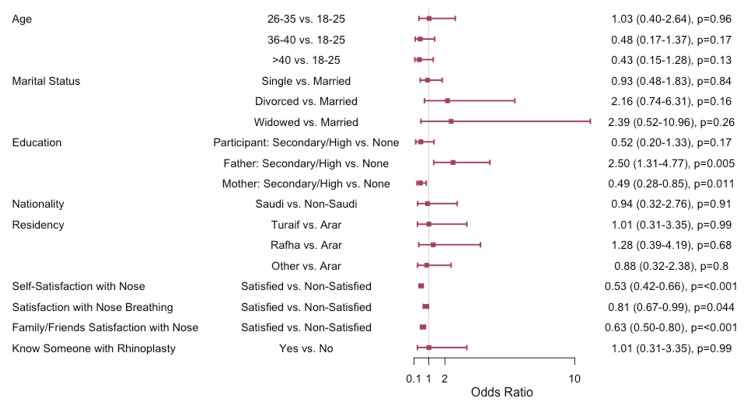 Figure 2
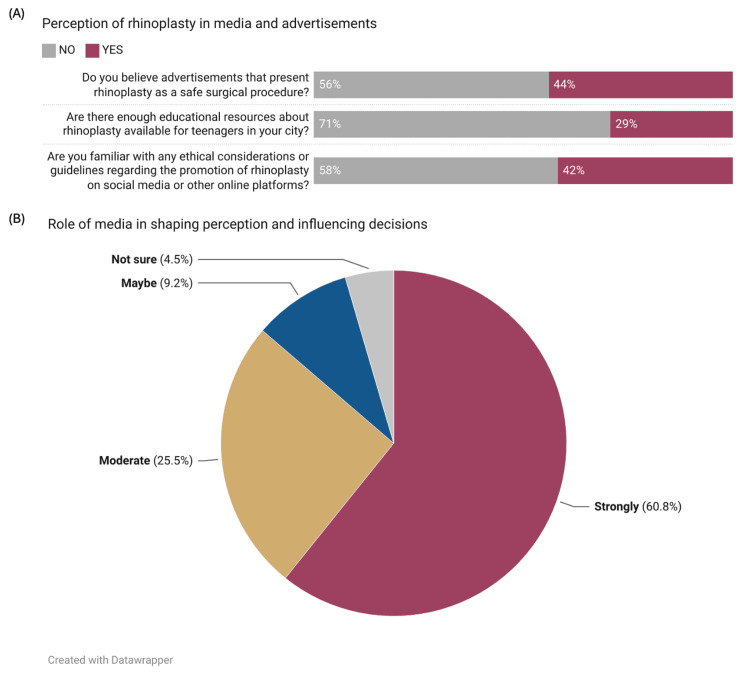 Figure 3
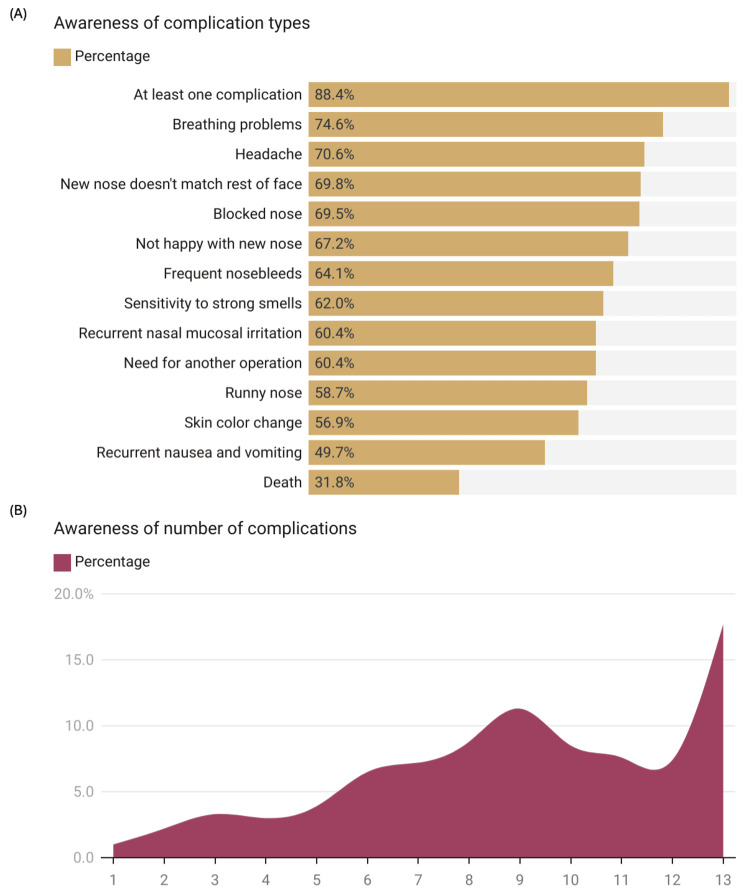 Figure 4
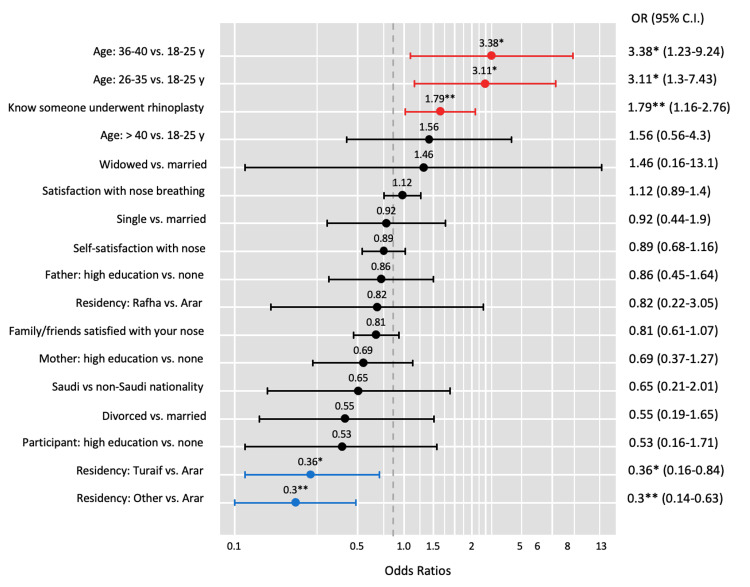 Figure 5
| Characteristic | Category | Frequency (N) | Percentage (%) |
| Age (years) | 18-25 | 48 | 5.3 |
| 26-35 | 360 | 39.8 | |
| 36-40 | 202 | 22.3 | |
| More than 40 | 295 | 32.6 | |
| Marital status | Married | 412 | 45.5 |
| Single | 435 | 48.1 | |
| Divorced | 42 | 4.6 | |
| Widowed | 16 | 1.8 | |
| Educational status | Illiterate | 4 | 0.4 |
| Primary school | 5 | 0.6 | |
| Preparatory school | 32 | 3.5 | |
| Secondary school | 152 | 16.8 | |
| University or higher | 712 | 78.7 | |
| Nationality | Non-Saudi | 42 | 4.6 |
| Saudi | 863 | 95.4 | |
| City of residence | Arar | 801 | 88.5 |
| Turaif | 35 | 3.9 | |
| Rafha | 26 | 2.9 | |
| Other | 43 | 4.8 |
| Question | Unsatisfied | Poorly satisfied | Moderately satisfied | Very satisfied | Completely satisfied |
| How do you feel about your nose? | 50 (5.5) | 43 (4.8) | 224 (24.8) | 254 (28.1) | 334 (36.9) |
| How satisfied are you with your nose breathing? | 57 (6.3) | 49 (5.4) | 188 (20.8) | 254 (28.1) | 357 (39.4) |
| How satisfied are your family and friends with the appearance of your nose? | 42 (4.6) | 33 (3.6) | 212 (23.4) | 254 (28.1) | 364 (40.2) |
| Characteristic | Category | Not interested (n=754) | Interested (n=151) | p-value |
| Age (years) | 18-25 | 34 (4.5) | 14 (9.3) | 0.06 |
| 26-35 | 296 (39.3) | 64 (42.4) | ||
| 36-40 | 169 (22.4) | 33 (21.9) | ||
| More than 40 | 255 (33.8) | 40 (26.5) | ||
| Marital status | Married | 344 (45.6) | 68 (45) | 0.13 |
| Single | 368 (48.8) | 67 (44.4) | ||
| Divorced | 31 (4.1) | 11 (7.3) | ||
| Widowed | 11 (1.5) | 5 (3.3) | ||
| Participant's educational level | Illiterate/Primary/Preparatory | 29 (3.8) | 12 (7.9) | 0.027 |
| Secondary school/University | 725 (96.2) | 139 (92.1) | ||
| Father's educational level | Illiterate/Primary/Preparatory | 210 (27.9) | 27 (17.9) | 0.011 |
| Secondary school/University | 544 (72.1) | 124 (82.1) | ||
| Mother's educational level | Illiterate/Primary/Preparatory | 247 (32.8) | 49 (32.5) | 0.94 |
| Secondary school/University | 507 (67.2) | 102 (67.5) | ||
| Nationality | Non-Saudi | 33 (4.4) | 9 (6) | 0.40 |
| Saudi | 721 (95.6) | 142 (94) | ||
| City of residence | Arar | 666 (88.3) | 135 (89.4) | 0.64 |
| Turaif | 31 (4.1) | 4 (2.6) | ||
| Rafha | 20 (2.7) | 6 (4) | ||
| Other | 37 (4.9) | 6 (4) | ||
| Satisfaction level | Satisfaction with nose appearance | 3.1 ± 0.9 | 1.8 ± 1.4 | <0.001 |
| Satisfaction with nose breathing | 3.1 ± 1.0 | 1.9 ± 1.5 | <0.001 | |
| Family/friends' satisfaction with nose appearance | 3.2 ± 0.9 | 1.9 ± 1.4 | <0.001 |
| Characteristic | Category | Frequency (N) | Percentage (%) |
| Awareness of rhinoplasty | Heard about rhinoplasty before | 795 | 87.8 |
| Know anyone who has had rhinoplasty surgery | 497 | 54.9 | |
| Sources of information about rhinoplasty | Social media | 608 | 67.2 |
| Friends/Family | 134 | 14.8 | |
| Television | 72 | 8.0 | |
| Internet search | 53 | 5.9 | |
| Other | 38 | 4.2 | |
| Frequency of rhinoplasty news on social media | Never | 73 | 8.1 |
| Rarely | 272 | 30.1 | |
| Monthly | 256 | 28.3 | |
| Weekly | 186 | 20.6 | |
| Daily | 118 | 13.0 |
| Characteristic | Category | Frequency (N) | Percentage(%) |
| Should there be more stringent regulations on the advertisement and promotion of rhinoplasty services targeting teenagers? | No | 182 | 20.1 |
| Yes | 723 | 79.9 | |
| How comfortable do you feel discussing the topic of rhinoplasty with your friends, or family? | Very comfortable | 256 | 28.3 |
| Moderately comfortable | 272 | 30.1 | |
| Slightly comfortable | 147 | 16.2 | |
| Uncomfortable | 125 | 13.8 | |
| Prefer not to answer | 105 | 11.6 |
| Characteristic | Category | Not aware (n=105) | Aware (n=800) | p-value |
| Age (years) | 18-25 | 10 (9.5) | 38 (4.8) | 0.008 |
| 26-35 | 33 (31.4) | 327 (40.9) | ||
| 36-40 | 17 (16.2) | 185 (23.1) | ||
| More than 40 | 45 (42.9) | 250 (31.3) | ||
| Marital status | Married | 41 (39) | 371 (46.4) | 0.35 |
| Single | 56 (53.3) | 379 (47.4) | ||
| Divorced | 7 (6.7) | 35 (4.4) | ||
| Widowed | 1 (1) | 15 (1.9) | ||
| Educational status of the participant | Illiterate/Primary/Preparatory | 4 (3.8) | 37 (4.6) | 0.71 |
| Secondary school/University | 101 (96.2) | 763 (95.4) | ||
| The educational status of the father | Illiterate/Primary/Preparatory | 26 (24.8) | 211 (26.4) | 0.81 |
| Secondary school/University | 79 (75.2) | 589 (73.6) | ||
| Educational status of the mother | Illiterate/Primary/Preparatory | 31 (29.5) | 265 (33.1) | 0.51 |
| Secondary school/University | 74 (70.5) | 535 (66.9) | ||
| Nationality | Non-Saudi | 4 (3.8) | 38 (4.8) | 0.81 |
| Saudi | 101 (96.2) | 762 (95.3) | ||
| City | Arar | 81 (77.1) | 720 (90) | <0.001 |
| Turaif | 9 (8.6) | 26 (3.3) | ||
| Rafha | 3 (2.9) | 23 (2.9) | ||
| Other | 12 (11.4) | 31 (3.9) | ||
| Self-satisfaction with nose | Mean ± SD | 3.0 ± 1.1 | 2.8 ± 1.1 | 0.11 |
| Satisfaction with nose breathing | Mean ± SD | 2.9 ± 1.2 | 2.8 ± 1.2 | 0.45 |
| Family/friends satisfied with your nose | Mean ± SD | 3.2 ± 0.97 | 2.92 ± 1.1 | 0.019 |
Peer Reviews
No public reviews on file for this paper yet. If you reviewed it on a platform where reviews are public (OpenReview, ICLR, NeurIPS, ICML), you can paste yours below so the community can read it here.
Videos
No videos yet. Explain this paper in a talk, walkthrough, or lecture? Add one.
Taxonomy
TopicsBody Image and Dysmorphia Studies · Nasal Surgery and Airway Studies · Global Healthcare and Medical Tourism
Introduction
The nose as a prominent facial feature plays a significant role in determining an individual's overall facial aesthetic and beauty. It is intrinsically linked to self-worth, self-confidence, and self-image of an individual. Any changes to the nasal structure, whether brought about by surgery, trauma, or inherited conditions, can significantly affect a person's mental health [1].
Rhinoplasty, a popular cosmetic surgical procedure, aims to reshape the nose, enhance its appearance, and improve nasal function. Individuals dissatisfied with their nose's appearance may opt for rhinoplasty to alter its shape or size while maintaining or enhancing nasal airway function. As a cosmetic procedure, rhinoplasty and its revision surgeries can have significant aesthetic and psychological effects on the patient [2].
However, like any surgical intervention, rhinoplasty carries inherent risks and potential complications. Early effects include epistaxis, periorbital ecchymosis, septal hematoma, infection, and skin necrosis; late repercussions include scar hypertrophy, septal perforation, and enophthalmos [3]. While serious problems are uncommon, a range of short- and long-term issues can cause patient discomfort, cosmetic dissatisfaction, and even functional difficulties [4].
In the last few years, the global demand for rhinoplasty has experienced a notable increase, partially attributed to the rising prevalence of body dysmorphic disorders [5]. In Saudi Arabia, the demand for rhinoplasty is particularly high, underscoring the importance of assessing the awareness and interest in this procedure among the female population. Moreover, understanding their knowledge of potential postoperative complications is crucial for promoting informed decision-making and ensuring patient safety.
The primary objectives of this study are to evaluate the awareness and level of interest in rhinoplasty among females in the Northern Border Region of Saudi Arabia and to assess their knowledge of the procedure's potential postoperative consequences. By examining these factors, the study aims to provide valuable insights into the current state of knowledge and attitudes towards rhinoplasty in this population. The findings of this research can inform future educational initiatives and patient counselling strategies, ultimately contributing to informed decision-making and optimizing patient outcomes in the context of rhinoplasty.
Materials and methods
Study design and participants
A cross-sectional study was conducted using a quantitative approach. Female participants aged between 18 and 45 years, living in the Northern Border Region of Saudi Arabia, were selected through convenience sampling. Inclusion criteria were agreeing to complete the survey and having an interest in rhinoplasty, while exclusion criteria were refusing to participate.
The study prioritized participants' confidentiality and data privacy. Deidentified patient information was used, and each participant was assigned a unique code to maintain anonymity. Ethical clearance was obtained from the Ethical Committee of the College of Medicine (HAP-09-A-043) and was issued by decision no (19-24-H) at Northern Border University before the commencement of the study.
After participants read and approved the informed consent, an online questionnaire, produced in Arabic, was made available via an anonymous online survey tool [6].
The questionnaire consisted of three main sections.
Personal Information
This section included questions on age, nationality, marital status, educational status, educational status of parents, and city of residence.
Attitude towards Rhinoplasty
Participants were asked about their satisfaction with their nose appearance and breathing, the impact of their nose on social and professional activities, their desire to change or improve their nose through surgery, and their familiarity with rhinoplasty. Additional questions explored the sources of information about rhinoplasty, the influence of media on perceptions and decisions related to the procedure, and the availability of educational resources.
Complications of Rhinoplasty
Participants were asked about their familiarity with various postoperative complications, such as skin discolouration, breath disorders, recurrent nosebleeds, nose blockage, recurrent nasal mucosal irritation, headache, recurrent nausea and vomiting, nasal discharge, sensitivity to strong odours, death, need for reoperation, dissatisfaction with the new nose, and mismatch of the new nose with the rest of the face.
Statistical analysis
A sample size of 905 participants was estimated using the Raosoft® calculator, with a 5% level of significance, 5% margin of error, 95% confidence, and expected response distribution of 50%. Data analysis was performed using SPSS (version 28) and RStudio 2023.06.0 Build 421. Descriptive statistics clarify the participants' sociodemographic characteristics, their attitudes towards rhinoplasty, and their awareness of postoperative complications. Continuous variables were expressed as mean ± standard deviation, while categorical variables were presented as frequencies and percentages. The Chi-square test assessed the relationships between categorical variables, such as sociodemographic factors, interest in rhinoplasty, and awareness of postoperative complications. Logistic regression analysis was performed to identify the factors associated with interest in rhinoplasty and awareness of postoperative complications. Odds ratios (ORs) and their corresponding 95% confidence intervals (CIs) were calculated to measure the strength of the associations. A p-value of less than 0.05 was considered statistically significant.
For questions using Likert scales (e.g., satisfaction levels), descriptive statistics such as frequencies, percentages, and modes were calculated to show the responses. The mean score for each Likert scale question was also calculated to provide an overall measure of satisfaction or agreement. For open-ended questions (e.g., reasons for wanting to change/improve the nose), thematic analysis was conducted to identify common themes and patterns in the responses. The survey responses were compared between different subgroups, such as age groups, educational levels, or cities, to identify any significant differences in attitudes, knowledge, or preferences related to rhinoplasty. Independent t-tests or one-way ANOVA were used for comparing continuous variables, while chi-square tests were used for categorical variables.
Results
A total of 905 individuals participated in the survey. Most of the participants were aged between 26 and 35 years (39.8%, n=360), followed by those over 40 years old (32.6%, n=295). Nearly half of the participants were single (48.1%, n=435), and 45.5% (n= 412) were married. Most of the participants had a university education or higher (78.7%, n=712). Most of the participants were Saudi nationals (95.4%, n=863), and 88.5%(n=801) were from the city of Arar (Table 1).
The participants reported varying levels of satisfaction with their nose appearance and function. More than one-third of the participants (36.9%, n=334) were completely satisfied with their nose appearance, while 39.4% (n=357)were completely satisfied with their nose breathing. A similar proportion (40.2%, n=364) reported that their family and friends were completely satisfied with the appearance of their noses (Table 2). Likert scale analysis further supported these findings, with mean scores of 3.86 ± 1.13 for satisfaction with nose appearance, 3.89 ± 1.18 for satisfaction with nose breathing, and 3.96 ± 1.09 for satisfaction of family and friends with the participant's nose appearance. These results suggest generally high levels of satisfaction across all three domains.
A significant proportion of the participants (72.4%, n=655) believed that their nose appearance sometimes (11.6%, n=105) or always (60.8%, n=576) limited their social and professional activities. However, despite this perception, only 16.7% (n=151) expressed a desire to change or improve their nose appearance through surgery, while the majority (83.3%, n=754) did not wish to undergo rhinoplasty (Figure 1A). Among the participants who provided reasons for considering rhinoplasty (n=68) as 7.4% from total, the most common reason was aesthetic improvement or beautification (41.2%, n=28), followed by nose size reduction (14.7%, n=10), correction of nasal deviation or curvature (13.2%, n=9), and breathing difficulties or nasal obstruction (8.8%, n=6). Other reasons included improving self-confidence (4.4%, n=3), correction of nasal injury or fracture (4.4%, n=3), proportionality with face (2.9%, n=2), medical reasons (2.9%, n=2), and other reasons (7.4%, n=5) (Figure 1B).
Perception and impact of rhinoplasty on activities(A) Personal perception and desire for rhinoplasty (n=905) Data has been represented as %; (B) Reasons for seeking rhinoplasty (n=68).Data has been represented as N,%.
The study compared the characteristics of participants who were interested and not interested in rhinoplasty (Table 3). The results indicated that the educational status of the participant (p=0.027) and their father (p=0.011) were significantly associated with interest in rhinoplasty, with those having lower educational levels being more interested. Satisfaction with nose appearance, breathing, and family and friends' opinions about the participant's nose were also significantly associated with interest in rhinoplasty (p<0.001 for all), with lower satisfaction levels (indicated by lower Likert scale scores) being associated with higher interest.
Table 3: Association between socioeconomic factors and interest in rhinoplastyData has been represented as N,% or Mean ± SD. Two-sided Chi-Square or independent t-tests were employed. P value is considered significant (p < 0.05%, p < 0.001%).
Logistic regression analysis (Figure 2) revealed that participants who were satisfied with their nose appearance (OR=0.53, 95% CI: 0.42-0.66, p<0.001), satisfied with their nose breathing (OR=0.81, 95% CI: 0.67-0.99, p=0.044), and whose family and friends were satisfied with their nose appearance (OR=0.63, 95% CI: 0.50-0.80, p<0.001) were less likely to be interested in rhinoplasty. The educational status of the participant's father was a significant predictor, with those whose fathers had secondary school or higher education being more likely to be interested in rhinoplasty compared to those whose fathers had low education (OR=2.50, 95% CI: 1.31-4.77, p=0.005). Conversely, participants whose mothers had secondary school or higher education were less likely to be interested in rhinoplasty compared to those whose mothers had no formal education (OR=0.49, 95% CI: 0.28-0.85, p=0.011). Age, marital status, nationality, and city of residence were not significantly associated with interest in rhinoplasty. Knowing someone who had undergone rhinoplasty was not significantly associated with interest in the procedure.
Factors associated with the desire to undergo rhinoplastyLogistic regression analysis was performed. Data has been represented as odds ratio (OR) and 95% confidence intervals (CI). P value is considered significant (p < 0.05%, p < 0.001%).
The majority of the participants (87.8%, n=795) had heard about rhinoplasty before, and more than half (54.9%, n=497) knew someone who had undergone the surgery. Social media was the most common source of information about rhinoplasty (67.2%, n=608), followed by friends and family (14.8%, n=134), television (8.0%, n=72), and Internet searches (5.9%, n=53). The frequency of encountering rhinoplasty news on social media varied, with 30.1% (n=272) reporting rare encounters and 13.0% (n=118) reporting daily encounters (Table 4).
Despite the high awareness of rhinoplasty, more than half of the participants (56.0%, n=507) did not believe advertisements presenting rhinoplasty as a safe surgical procedure. The majority (70.8%, n=641) also felt that there were insufficient educational resources about rhinoplasty available for teenagers in their city. Furthermore, 58.2% (n=527) of the participants were not familiar with any ethical considerations or guidelines regarding the promotion of rhinoplasty on social media or other online platforms (Figure 3A). Most participants strongly believed (60.8%, n=550) or moderately believed (25.5%, n=231) that media plays a role in shaping perception and influencing decisions related to rhinoplasty among teenagers, while a smaller proportion were unsure (4.5%, n=41) or thought media might play a role (9.2%, n=83) (Figure 3B). Likert scale analysis further reinforced these findings, with a mean score of 3.38 ± 0.87 for the perceived role of media in shaping perception and influencing decisions related to rhinoplasty among teenagers, suggesting a strong belief in the media's influence. Logistic regression analysis showed that belief in the effect of media on the desire to undergo rhinoplasty was significantly associated with an increased likelihood of being interested in the procedure (OR=1.44, 95% CI: 1.13-1.86, p=0.004).
Perception of rhinoplasty in media and the role of media in shaping decisions (n=905)(A) Perception of rhinoplasty in media and advertisements; (B) Role of media in shaping perception and influencing decisions.Data has been represented as %.
Most participants (79.9%, n=723) believed that more stringent regulations should be on advertising and promoting rhinoplasty services targeting teenagers (Table 5). Regarding comfort levels in discussing rhinoplasty with friends or family, 28.3% (n=256) reported feeling very comfortable, while 13.8% (n=125) felt uncomfortable (Table 5).
The study investigated participants' awareness of postoperative complications related to rhinoplasty. The results showed that 88.4% (n=800) of participants were aware of at least one complication. The most recognized complications were breath disorders (74.6%, n=675), headache (70.6%, n=639), and mismatch of the new nose with the rest of the face (69.8%, n=632). The least recognized complications were recurrent nausea and vomiting (49.7%, n=450) and the possibility of death (31.8%, n=288) (Figure 4A). The number of complications participants were aware of varied considerably. About 17.7% (n=160) of participants knew about all 13 complications listed in the survey, while 11.6% (n=105) were unaware of any complications. The remaining participants demonstrated awareness of between 1 and 12 complications (Figure 4B).
Awareness of postoperative complications related to rhinoplasty(A) Knowledge of complication types after rhinoplasty (n=905). A bar graph showing the percentage of participants aware of each specific postoperative complication related to rhinoplasty; (B) Distribution of participants by number of postoperative complications they were aware of (n=905). A histogram displaying the distribution of participants according to the number of postoperative complications they were aware of, ranging from 1 to 13. Data has been represented as %.
Age (p=0.008), city of residence (p < 0.001), and satisfaction of family and friends with the participant's nose (p=0.019) were significantly associated with complication awareness. Middle-aged participants (26-40 years) and those living in Arar were more likely to know about potential problems after surgery, while those whose loved ones were less satisfied with their nose appearance were more aware of complications (Table 6).
Table 6: Association between sociodemographic factors and awareness of postoperative complicationsData has been represented as N,% or Mean ± SD. Two-sided Chi-Square or independent t-tests were employed. P value is considered significant (p < 0.05%, p < 0.001%).
Figure 5 presents the results of a logistic regression analysis examining the predictors of awareness of postoperative complications related to rhinoplasty. Age was a significant predictor of complication awareness, with participants aged 26-35 years (OR=3.11, 95% CI: 1.30-7.43, p=0.011) and 36-40 years (OR=3.38, 95% CI: 1.23-9.24, p=0.018) being more likely to be aware of complications compared to those aged 18-25 years. Participants who knew someone with a history of rhinoplasty were more likely to be aware of potential postoperative complications (OR=1.79, 95% CI: 1.16-2.76, p=0.009). Residency was a significant predictor, with participants living in Turaif (OR=0.36, 95% CI: 0.16-0.84, p=0.017) and other cities (OR=0.30, 95% CI: 0.14-0.63, p=0.002) being less likely to be aware of complications compared to those living in Arar. Marital status, educational status of the participant and their parents, and nationality were not significantly associated with complication awareness.
Predictors of awareness of complicationsMultivariate logistic regression analysis was performed, and results are reported as odds ratio (OR) and 95% confidence interval (CI).High education: Secondary school or university education
Discussion
The present study aimed to investigate the awareness, attitudes, and interest in rhinoplasty among females in the Northern Border Region of Saudi Arabia, as well as their knowledge of potential postoperative complications. The findings provide valuable insights into the complex factors influencing the perception and decision-making process regarding this cosmetic procedure.
One of the study's main conclusions was that participants had a high level of awareness about rhinoplasty, with 87.8% having heard of the procedure previously and 54.9% knowing someone who had had the surgery. This awareness has increased with the use of septorhinoplasty because of advancements in surgical technique, media awareness, and improved patient interest [7]. Moreover, a recent study suggested that some people who are dissatisfied with their noses may have rhinoplasty to alter the shape of the nose [8]. Both men and women in the younger age group often exhibit this tendency [9]. This high awareness can be attributed to the increasing popularity of rhinoplasty in Saudi Arabia and the significant role played by social media in disseminating information about the procedure. Social media was identified as the most common source of information about rhinoplasty (67.2%), followed by friends and family (14.8%) consistent with social media significantly affecting patients’ decisions [10]. In addition, another article suggested that social media has an important role in explaining the increased desire for cosmetic procedures [11]. This finding underscores the importance of social media platforms in shaping public perception and influencing decisions related to cosmetic surgery.
Despite the high awareness, the study revealed that a significant proportion of participants (72.4%) believed that their nose appearance sometimes or always limited their social and professional activities, these findings were consistent with another study that revealed that rhinoplasty has unique preoperative and postoperative psychological factors [12]. This finding suggests that perceived physical imperfections can affect an individual's self-image and confidence, potentially affecting their personal and professional life. However, it is noteworthy that only 16.7% of the participants desired to change or improve their nose appearance through surgery. In contrast, another Saudi study revealed that more than half of the participants didn’t accept cosmetic surgery [13]. This discrepancy highlights the complex attitudes toward cosmetic surgery and the fact that not all individuals who are dissatisfied with their appearance may choose to undergo surgical intervention.
The study also identified several sociodemographic factors associated with interest in rhinoplasty. The educational status of the participants and their fathers were found to be significantly associated with interest in the procedure, with those of lower educational levels being more interested, which aligns with a previous study that has proposed that the rate of cosmetic surgery falls as parental education rises [14]. Nonetheless, a recent study found no connection between parental education and rhinoplasty interest [15]. This finding suggests that individuals with lower educational backgrounds may be more susceptible to media influences and may view rhinoplasty as a means to improve their social status and enhance their prospects in various aspects of life.
Additionally, satisfaction with nose appearance, breathing, and family and friends' opinions about the participant's nose were significantly associated with interest in rhinoplasty, with lower satisfaction levels being associated with higher interest [8]. This highlights the role of personal and social factors in shaping the desire for cosmetic surgery.
Another important finding of the study was the participants' concern regarding the safety, availability of educational resources, and ethical considerations in the promotion of rhinoplasty, particularly on social media platforms. The majority of participants did not believe advertisements presenting rhinoplasty as a safe procedure (56.0%), felt there were insufficient educational resources about rhinoplasty available for teenagers in their city (70.8%), and were not familiar with ethical considerations or guidelines regarding the promotion of rhinoplasty on social media or other online platforms (58.2%). These findings underscore the need for accurate and comprehensive information about the risks, benefits, and long-term consequences of rhinoplasty to be made readily available to the public, especially teenagers who may be more vulnerable to media influences.
The study also investigated participants' awareness of postoperative complications related to rhinoplasty. While 88.4% of participants were aware of at least one complication, the level of awareness varied considerably across different complications in contrast with the previous study which revealed that More than half of the participants in our study possessed below-average information regarding the complications that arise after rhinoplastic surgery [3,16]. The most recognized complications were breath disorders (74.6%), and headache (70.6%). In line with another study, the most common rhinoplasty problems identified by the respondents were headache, respiratory issues, and unhappiness with the new nose (69.8%). mismatch of the new nose with the rest of the face [15]. While the least recognized complications were recurrent nausea and vomiting (49.7%) and the possibility of death (31.8%). These findings align with life-threatening complications that occur in 1.7% to 5% of rhinoplasty [17]. This variation in awareness highlights the need for more comprehensive education about the full range of potential complications associated with rhinoplasty.
The study identified several factors associated with complication awareness, including age, city of residence, and family and friends ‘ satisfaction with the participant's nose. Middle-aged participants (26-40 years) and those living in Arar were more likely to be aware of potential problems after surgery. Moreover, those whose loved ones were less satisfied with their nose appearance were more aware of complications. Studies have revealed that teenage females have less knowledge about rhinoplasty and its complications [6,17]. In another study in California, 30% of participants were influenced by someone who had undergone the surgery [18].
The logistic regression analysis revealed that age, knowing someone who had undergone rhinoplasty, and residency were significant predictors of complication awareness. Participants aged 26-35 years and 36-40 years were more likely to be aware of complications compared to those aged 18-25 years, highlighting the importance of age and life experience in shaping knowledge about the risks associated with cosmetic surgery. Participants who knew someone with a history of rhinoplasty were also more likely to be aware of potential postoperative complications, suggesting that personal connections and experiences of others can influence an individual's understanding of the risks involved. Additionally, participants living in Turaif and other cities were less likely to be aware of complications compared to those living in Arar, these findings align with another study that showed that there were potential geographic disparities in access to information and education about rhinoplasty [19].
The findings of this study have important implications for healthcare professionals, policymakers, and society as a whole. The highest level of awareness and interest in rhinoplasty among females in the Northern Border Region of Saudi Arabia underscores the need for accurate and comprehensive information about the procedure to be available to the public. The findings were similar to another study that showed a high awareness of rhinoplasty among females and a high interest in cosmetic surgery [20].
Healthcare professionals should focus on developing targeted educational interventions to improve patient knowledge and informed decision-making, particularly among younger individuals, those with lower education levels, and those residing in areas outside of Arar. These interventions should aim to increase awareness of the potential complications associated with rhinoplasty and provide guidance on critically evaluating information presented on social media and other online platforms. Influencers who have had rhinoplasty surgery falsely advertised the process on social media, which made the public less aware of the risks associated with the practice [21].
So, policymakers should also consider implementing regulations to ensure that advertisements and promotions of rhinoplasty services, particularly those targeting teenagers, are accurate, transparent, and ethically responsible. This may involve developing guidelines for promoting cosmetic surgery on social media platforms and increasing oversight of the content presented in these advertisements.
Additionally, society should engage in open and honest conversations about the societal pressures and beauty standards that may contribute to the increasing popularity of cosmetic surgery, particularly among younger individuals. By fostering a culture of self-acceptance and body positivity, we can help individuals develop a more positive self-image and reduce the perceived need for surgical intervention to address physical imperfections.
The putative hypothesis for those who are less educated being more interested in rhinoplasty could be related to several factors:
Socioeconomic status
Lower educational levels are often associated with lower socioeconomic status. Individuals from lower socioeconomic backgrounds may view rhinoplasty as a means to improve their social status and enhance their prospects in various aspects of life, such as employment or relationships.
Exposure to media influences
Less educated individuals may be more susceptible to media influences, such as celebrity culture and advertising, which often promote idealized beauty standards. This increased exposure and vulnerability to media messages may lead to a greater desire for cosmetic enhancements, including rhinoplasty.
Limited access to information
Individuals with lower educational levels may have limited access to accurate and comprehensive information about the risks, benefits, and long-term consequences of rhinoplasty. This lack of information may result in a more idealized perception of the procedure and its outcomes, leading to a higher interest in undergoing rhinoplasty.
Psychological factors
Lower educational levels may be associated with lower self-esteem and body satisfaction. Individuals who are less satisfied with their appearance may view rhinoplasty as a means to boost their self-confidence and improve their overall psychological well-being.
Cultural and societal factors
In some cultures or societies, physical appearance may be more heavily emphasized and valued, particularly among those with lower educational levels. This cultural pressure to conform to certain beauty standards may contribute to a higher interest in cosmetic procedures like rhinoplasty.
This information can be valuable for healthcare professionals and policymakers in developing targeted educational interventions to improve patient knowledge and informed decision-making. These findings highlight the importance of considering sociodemographic factors when developing educational interventions to improve patient knowledge and informed decision-making regarding rhinoplasty. Healthcare professionals should focus on increasing awareness of potential complications, particularly among younger individuals, those with lower education levels, and those residing outside Arar. By tailoring educational efforts to these specific groups, healthcare providers can help ensure that patients are well-informed about the risks associated with rhinoplasty and can make more informed decisions about whether to undergo the procedure
This discrepancy highlights complex attitudes towards cosmetic surgery and the impact of perceived physical imperfections on personal and professional life.
It is important to take into account the many limitations of this study when evaluating the findings. First, the sample was restricted to Saudi Arabia's Northern Border Region's female population, which may not accurately reflect the country's overall population or those of other regions. Second, the research used self-reported data, which is prone to biases related to social desirability and recollection. Third, the cross-sectional form of the study makes it impossible to determine a causal relationship between the variables under investigation. Fourth, the study did not investigate the precise causes of the participants' desire for rhinoplasty.
Conclusions
In conclusion, this study provides valuable insights into the awareness, attitudes, and interest in rhinoplasty among females in the Northern Border Region of Saudi Arabia, as well as their knowledge of potential postoperative complications. The findings highlight the complex factors influencing the perception and decision-making process regarding this cosmetic procedure and underscore the need for accurate and comprehensive information to be made readily available to the public. By developing targeted educational interventions, implementing responsible advertising regulations, and fostering a culture of self-acceptance, we can help individuals make informed decisions about whether to undergo rhinoplasty and ultimately promote better physical and mental health outcomes.
The reference list from the paper itself. Each links out to its DOI / PubMed record.
- 1The contrasting effects of body image and self-esteem in the makeup usage P Lo S One Mafra AL Silva CS Varella MA Valentova JV 017202210.1371/journal.pone.0265197 PMC 895616435333869 · doi ↗ · pubmed ↗
- 2Trends and demographic characteristics of Saudi cosmetic surgery patients Saudi Med J Alharethy SE 7387413820172867472010.15537/smj.2017.7.18528 PMC 5556282 · doi ↗ · pubmed ↗
- 3Adult knowledge about postoperative complications of rhinoplasty in the western region of Saudi Arabia Cureus Taha M Al Zubaidi HA Alrezqi AA Alsulbi AM Alrashdi AA Alzubaidi AA Alqarni AS 015202310.7759/cureus.37183 PMC 1016321337159787 · doi ↗ · pubmed ↗
- 4Complications in rhinoplasty Clin Plast Surg Eytan DF Wang TD 1791894920223478213510.1016/j.cps.2021.07.009 · doi ↗ · pubmed ↗
- 5Clinical practice guideline: improving nasal form and function after rhinoplasty Otolaryngol Head Neck Surg Ishii LE Tollefson TT Basura GJ 0156201710.1177/019459981668315328145823 · doi ↗ · pubmed ↗
- 6Interest in rhinoplasty and awareness of postoperative complications among female high school students in Riyadh, Saudi Arabia Cureus Alsulaiman AM Alrashid S Alabdulkareem S Najjar R Arafat A Al Ghonaim Y 015202310.7759/cureus.40783 PMC 1036252637485206 · doi ↗ · pubmed ↗
- 7Assessment of patient satisfaction with primary septorhinoplasty using the rhinoplasty outcome evaluation questionnaire Cureus Bilgin E Say MA BaklacıD 012202010.7759/cureus.11777 PMC 777912733409024 · doi ↗ · pubmed ↗
- 8Patient dissatisfaction following rhinoplasty: a 10-year experience in Iran Maxillofac Plast Reconstr Surg Ghorbani F Ahmadi H Davar G 74520233669799110.1186/s 40902-022-00369-z PMC 9877265 · doi ↗ · pubmed ↗