Correction: Laparoscopic repair of a primary parahiatal hernia combined with gastric volvulus: a case report and literature review
Hirotada Muramatsu, Hisashi Amaike, Rena Ogura, Kouichi Shirono, Noriyuki Kamiya

Abstract
Genes, proteins, chemicals, diseases, species, mutations and cell lines named across the full text — each resolved to its canonical identifier and authoritative record.
Click any figure to enlarge with its caption.
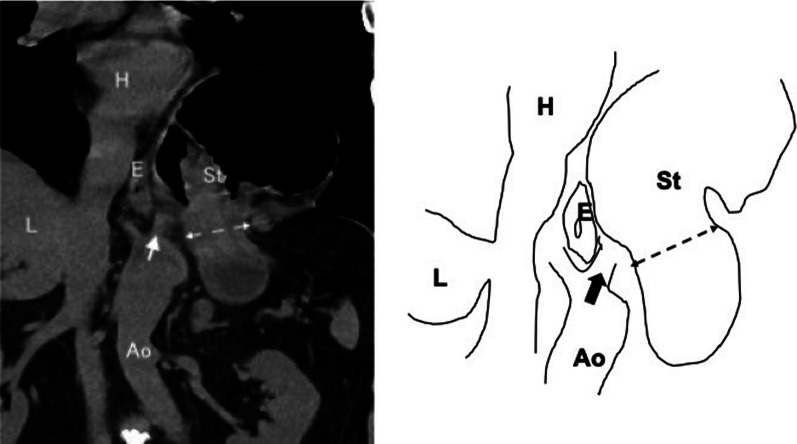 Figure 7
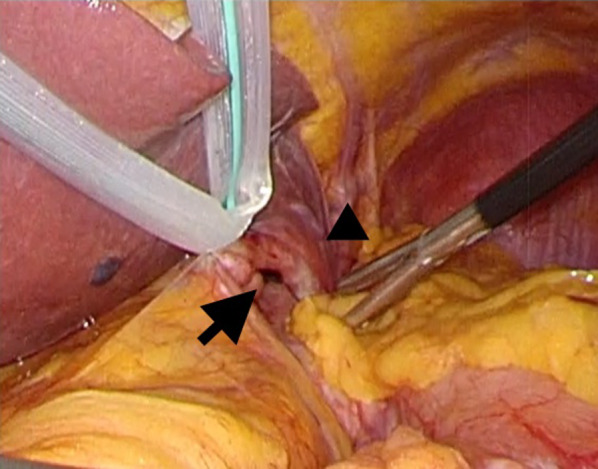 Figure 8
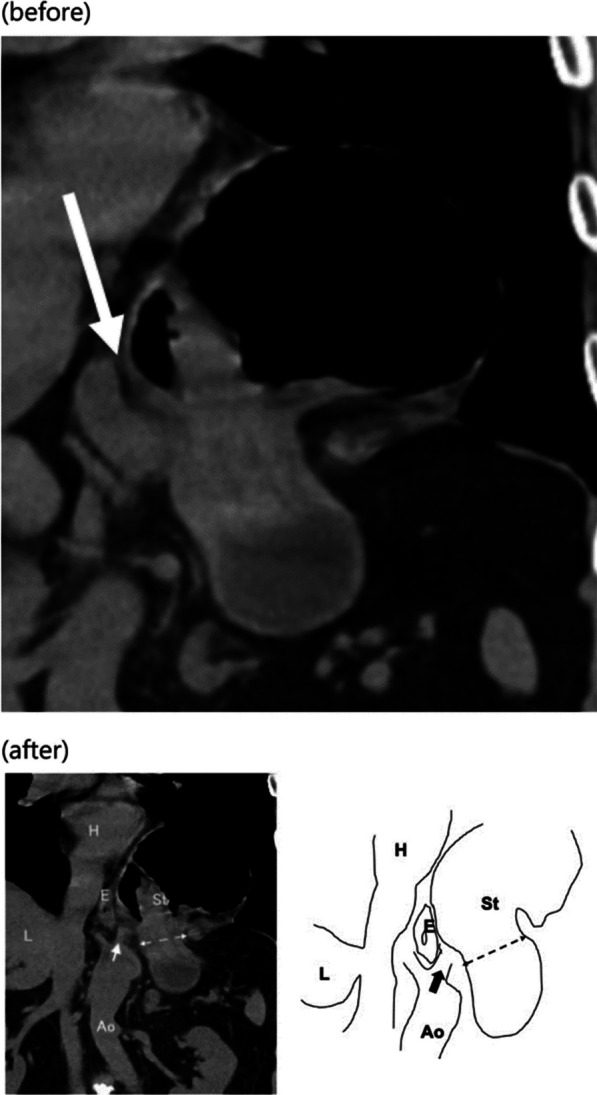 Figure 3
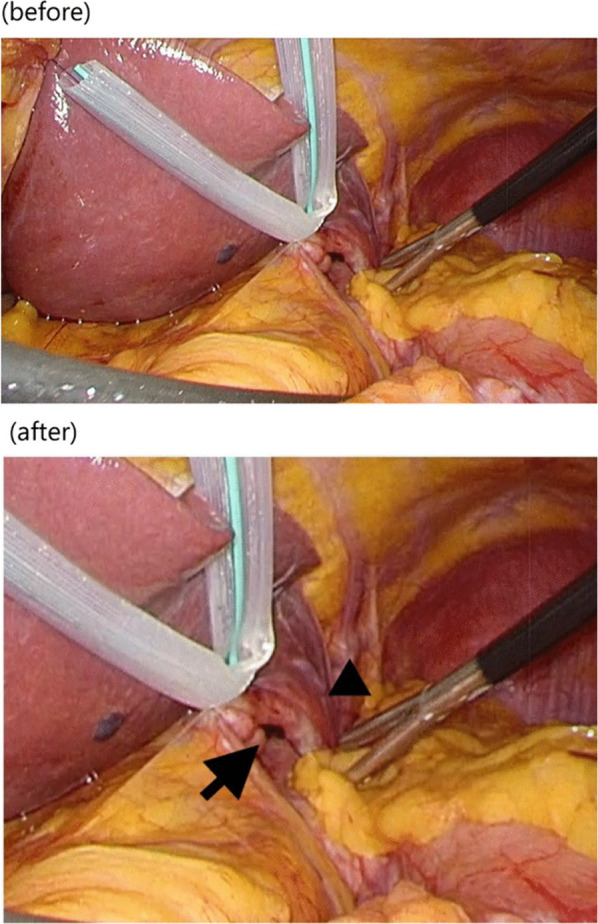 Figure 4
Peer Reviews
No public reviews on file for this paper yet. If you reviewed it on a platform where reviews are public (OpenReview, ICLR, NeurIPS, ICML), you can paste yours below so the community can read it here.
Videos
No videos yet. Explain this paper in a talk, walkthrough, or lecture? Add one.
Taxonomy
TopicsCongenital Diaphragmatic Hernia Studies · Congenital Anomalies and Fetal Surgery · Esophageal and GI Pathology
Correction: Surgical Case Reports (2024) 10:135 10.1186/s40792-024-01931-9
Following publication of the original article [1], the authors reported an error in figures 7 and 8.
The original figure 7 was:
The correct Fig. 7 should read:Fig. 7. Reassuring plain computed tomography on admission. We retrospectively examined the details of preoperative plain computed tomography (coronal view) and were able to detect the body of the stomach deviated into the left thoracic cavity and the presence of connective tissue showing left diaphragmatic crus (arrow) beside the hernial orifice (double arrow dotted line) (H: heart, E: esophagus, L: liver, Ao: abdominal aorta, St: stomach)
The original figure 8 was:
The correct Fig. 8 should read:Fig. 8. Transition area of left triangular ligament was located just above the hernial orifice (arrow), and the lateral segment of the liver (arrowhead) did not cover the left subdiaphragmatic space, including the hernial orifice
The original article [1] has been updated.
The reference list from the paper itself. Each links out to its DOI / PubMed record.