Local Perineal Capillary Perforator Flaps: A Minimally Invasive Technique for the Correction of Vulvar Stenosis
Anna Amelia Caretto, Giorgia Garganese, Simona Maria Fragomeni, Luca Tagliaferri, Bruno Fionda, Giovanni Scambia, Stefano Gentileschi

TL;DR
This paper introduces a minimally invasive surgical technique using capillary perforator flaps to effectively treat vulvar stenosis, resulting in significant improvement with no complications.
Contribution
The novel CPPF technique offers a safe and effective solution for vulvar stenosis correction with minimal invasiveness and no postoperative complications.
Findings
Thirteen patients experienced complete resolution of vulvar stenosis with no recurrences after CPPF surgery.
The average severity of stenosis improved significantly from 2.3 preoperatively to 0.3 postoperatively (p < 0.01).
No postoperative complications were observed in any of the patients treated with CPPF.
Abstract
Background: Vulvar stenosis is a debilitating condition that compromises sexual function, urination, and the ability to undergo gynecological examinations. The purpose of this study is to describe the technique of capillary perforator perineal flaps (CPPF) for the correction of vulvar stenosis. Methods: We retrospectively examined patients with vulvar stenosis treated through surgical separation and reconstruction with CPPF. The procedure involved vulvar separation with the creation of a subsequent defect, repaired using a flap, harvested laterally to the labia majora including a capillary perforator and transferred through a subcutaneous tunnel to repair the vulvar defect. The functional outcome was evaluated with the Bradford scale, comparing the preoperative and postoperative scores using the Student’s t-test. Results: thirteen patients were included, three with stenosis following…
Genes, proteins, chemicals, diseases, species, mutations and cell lines named across the full text — each resolved to its canonical identifier and authoritative record.
Click any figure to enlarge with its caption.
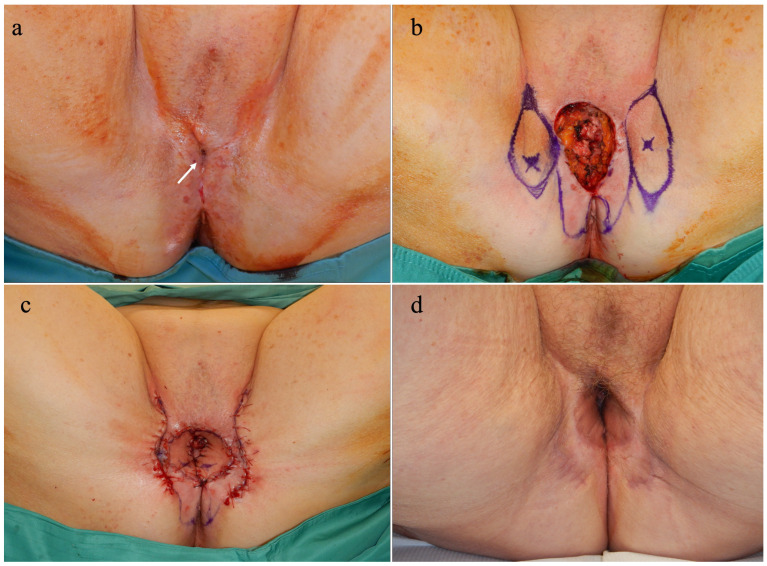 Figure 1
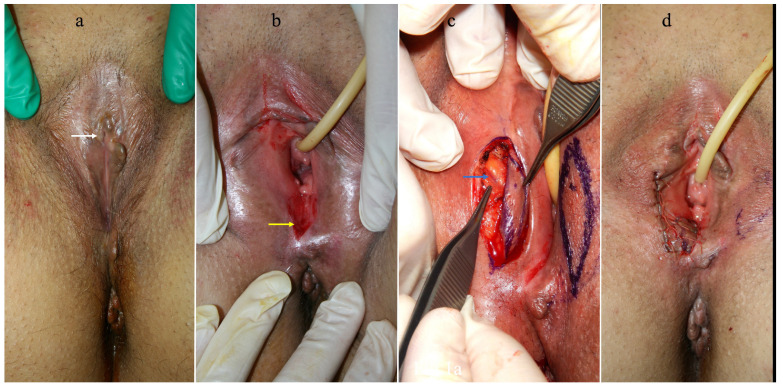 Figure 2
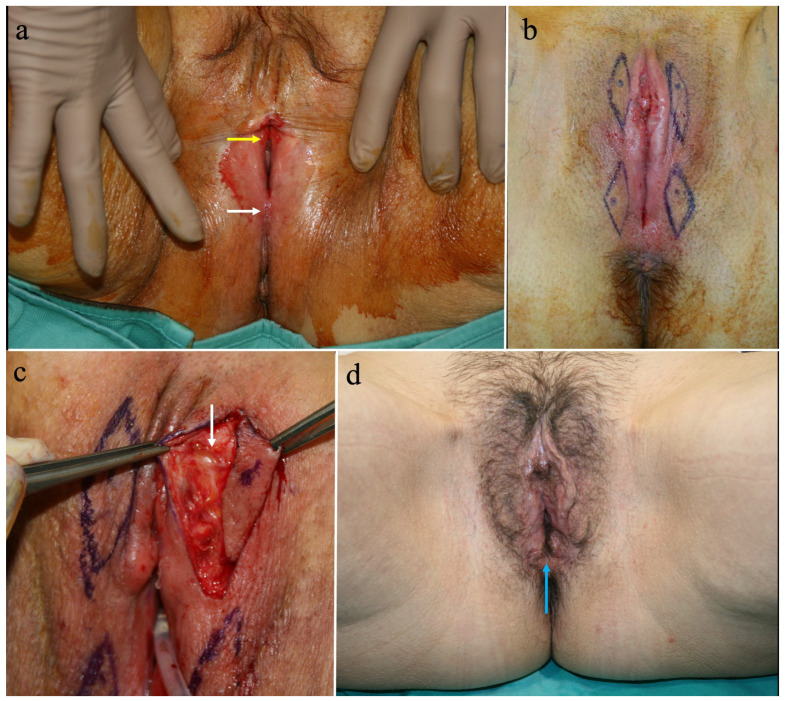 Figure 3
Peer Reviews
No public reviews on file for this paper yet. If you reviewed it on a platform where reviews are public (OpenReview, ICLR, NeurIPS, ICML), you can paste yours below so the community can read it here.
Videos
No videos yet. Explain this paper in a talk, walkthrough, or lecture? Add one.
Taxonomy
TopicsReconstructive Surgery and Microvascular Techniques · Urological Disorders and Treatments · Genital Health and Disease