Exploring Trichoderma Species in Industrial Wastewater: Morphological and Molecular Insights from Isolates
Syeda Bint-e-Zahira, Abdul Nasir Khalid, Nousheen Yousaf, Muhammad Iqbal, Tauseef Anwar, Huma Qureshi, Saleh H. Salmen, Mohammad Javed Ansari

TL;DR
This study identifies and characterizes three Trichoderma species from industrial wastewater in Pakistan using both morphological and molecular methods.
Contribution
The study combines morphological and molecular approaches to identify new Trichoderma species in industrial wastewater from Pakistan.
Findings
Three Trichoderma species (T. citrinoviride, T. erinaceum, T. longibrachiatum) were identified from industrial wastewater in Pakistan.
Morphological and molecular methods confirmed species differentiation based on features like phialides and conidia.
The study emphasizes the importance of combined approaches for accurate Trichoderma identification in industrial environments.
Abstract
The genus Trichoderma holds economic significance due to its widespread distribution and diverse applications, including biological control, enzyme production, and various biotechnological uses. The accurate identification of Trichoderma species is crucial given their close association with human activities. Despite previous efforts in classification, a comprehensive analysis combining morphological and molecular approaches is necessary. This study focuses on the isolation of four Trichoderma species from industrial wastewater in Pakistan, expanding on the known diversity in the region; isolation involved collecting samples from industrial wastewater effluents at specific sites in Punjab, Pakistan. Trichoderma strains were cultured and purified on solid media, with subsequent biomass production for bisorptional activity. Morphological characterization included colony features and…
Genes, proteins, chemicals, diseases, species, mutations and cell lines named across the full text — each resolved to its canonical identifier and authoritative record.
Click any figure to enlarge with its caption.
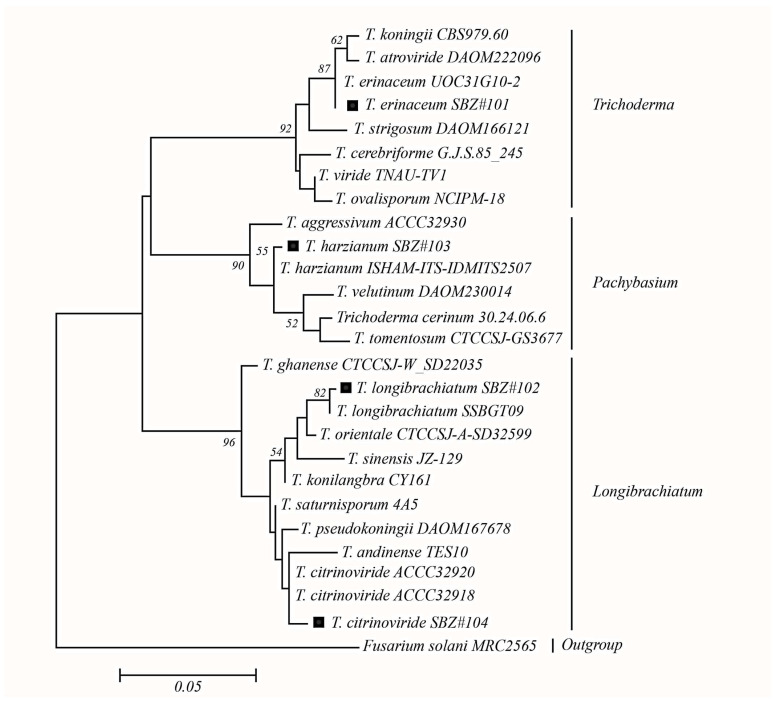 Figure 1
Peer Reviews
No public reviews on file for this paper yet. If you reviewed it on a platform where reviews are public (OpenReview, ICLR, NeurIPS, ICML), you can paste yours below so the community can read it here.
Videos
No videos yet. Explain this paper in a talk, walkthrough, or lecture? Add one.
Taxonomy
TopicsEducation for Peace and Conflict Resolution