Improved Interpretation of Pulmonary Artery Wedge Pressures through Left Atrial Volumetry—A Cardiac Magnetic Resonance Imaging Study
Gülmisal Güder, Theresa Reiter, Maria Drayss, Wolfgang Bauer, Björn Lengenfelder, Peter Nordbeck, Georg Fette, Stefan Frantz, Caroline Morbach, Stefan Störk

TL;DR
This study shows that pulmonary artery wedge pressure (PAWP) may not reliably reflect left heart disease in patients with reduced heart function, and left atrial ejection fraction is a better indicator.
Contribution
The study identifies left atrial ejection fraction as a novel CMR predictor of elevated PAWP in patients with reduced LVEF.
Findings
Elevated PAWP was independently predicted by NT-proBNP, left atrial ejection fraction, and LV end-systolic volume index.
A normal PAWP did not reliably exclude elevated left ventricular end-diastolic pressure (LVEDP) in patients with reduced LVEF.
Left atrial ejection fraction was the only CMR variable significantly different between patients with elevated LVEDP and PAWP levels.
Abstract
Background: The pulmonary artery wedge pressure (PAWP) is regarded as a reliable indicator of left ventricular end-diastolic pressure (LVEDP), but this association is weaker in patients with left-sided heart disease (LHD). We compared morphological differences in cardiac magnetic resonance imaging (CMR) in patients with heart failure (HF) and a reduced left ventricular ejection fraction (LVEF), with or without elevation of PAWP or LVEDP. Methods: We retrospectively identified 121 patients with LVEF < 50% who had undergone right heart catheterization (RHC) and CMR. LVEDP data were available for 75 patients. Results: The mean age of the study sample was 63 ± 14 years, the mean LVEF was 32 ± 10%, and 72% were men. About 53% of the patients had an elevated PAWP (>15 mmHg). In multivariable logistic regression analysis, NT-proBNP, left atrial ejection fraction (LAEF), and LV end-systolic…
Genes, proteins, chemicals, diseases, species, mutations and cell lines named across the full text — each resolved to its canonical identifier and authoritative record.
Click any figure to enlarge with its caption.
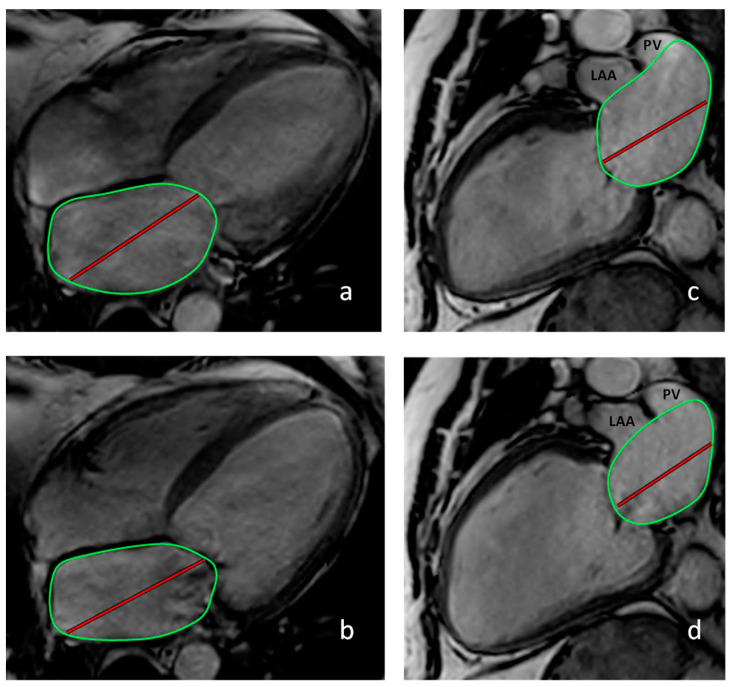 Figure 1
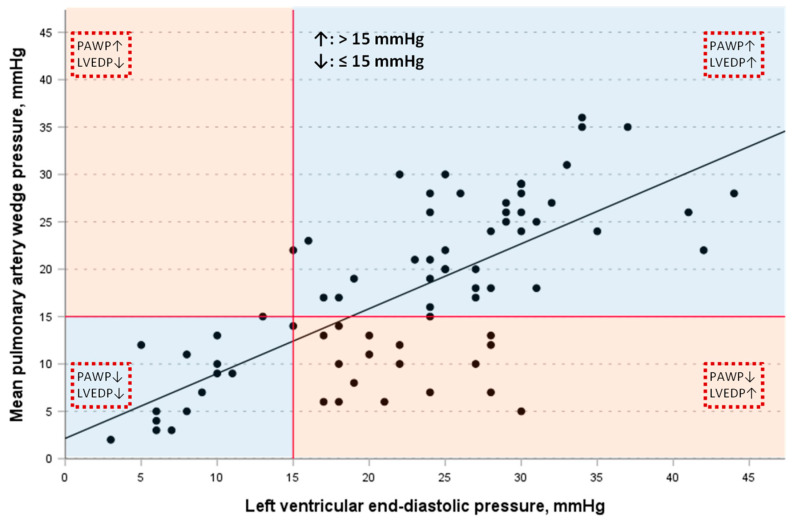 Figure 2
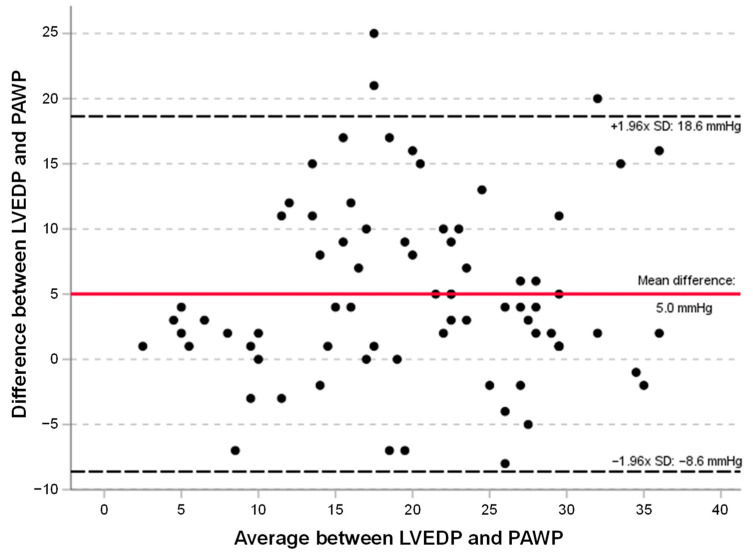 Figure 3
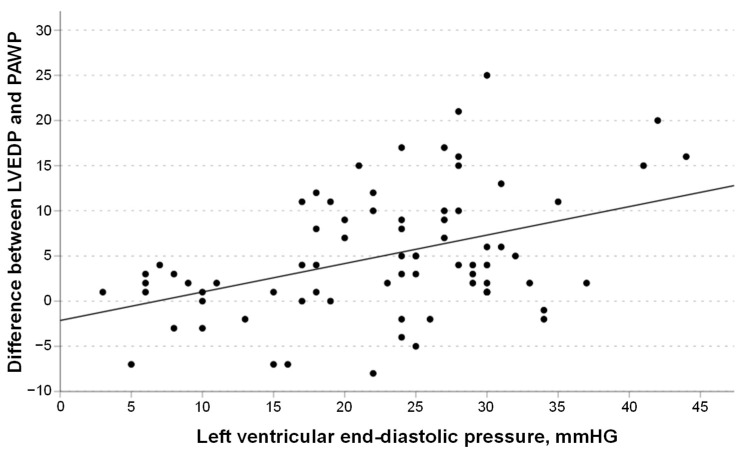 Figure 4
Peer Reviews
No public reviews on file for this paper yet. If you reviewed it on a platform where reviews are public (OpenReview, ICLR, NeurIPS, ICML), you can paste yours below so the community can read it here.
Videos
No videos yet. Explain this paper in a talk, walkthrough, or lecture? Add one.
Taxonomy
TopicsCardiovascular Function and Risk Factors · Cardiac Imaging and Diagnostics · Pulmonary Hypertension Research and Treatments