The Influence of the Auxiliary Ligand in Monofunctional Pt(II) Anticancer Complexes on the DNA Backbone
Evanthia-Vasiliki Tagari, Evangelia Sifnaiou, Theodoros Tsolis, Achilleas Garoufis

TL;DR
This study explores how different auxiliary ligands in platinum-based anticancer complexes affect their DNA interactions and cancer cell toxicity.
Contribution
The paper reveals how ligand bulkiness and aromaticity influence DNA binding and cytotoxicity in monofunctional Pt(II) complexes.
Findings
Complexes with bulkier ligands showed slower hydrolysis rates and distinct DNA binding behaviors.
Only the complex with a phenyl-substituted pyridine ligand exhibited significant cytotoxicity against A549 lung cancer cells.
Steric hindrance from ligand substituents altered sugar conformation dynamics in DNA model compounds.
Abstract
Monofunctional platinum complexes offer a promising alternative to cisplatin in cancer chemotherapy, showing a unique mechanism of action. Their ability to induce minor helix distortions effectively inhibits DNA transcription. In our study, we synthesized and characterized three monofunctional Pt(II) complexes with the general formula [Pt(en)(L)Cl]NO3, where en = ethylenediamine, and L = pyridine (py), 2-methylpyridine (2-mepy), and 2-phenylpyridine (2-phpy). The hydrolysis rates of [Pt(en)(py)Cl]NO3 (1) and [Pt(en)(2-mepy)Cl]NO3 (2) decrease with the bulkiness of the auxiliary ligand with k(1) = 2.28 ± 0.15 × 10⁻⁴ s−1 and k(2) = 8.69 ± 0.98 × 10⁻⁵ s−1 at 298 K. The complex [Pt(en)(2-phpy)Cl]Cl (3) demonstrated distinct behavior. Upon hydrolysis, an equilibrium (Keq = 0.385 mM) between the complexes [Pt(en)(2-phpy)Cl]+ and [Pt(en)(2-phpy-H+)]+ was observed with no evidence (NMR or…
Genes, proteins, chemicals, diseases, species, mutations and cell lines named across the full text — each resolved to its canonical identifier and authoritative record.
Click any figure to enlarge with its caption.
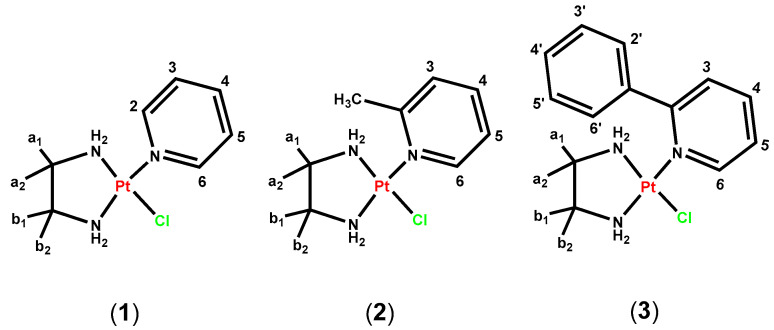 Figure 1
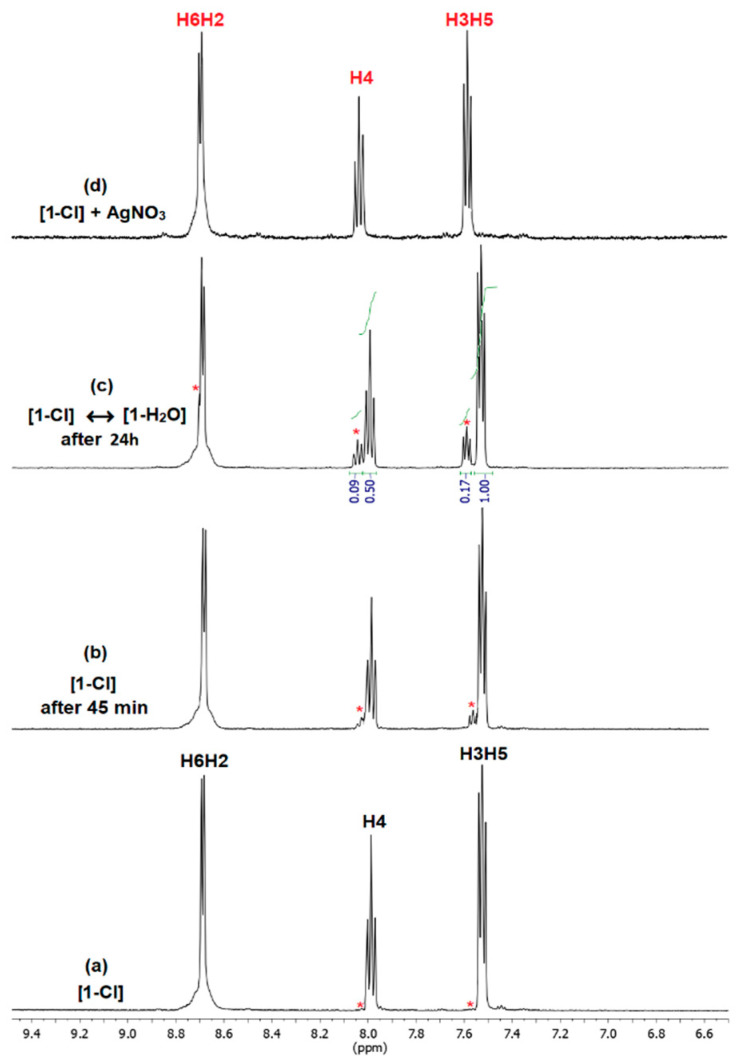 Figure 2
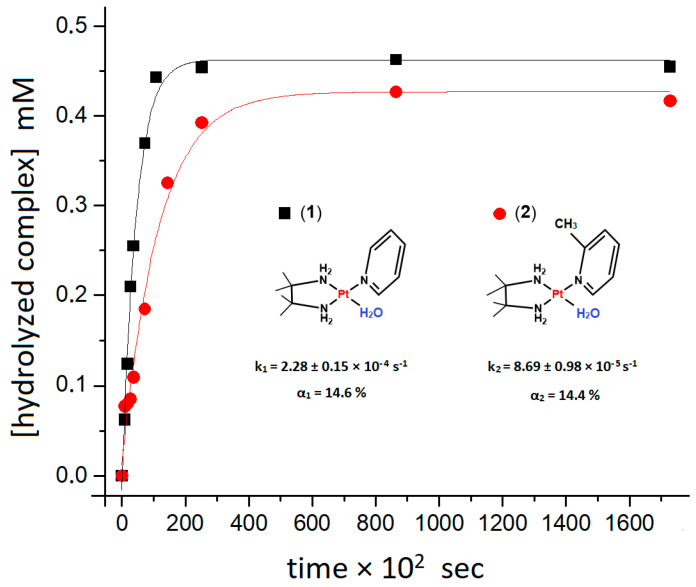 Figure 3
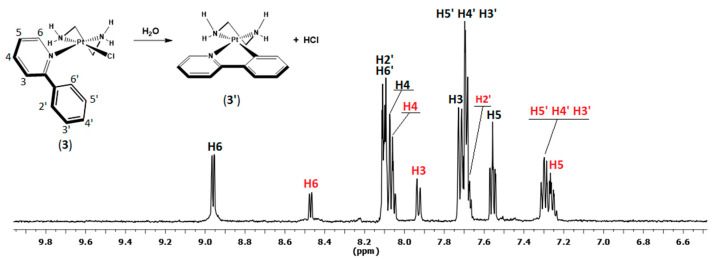 Figure 4
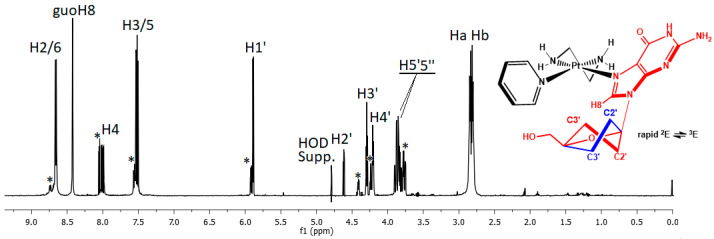 Figure 5
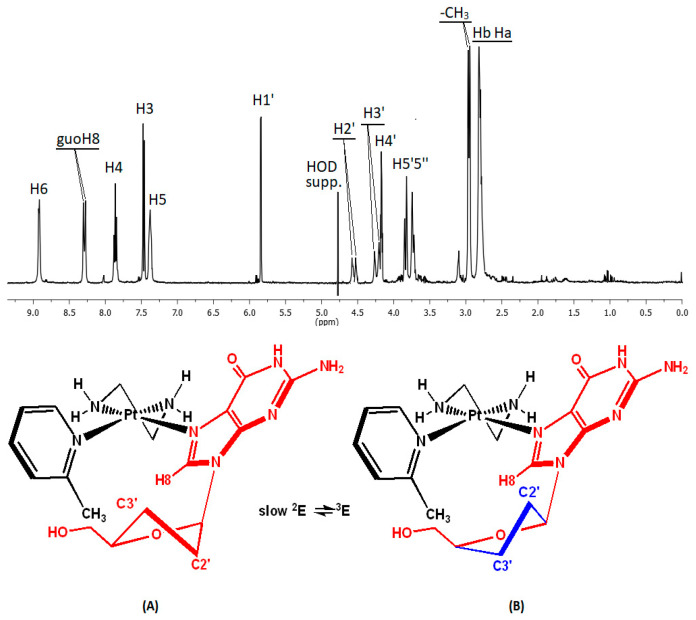 Figure 6
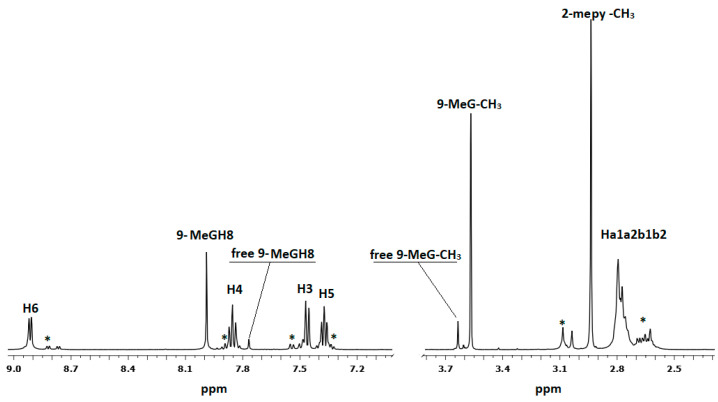 Figure 7
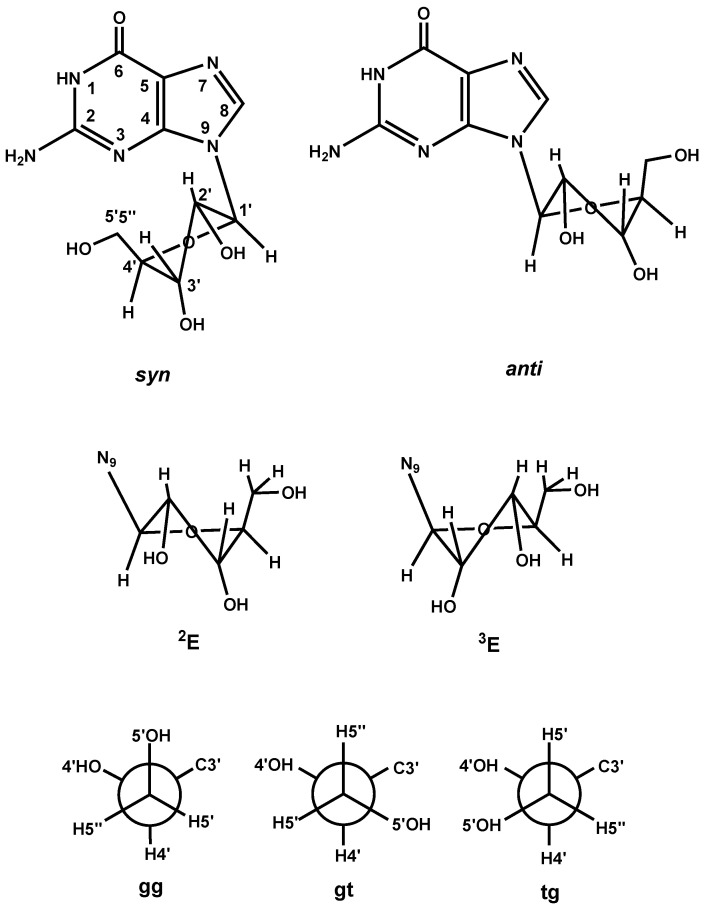 Figure 8
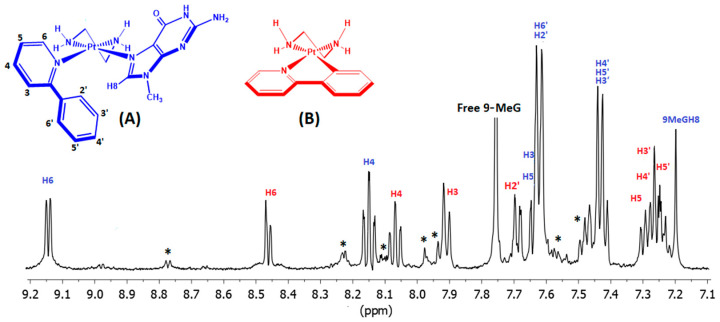 Figure 9
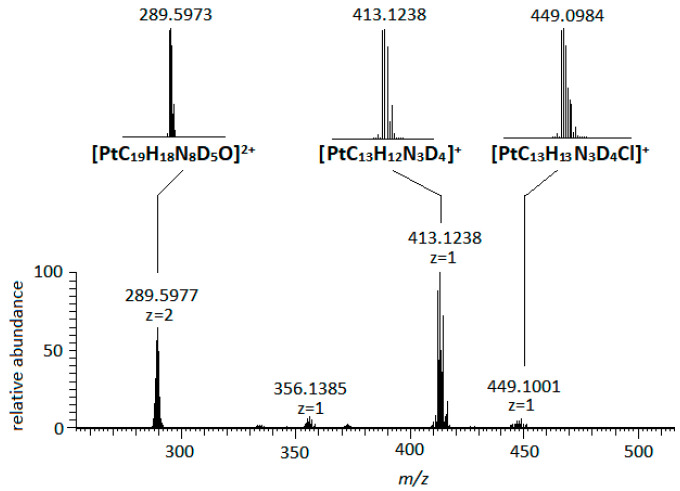 Figure 10
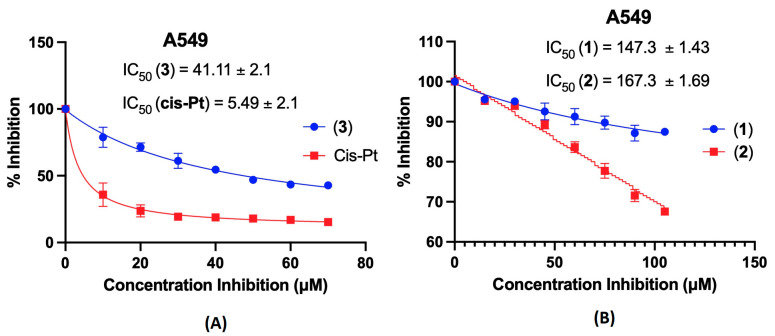 Figure 11
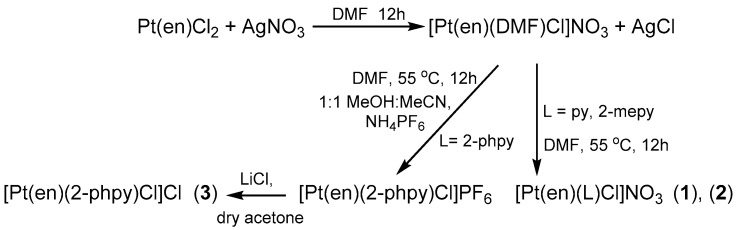 Figure 12
Peer Reviews
No public reviews on file for this paper yet. If you reviewed it on a platform where reviews are public (OpenReview, ICLR, NeurIPS, ICML), you can paste yours below so the community can read it here.
Videos
No videos yet. Explain this paper in a talk, walkthrough, or lecture? Add one.
Taxonomy
TopicsMetal complexes synthesis and properties · Ferrocene Chemistry and Applications · Click Chemistry and Applications