Evidence of Incomplete Feeding Behaviors among South Carolina Tick Populations
Kayla E. Bramlett, Laura E. Witt, Madeleine M. Meyer, Kia Zellars, Kyndall C. Dye-Braumuller, Melissa S. Nolan

TL;DR
South Carolina ticks are feeding on multiple hosts, including humans, which increases the risk of spreading diseases.
Contribution
This study provides the first evidence of incomplete feeding behavior in South Carolina tick populations, linking it to potential disease transmission risks.
Findings
Approximately one-third of collected ticks had fed on humans.
Incomplete feeding patterns varied by species, location, and time of collection.
The behavior aligns with rising tick-borne disease trends in the southeastern USA.
Abstract
In the southeastern United States of America, shifts in the environment such as climate change and host availability are pushing tick populations to spread into new areas. It is hypothesized that, as they migrate, tick populations have developed a behavior known as incomplete feeding. With this, ticks feed on more than one host at each life stage, increasing the chance of pathogen transmission. In South Carolina, we found evidence of ticks displaying this behavior. We collected engorged female ticks from stray dogs at animal shelters across the state in 2022. Testing showed that about a third of these ticks had fed on humans. The patterns varied depending on the tick species, where they were found, and the time of collection. This pilot study reflects the growing trend of tick-borne diseases in the southeastern USA. It is crucial to dig deeper into how factors like the season, location,…
Genes, proteins, chemicals, diseases, species, mutations and cell lines named across the full text — each resolved to its canonical identifier and authoritative record.
Click any figure to enlarge with its caption.
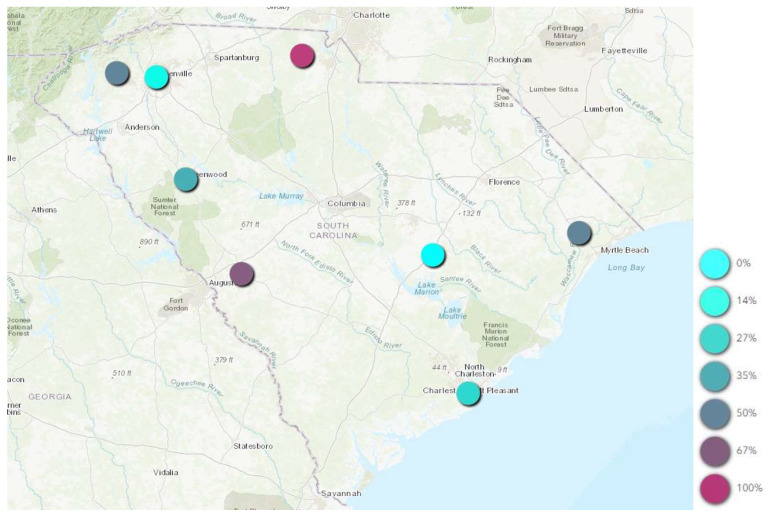 Figure 1
Peer Reviews
No public reviews on file for this paper yet. If you reviewed it on a platform where reviews are public (OpenReview, ICLR, NeurIPS, ICML), you can paste yours below so the community can read it here.
Videos
No videos yet. Explain this paper in a talk, walkthrough, or lecture? Add one.
Taxonomy
TopicsVector-borne infectious diseases · Vector-Borne Animal Diseases · Viral Infections and Vectors