Revisiting the Transferability of Few-Shot Image Classification: A Frequency Spectrum Perspective
Min Zhang, Zhitao Wang, Donglin Wang

TL;DR
This paper explores how different frequency components in images affect few-shot image classification performance and introduces a new method to improve transferability.
Contribution
The paper introduces a novel frequency spectrum perspective and a method called Frequency Spectrum Mask (FRSM) to enhance transferability in few-shot image classification.
Findings
Non-causal frequencies like background information negatively impact transferability in few-shot learning.
The proposed FRSM method improves transferability by weighting and mitigating non-causal frequencies.
Experiments show FRSM significantly enhances performance across nine datasets.
Abstract
Few-shot learning, especially few-shot image classification (FSIC), endeavors to recognize new categories using only a handful of labeled images by transferring knowledge from a model trained on base categories. Despite numerous efforts to address the challenge of deficient transferability caused by the distribution shift between the base and new classes, the fundamental principles remain a subject of debate. In this paper, we elucidate why a decline in performance occurs and what information is transferred during the testing phase, examining it from a frequency spectrum perspective. Specifically, we adopt causality on the frequency space for FSIC. With our causal assumption, non-causal frequencies (e.g., background knowledge) act as confounders between causal frequencies (e.g., object information) and predictions. Our experimental results reveal that different frequency components…
Genes, proteins, chemicals, diseases, species, mutations and cell lines named across the full text — each resolved to its canonical identifier and authoritative record.
Click any figure to enlarge with its caption.
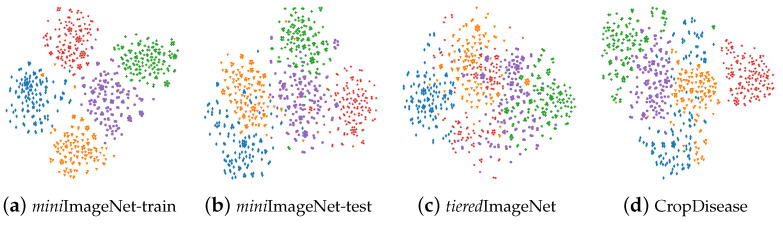 Figure 1
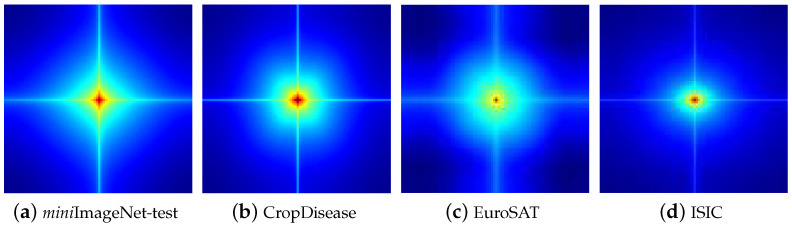 Figure 2
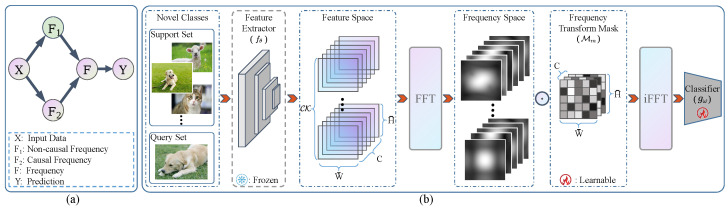 Figure 3
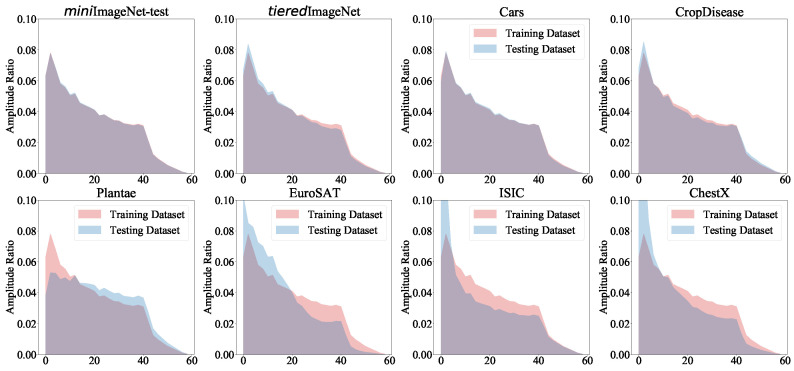 Figure 4
 Figure 5
 Figure 6
 Figure 7
 Figure 8
 Figure 9
 Figure 10
 Figure 11
 Figure 12
 Figure 13
 Figure 14
 Figure 15
 Figure 16
 Figure 17
 Figure 18
 Figure 19
 Figure 20
 Figure 21
 Figure 22
 Figure 23
 Figure 24
 Figure 25
 Figure 26
 Figure 27
 Figure 28
 Figure 29
 Figure 30
 Figure 31
 Figure 32
 Figure 33
 Figure 34
 Figure 35
 Figure 36
 Figure 37
 Figure 38
 Figure 39
 Figure 40
 Figure 41
 Figure 42
 Figure 43
 Figure 44
Peer Reviews
No public reviews on file for this paper yet. If you reviewed it on a platform where reviews are public (OpenReview, ICLR, NeurIPS, ICML), you can paste yours below so the community can read it here.
Videos
No videos yet. Explain this paper in a talk, walkthrough, or lecture? Add one.
Taxonomy
TopicsDomain Adaptation and Few-Shot Learning · Image Processing Techniques and Applications · Photoacoustic and Ultrasonic Imaging