Coreference Resolution Based on High-Dimensional Multi-Scale Information
Yu Wang, Zenghui Ding, Tao Wang, Shu Xu, Xianjun Yang, Yining Sun

TL;DR
This paper introduces a new method for coreference resolution using multi-scale information to improve BERT's performance on text encoding.
Contribution
A novel multi-scale context module is proposed to enhance BERT's encoding for varying text spans.
Findings
The multi-scale module improves BERT's global information collection ability.
Adding the module increased F1 scores by 0.5% with BERT and 0.2% with span BERT.
Abstract
Coreference resolution is a key task in Natural Language Processing. It is difficult to evaluate the similarity of long-span texts, which makes text-level encoding somewhat challenging. This paper first compares the impact of commonly used methods to improve the global information collection ability of the model on the BERT encoding performance. Based on this, a multi-scale context information module is designed to improve the applicability of the BERT encoding model under different text spans. In addition, improving linear separability through dimension expansion. Finally, cross-entropy loss is used as the loss function. After adding BERT and span BERT to the module designed in this article, F1 increased by 0.5% and 0.2%, respectively.
Genes, proteins, chemicals, diseases, species, mutations and cell lines named across the full text — each resolved to its canonical identifier and authoritative record.
Click any figure to enlarge with its caption.
 Figure 1
 Figure 2
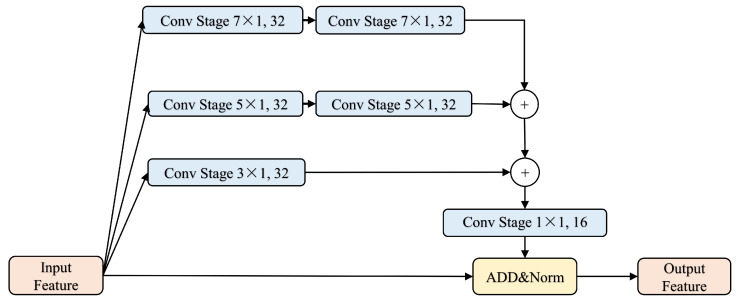 Figure 3
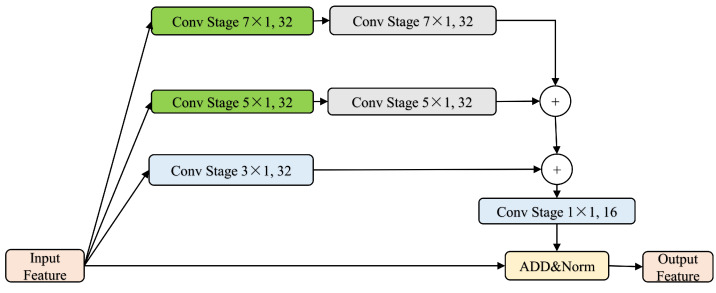 Figure 4
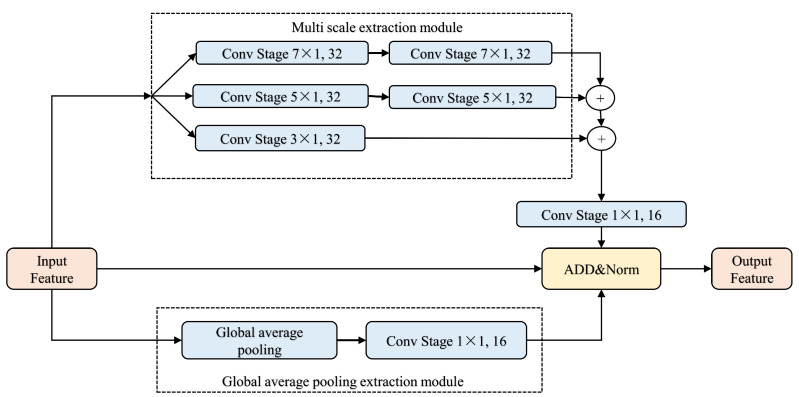 Figure 5
 Figure 6
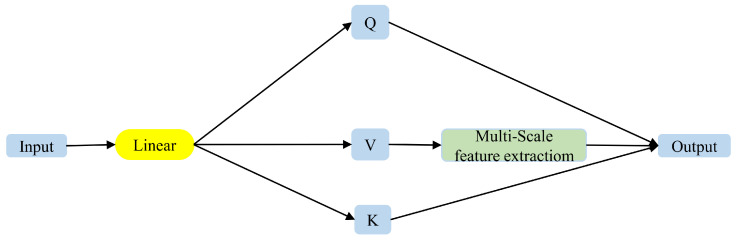 Figure 7
 Figure 8
 Figure 9
 Figure 10
Peer Reviews
No public reviews on file for this paper yet. If you reviewed it on a platform where reviews are public (OpenReview, ICLR, NeurIPS, ICML), you can paste yours below so the community can read it here.
Videos
No videos yet. Explain this paper in a talk, walkthrough, or lecture? Add one.
Taxonomy
TopicsTopic Modeling · Natural Language Processing Techniques · Text and Document Classification Technologies