Building Test Batteries Based on Analyzing Random Number Generator Tests within the Framework of Algorithmic Information Theory
Boris Ryabko

TL;DR
This paper introduces a new method for evaluating random number generator tests using algorithmic information theory, suggesting the inclusion of data compression-based tests in test batteries.
Contribution
A novel method for comparing statistical tests based on algorithmic information theory is proposed.
Findings
The proposed method can compare test power in cases where traditional statistics cannot.
Tests using data compression with dictionaries should be included in test batteries.
Abstract
The problem of testing random number generators is considered and a new method for comparing the power of different statistical tests is proposed. It is based on the definitions of random sequence developed in the framework of algorithmic information theory and allows comparing the power of different tests in some cases when the available methods of mathematical statistics do not distinguish between tests. In particular, it is shown that tests based on data compression methods using dictionaries should be included in test batteries.
Genes, proteins, chemicals, diseases, species, mutations and cell lines named across the full text — each resolved to its canonical identifier and authoritative record.
Click any figure to enlarge with its caption.
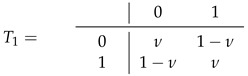 Figure 1
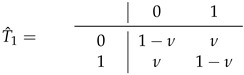 Figure 2
 Figure 3
Peer Reviews
No public reviews on file for this paper yet. If you reviewed it on a platform where reviews are public (OpenReview, ICLR, NeurIPS, ICML), you can paste yours below so the community can read it here.
Videos
No videos yet. Explain this paper in a talk, walkthrough, or lecture? Add one.
Taxonomy
TopicsAlgorithms and Data Compression · Computability, Logic, AI Algorithms · Cellular Automata and Applications