Slow Sulfide Donor GYY4137 Increased the Sensitivity of Two Breast Cancer Cell Lines to Paclitaxel by Different Mechanisms
Veronika Liskova, Barbora Chovancova, Kristina Galvankova, Ladislav Klena, Katarina Matyasova, Petr Babula, Marian Grman, Ingeborg Rezuchova, Maria Bartosova, Olga Krizanova

TL;DR
This study shows that GYY4137, a slow sulfide donor, enhances the effectiveness of paclitaxel in two breast cancer cell lines through different mechanisms.
Contribution
The paper reveals distinct mechanisms by which hydrogen sulfide improves paclitaxel sensitivity in different breast cancer cell types.
Findings
GYY4137 increased paclitaxel sensitivity in both MDA-MB-231 and JIMT1 breast cancer cells.
In MDA-MB-231 cells, GYY4137 boosted apoptosis without affecting IP3R1 protein or cytoskeleton morphology.
The sensitization mechanism of GYY4137 differs between MDA-MB-231 and JIMT1 cells.
Abstract
Paclitaxel (PTX) is a chemotherapeutic agent affecting microtubule polymerization. The efficacy of PTX depends on the type of tumor, and its improvement would be beneficial in patients’ treatment. Therefore, we tested the effect of slow sulfide donor GYY4137 on paclitaxel sensitivity in two different breast cancer cell lines, MDA-MB-231, derived from a triple negative cell line, and JIMT1, which overexpresses HER2 and is resistant to trastuzumab. In JIMT1 and MDA-MB-231 cells, we compared IC50 and some metabolic (apoptosis induction, lactate/pyruvate conversion, production of reactive oxygen species, etc.), morphologic (changes in cytoskeleton), and functional (migration, angiogenesis) parameters for PTX and PTX/GYY4137, aiming to determine the mechanism of the sensitization of PTX. We observed improved sensitivity to paclitaxel in the presence of GYY4137 in both cell lines, but also…
Genes, proteins, chemicals, diseases, species, mutations and cell lines named across the full text — each resolved to its canonical identifier and authoritative record.
Click any figure to enlarge with its caption.
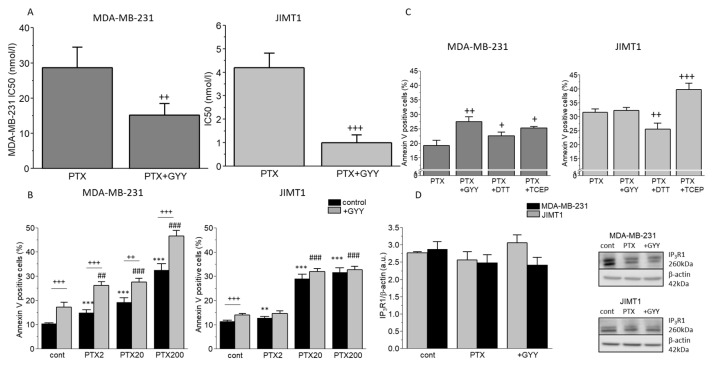 Figure 1
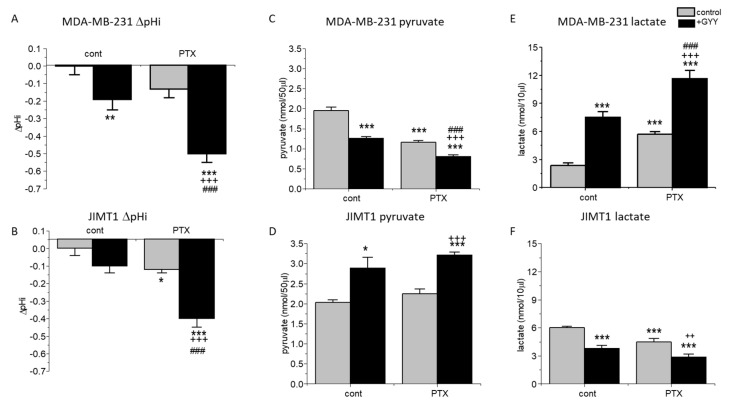 Figure 2
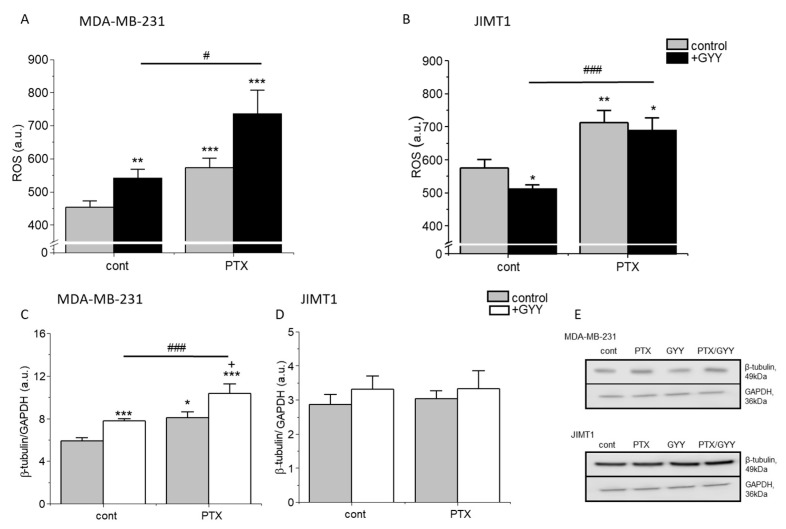 Figure 3
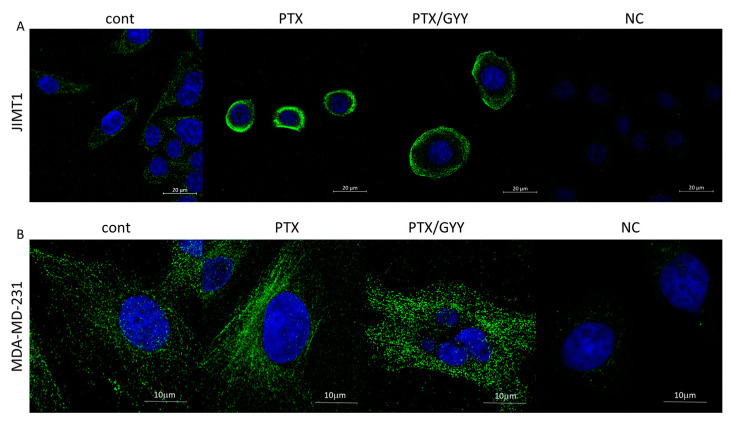 Figure 4
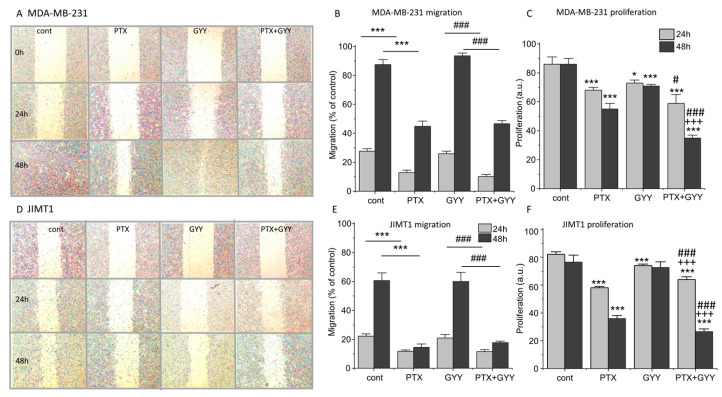 Figure 5
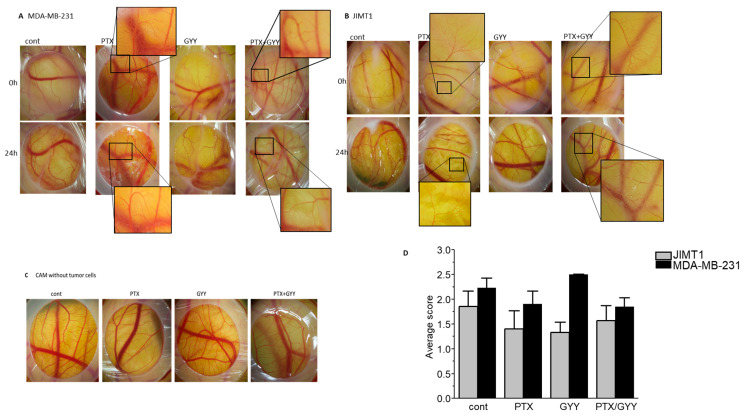 Figure 6
Peer Reviews
No public reviews on file for this paper yet. If you reviewed it on a platform where reviews are public (OpenReview, ICLR, NeurIPS, ICML), you can paste yours below so the community can read it here.
Videos
No videos yet. Explain this paper in a talk, walkthrough, or lecture? Add one.
Taxonomy
TopicsCancer, Hypoxia, and Metabolism · Glutathione Transferases and Polymorphisms · Cancer, Stress, Anesthesia, and Immune Response