Repair and DNA Polymerase Bypass of Clickable Pyrimidine Nucleotides
Anton V. Endutkin, Anna V. Yudkina, Timofey D. Zharkov, Alexander E. Barmatov, Daria V. Petrova, Daria V. Kim, Dmitry O. Zharkov

TL;DR
This study explores how DNA repair systems and polymerases handle clickable nucleotides, finding that they can be repaired or cause errors, but not at high rates.
Contribution
The study reveals the repair and bypass mechanisms of bulky clickable pyrimidine nucleotides by DNA glycosylases and polymerases.
Findings
EtU and C8-AlkU are excised by SMUG1 and MBD4 in vitro, but persist longer in human cells than uracil.
DNA polymerases bypass EtU, C8-AlkU, and C8-AlkC mostly error-free, though some misincorporation occurs, especially with DNA polymerase β.
Clickable nucleotides may cause mutations, but the frequency of such events in cells is likely low.
Abstract
Clickable nucleosides, most often 5-ethynyl-2′-deoxyuridine (EtU), are widely used in studies of DNA replication in living cells and in DNA functionalization for bionanotechology applications. Although clickable dNTPs are easily incorporated by DNA polymerases into the growing chain, afterwards they might become targets for DNA repair systems or interfere with faithful nucleotide insertion. Little is known about the possibility and mechanisms of these post-synthetic events. Here, we investigated the repair and (mis)coding properties of EtU and two bulkier clickable pyrimidine nucleosides, 5-(octa-1,7-diyn-1-yl)-U (C8-AlkU) and 5-(octa-1,7-diyn-1-yl)-C (C8-AlkC). In vitro, EtU and C8-AlkU, but not C8-AlkC, were excised by SMUG1 and MBD4, two DNA glycosylases from the base excision repair pathway. However, when placed into a plasmid encoding a fluorescent reporter inactivated by repair in…
Genes, proteins, chemicals, diseases, species, mutations and cell lines named across the full text — each resolved to its canonical identifier and authoritative record.
Click any figure to enlarge with its caption.
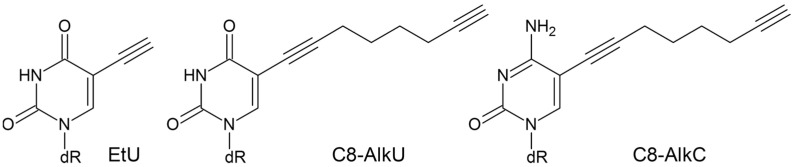 Figure 1
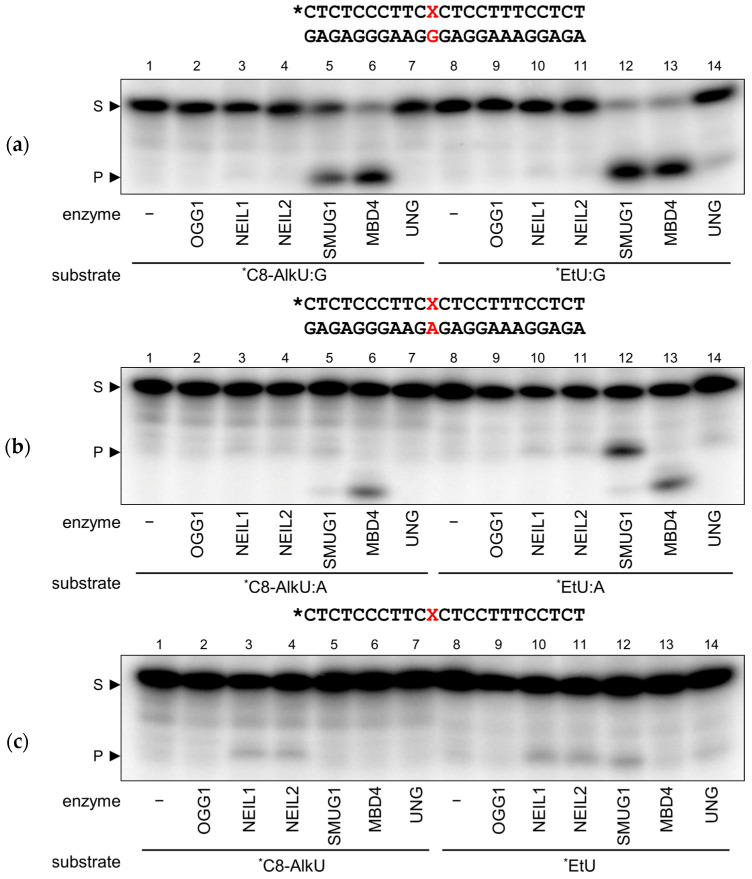 Figure 2
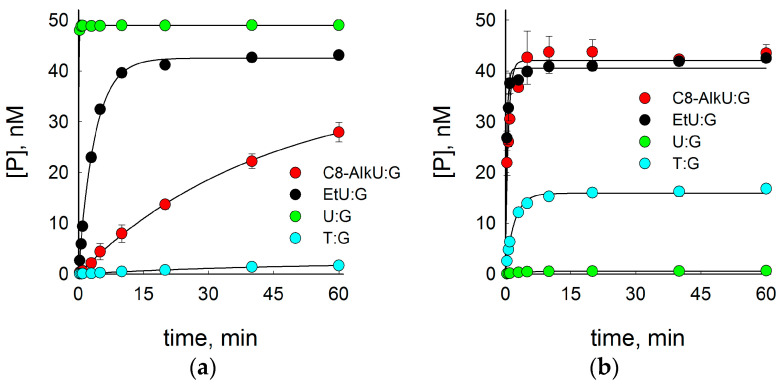 Figure 3
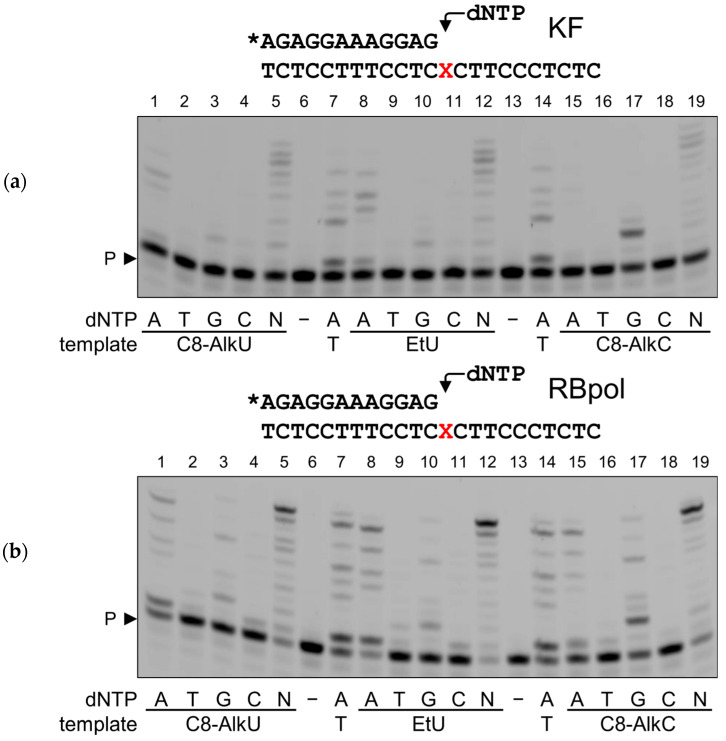 Figure 4
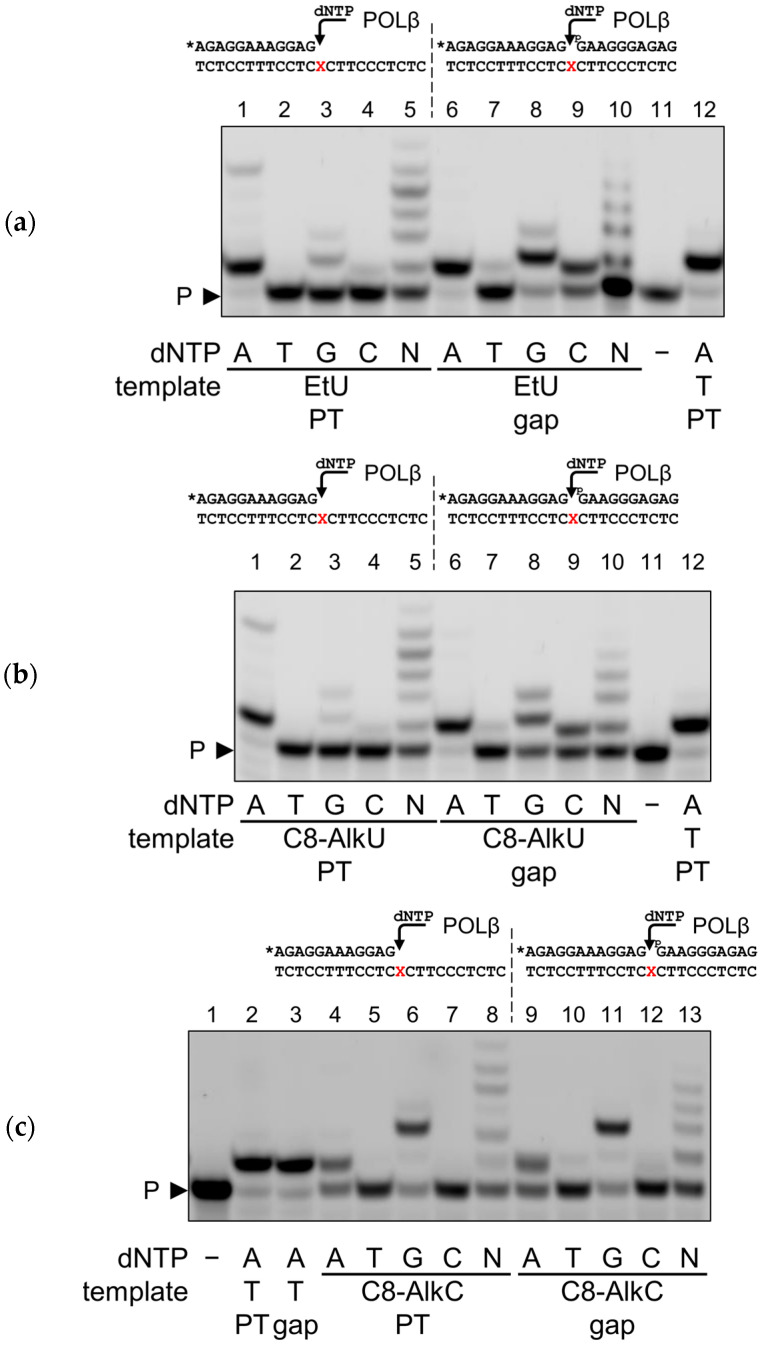 Figure 5
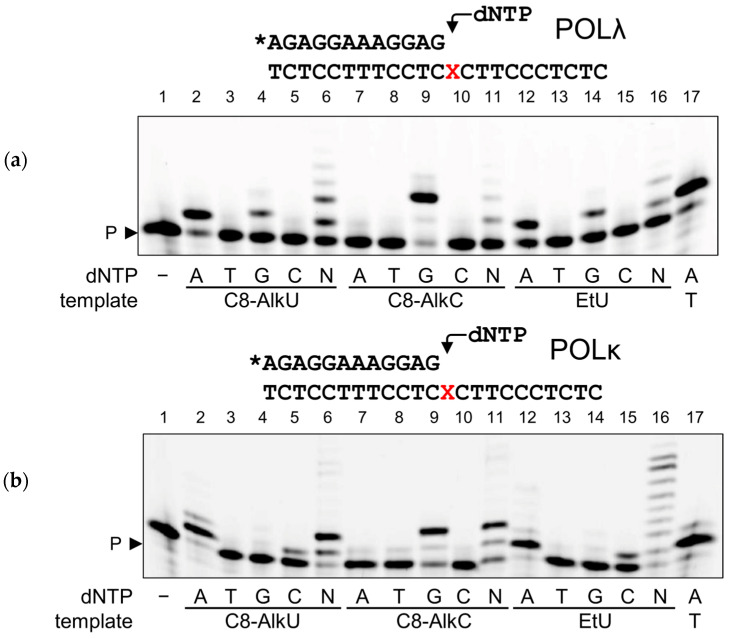 Figure 6
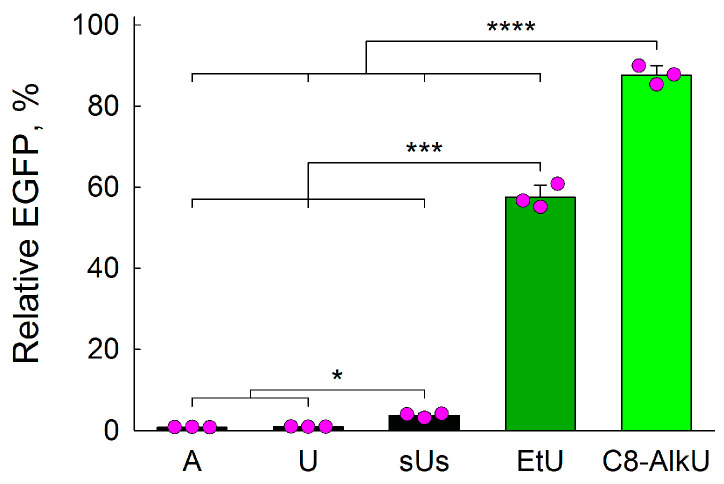 Figure 7
Peer Reviews
No public reviews on file for this paper yet. If you reviewed it on a platform where reviews are public (OpenReview, ICLR, NeurIPS, ICML), you can paste yours below so the community can read it here.
Videos
No videos yet. Explain this paper in a talk, walkthrough, or lecture? Add one.
Taxonomy
TopicsDNA and Nucleic Acid Chemistry · Advanced biosensing and bioanalysis techniques · Biochemical and Molecular Research