Predictive ability of multi-population genomic prediction methods of phenotypes for reproduction traits in Chinese and Austrian pigs
Xue Wang, Zipeng Zhang, Hehe Du, Christina Pfeiffer, Gábor Mészáros, Xiangdong Ding

TL;DR
This study compares machine learning and traditional methods for predicting reproduction traits in pigs from China and Austria, finding that machine learning performs better when populations are genetically similar.
Contribution
The study evaluates machine learning algorithms in multi-population genomic prediction for pig reproduction traits, revealing performance differences based on population relatedness.
Findings
ML methods like SVR and KRR improved predictive ability by up to 29.7% in multi-population scenarios compared to ST-GBLUP.
MT-GBLUP outperformed ML methods when unrelated populations were added.
ML showed lower mean square errors in most population-trait combinations when populations were genetically similar.
Abstract
Multi-population genomic prediction can rapidly expand the size of the reference population and improve genomic prediction ability. Machine learning (ML) algorithms have shown advantages in single-population genomic prediction of phenotypes. However, few studies have explored the effectiveness of ML methods for multi-population genomic prediction. In this study, 3720 Yorkshire pigs from Austria and four breeding farms in China were used, and single-trait genomic best linear unbiased prediction (ST-GBLUP), multitrait GBLUP (MT-GBLUP), Bayesian Horseshoe (BayesHE), and three ML methods (support vector regression (SVR), kernel ridge regression (KRR) and AdaBoost.R2) were compared to explore the optimal method for joint genomic prediction of phenotypes of Chinese and Austrian pigs through 10 replicates of fivefold cross-validation. In this study, we tested the performance of different…
Genes, proteins, chemicals, diseases, species, mutations and cell lines named across the full text — each resolved to its canonical identifier and authoritative record.
Click any figure to enlarge with its caption.
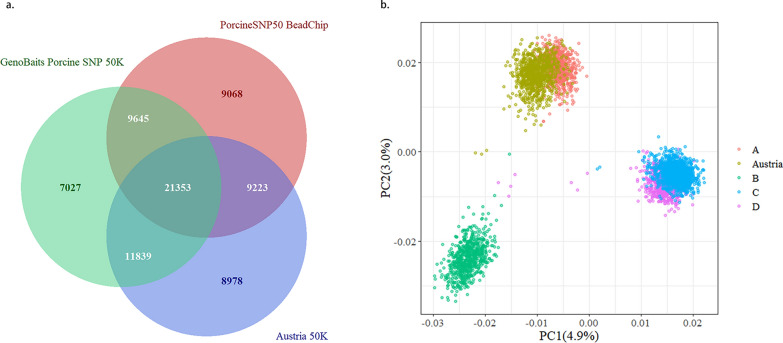 Figure 1
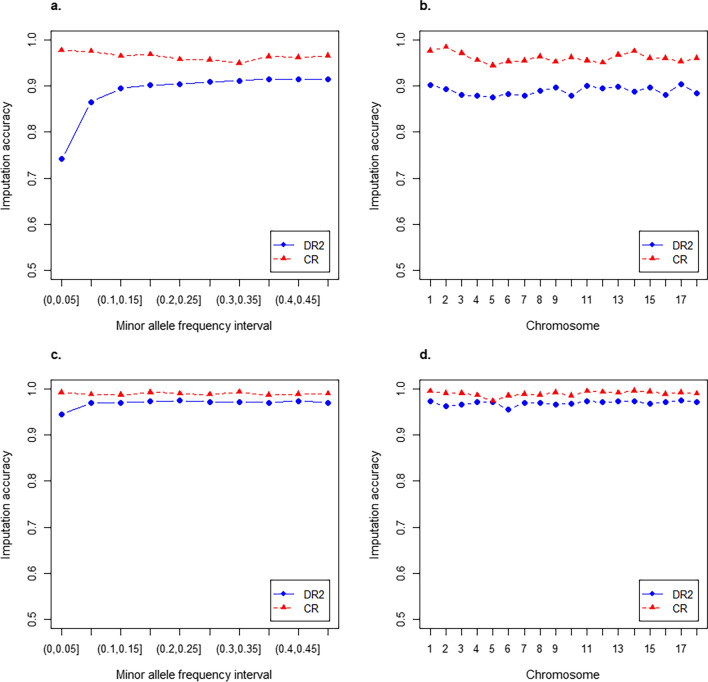 Figure 2
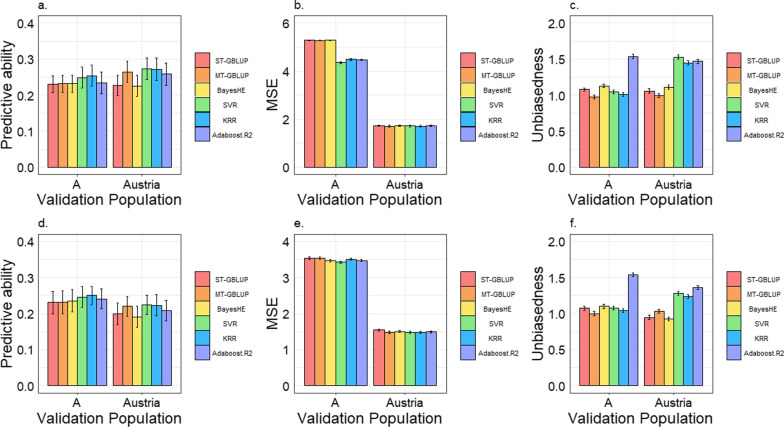 Figure 3
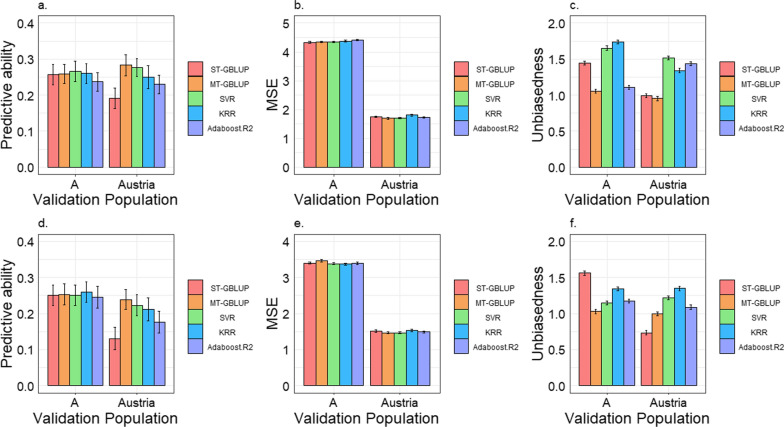 Figure 4
Peer Reviews
No public reviews on file for this paper yet. If you reviewed it on a platform where reviews are public (OpenReview, ICLR, NeurIPS, ICML), you can paste yours below so the community can read it here.
Videos
No videos yet. Explain this paper in a talk, walkthrough, or lecture? Add one.
Taxonomy
TopicsChemical Synthesis and Analysis · Synthesis and Catalytic Reactions · Synthesis of heterocyclic compounds