Two Sides of the Same Coin in Female Borderline Personality Disorder: Self-Reported Guilt and Shame and Their Neurofunctional Correlates
Hella Parpart, Jakob Blass, Thomas Meindl, Janusch Blautzik, Petra Michl, Thomas Beblo, Rolf Engel, Maximilian Reiser, Peter Falkai, Hans-Juergen Moeller, Martin Driessen, Kristina Hennig-Fast

TL;DR
The study explores how people with borderline personality disorder experience and process emotions like guilt and shame compared to healthy individuals, using brain scans and self-reports.
Contribution
The study reveals distinct neural correlates of shame and guilt in BPD patients despite similar subjective emotional intensity compared to healthy controls.
Findings
BPD patients showed stronger brain activation in regions like the cingulate and fusiform gyrus during shame scenarios.
In guilt scenarios, BPD patients had increased activation in the caudate nucleus and posterior cingulate cortex compared to healthy controls.
Healthy controls exhibited stronger activation in the cuneus and lingual gyrus during both shame and guilt conditions.
Abstract
Objective: Patients with borderline personality disorder (BPD) report to be especially prone to social emotions like shame and guilt. At the same time, these emotions seem to play an important role in BPD pathology. The present study aimed to deepen the knowledge about the processes behind shame and guilt in patients with BPD. Methods: Twenty patients with BPD and twenty healthy controls (HCs) took part in an experiment that induced shame and guilt by imagining scenarios during scanning using functional brain imaging. Participants also filled out self-report questionnaires and took part in diagnostic interviews. Results: BPD patients reported more proneness to guilt but not to shame than the HCs. There was no difference in the self-reported intensity rating of experimentally induced emotions between the groups. Between-group contrast of neural signals in the shame condition revealed a…
Genes, proteins, chemicals, diseases, species, mutations and cell lines named across the full text — each resolved to its canonical identifier and authoritative record.
Click any figure to enlarge with its caption.
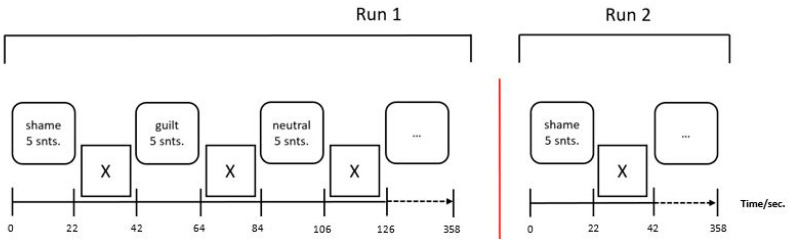 Figure 1
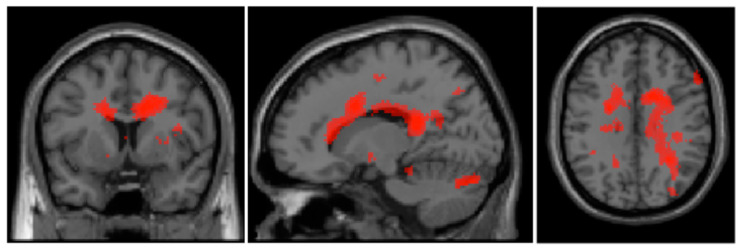 Figure 2
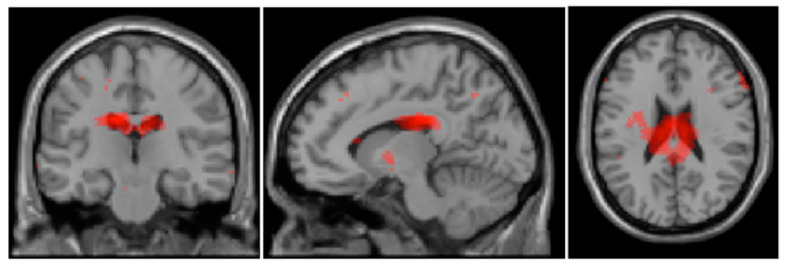 Figure 3
Peer Reviews
No public reviews on file for this paper yet. If you reviewed it on a platform where reviews are public (OpenReview, ICLR, NeurIPS, ICML), you can paste yours below so the community can read it here.
Videos
No videos yet. Explain this paper in a talk, walkthrough, or lecture? Add one.
Taxonomy
TopicsPersonality Disorders and Psychopathology · Psychotherapy Techniques and Applications · Obsessive-Compulsive Spectrum Disorders