Identifying Molecular Pathophysiology and Potential Therapeutic Options in Iatrogenic Tracheal Stenosis
Russell Seth Martins, Joanna Weber, Bryan Johnson, Jeffrey Luo, Kostantinos Poulikidis, Mohammed Jawad Latif, Syed Shahzad Razi, Al Haitham Al Shetawi, Robert S. Lebovics, Faiz Y. Bhora

TL;DR
This study explores the genetic basis of difficult-to-treat tracheal stenosis and identifies retinoic acid as a potential new treatment.
Contribution
First study to link retinoic acid deficiency and hyperkeratinization to iatrogenic tracheal stenosis pathophysiology.
Findings
Gene dysregulation in ITS is linked to hyperkeratinization and reduced cell cycle regulation.
Retinoic acid metabolism is disrupted, suggesting local deficiency in affected tissues.
Retinoic acid may regulate seven of the ten most dysregulated genes, making it a promising therapy.
Abstract
Introduction: While most patients with iatrogenic tracheal stenosis (ITS) respond to endoscopic ablative procedures, approximately 15% experience a recalcitrant, recurring disease course that is resistant to conventional management. We aimed to explore genetic profiles of patients with recalcitrant ITS to understand underlying pathophysiology and identify novel therapeutic options. Methods: We collected 11 samples of granulation tissue from patients with ITS and performed RNA sequencing. We identified the top 10 most highly up- and down-regulated genes and cellular processes that these genes corresponded to. For the most highly dysregulated genes, we identified potential therapeutic options that favorably regulate their expression. Results: The dysregulations in gene expression corresponded to hyperkeratinization (upregulation of genes involved in keratin production and keratinocyte…
Genes, proteins, chemicals, diseases, species, mutations and cell lines named across the full text — each resolved to its canonical identifier and authoritative record.
Click any figure to enlarge with its caption.
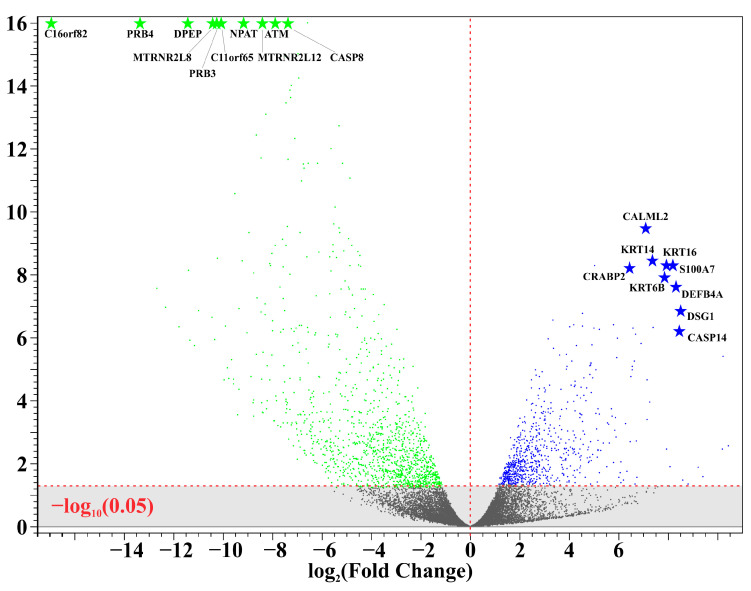 Figure 1
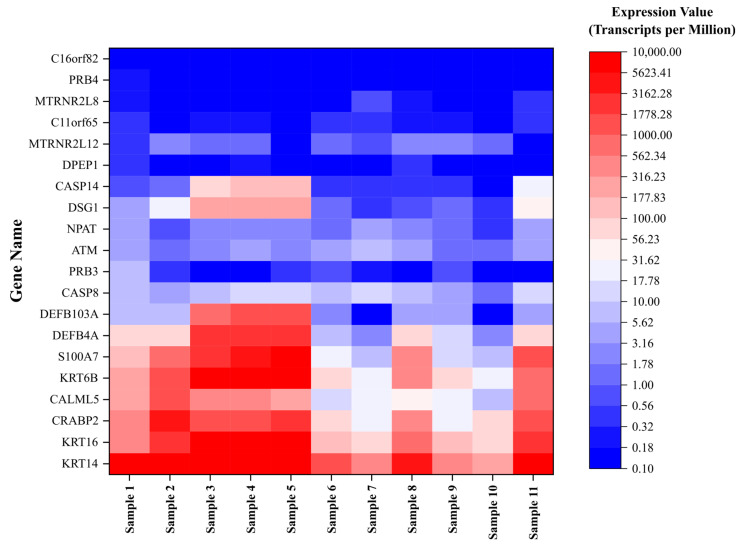 Figure 2
Peer Reviews
No public reviews on file for this paper yet. If you reviewed it on a platform where reviews are public (OpenReview, ICLR, NeurIPS, ICML), you can paste yours below so the community can read it here.
Videos
No videos yet. Explain this paper in a talk, walkthrough, or lecture? Add one.
Taxonomy
TopicsTracheal and airway disorders · Esophageal and GI Pathology · Metastasis and carcinoma case studies