Analytical and Clinical Interference of Sample Hemolysis in Evaluating Blood Biochemical and Endocrine Parameters in Cows
Dražen Kovačević, Marko Cincović, Mira Majkić, Jovan Spasojević, Radojica Djoković, Sandra Nikolić, Maja Došenović Marinković, Biljana Delić Vujanović, Nemanja Obradović, Ljiljana Anđušić, Aleksandar Čukić, Miloš Petrović, Jože Starič, Jožica Ježek

TL;DR
This study determines how different levels of blood hemolysis affect biochemical and endocrine test results in cows and sets thresholds for acceptable and unacceptable interference.
Contribution
The paper introduces specific hemolysis thresholds for 20 blood parameters in cows, enabling labs to decide when results are valid or need correction or rejection.
Findings
Thresholds for hemolysis interference were established for 20 blood parameters in cows.
Three decision levels for hemolysis were defined: unrestricted reporting, reporting with correction, and rejection.
Interferograms were developed to help laboratories implement these thresholds after validation.
Abstract
The metabolic profile implies simultaneous determination of carbohydrate, fat, protein, and mineral metabolism parameters as well as endocrinological parameters in the blood of cows. Blood is exposed to a variety of preanalytical factors during sampling, transport to the laboratory, and laboratory preparation for analysis, which may cause hemolysis of the sample. As hemolysis affects the values of the metabolic profile, the analyzed blood parameters may falsely increase or decrease, and the metabolic status of the cows may be misinterpreted. Preventing hemolysis is important because severe hemolysis requires discarding the sample and resampling, which is very resource-intensive. In this paper, three levels of hemolysis were determined for each blood parameter tested: (a) a hemolysis level that does not affect the values of the parameters and allows the results to be issued without…
Genes, proteins, chemicals, diseases, species, mutations and cell lines named across the full text — each resolved to its canonical identifier and authoritative record.
Click any figure to enlarge with its caption.
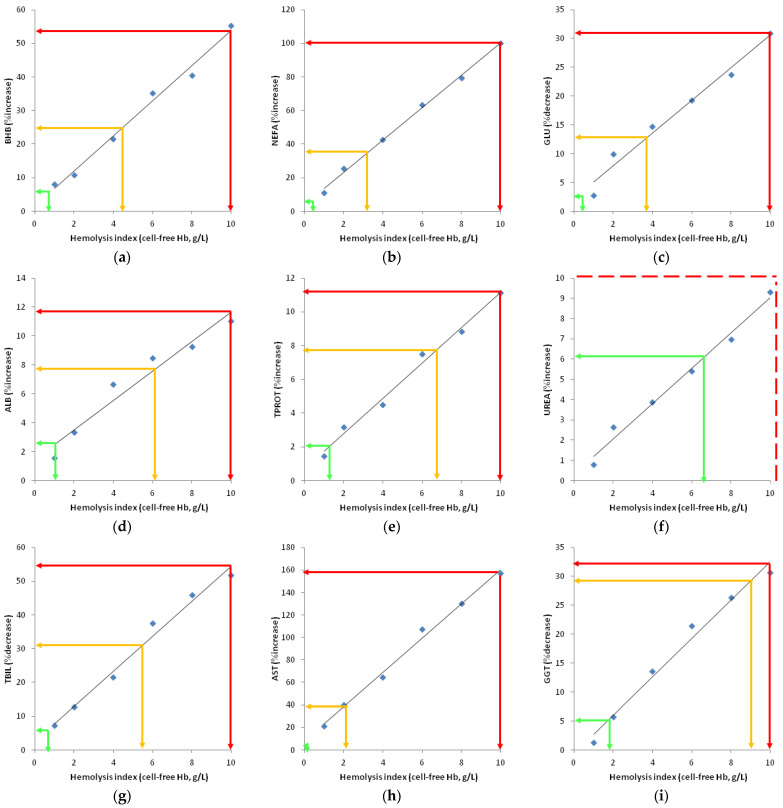 Figure 1
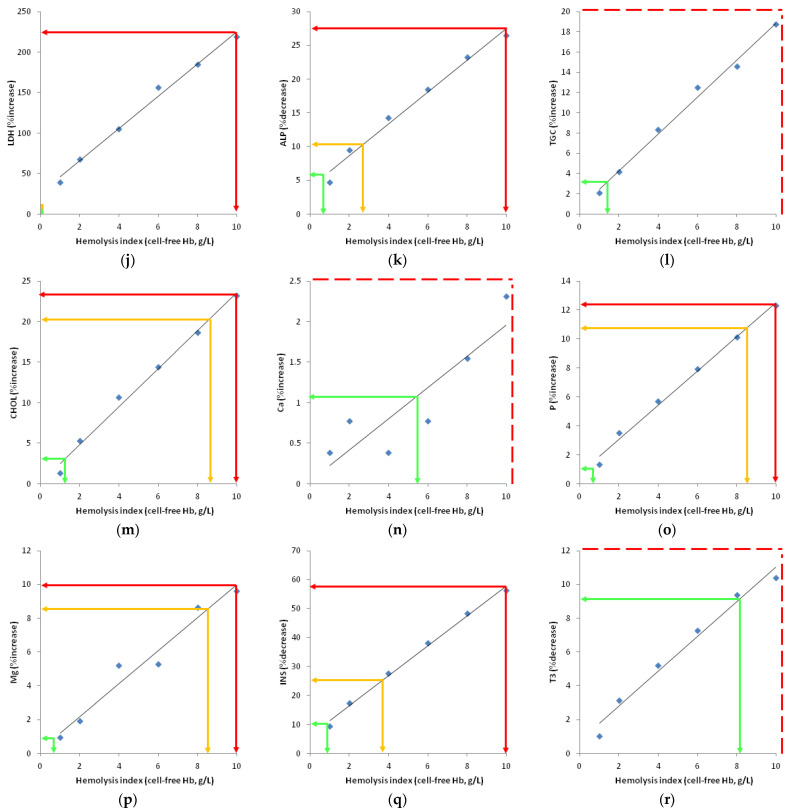 Figure 2
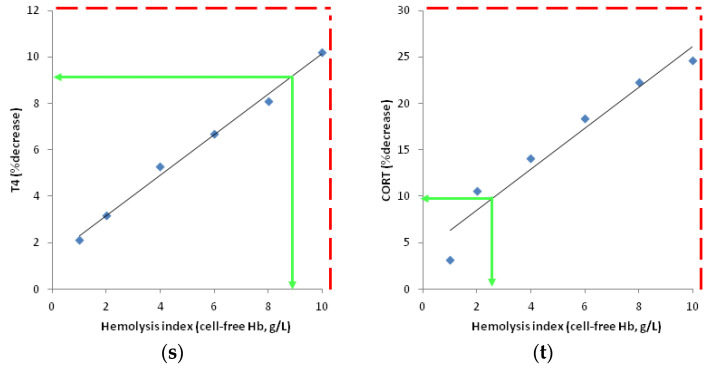 Figure 3
Peer Reviews
No public reviews on file for this paper yet. If you reviewed it on a platform where reviews are public (OpenReview, ICLR, NeurIPS, ICML), you can paste yours below so the community can read it here.
Videos
No videos yet. Explain this paper in a talk, walkthrough, or lecture? Add one.
Taxonomy
TopicsReproductive Physiology in Livestock · Clinical Laboratory Practices and Quality Control · Animal health and immunology